A Watch That Survived Hampta Pass and My Clumsy Self — Amazfit T-Rex Ultra Review
Let me tell you about the moment I decided this watch was worth every rupee. I was three days into a Hampta Pass trek in Himachal, it was drizzling, the temperature had dropped to about 2 degrees, and I slipped on a wet rock and landed hard on my left wrist. The wrist with the watch. My first thought was about my bones, second thought was about the watch. Bones were fine. Watch was fine. Not a scratch. Not even a scuff mark on the titanium bezel. That, right there, is what the Amazfit T-Rex Ultra is about.
The T-Rex Ultra is currently sitting at ₹24,999 on Amazon India. MRP is ₹34,999, so you're looking at a 29% discount — close to ten thousand rupees off. That's a big deal for a watch in this category. Amazon is also running an SBI credit card offer that gives you an additional ₹1,000 off, bringing the effective price to about ₹23,999. And there's a no-cost EMI option at ₹4,167 per month for six months if you don't want to pay everything upfront. ICICI Bank cardholders have occasionally had separate cashback offers on Amazon too, so check the deal page for current bank promotions before buying.
I bought this watch specifically for the Hampta Pass trek, and I've been wearing it daily for about three months now. Let me give you the full picture — the good, the not-so-good, and the surprisingly good.
Built Like an Actual Tank (Almost)
The T-Rex Ultra is MIL-STD-810G certified. That's a military standard for equipment durability, and it means this watch has been tested against extreme temperatures (minus 40 to 70 degrees Celsius), mechanical shock, humidity, salt spray, sand and dust, and low pressure altitude conditions. Most of us will never subject our watches to these extremes, but it's reassuring to know that the watch can take whatever you throw at it.
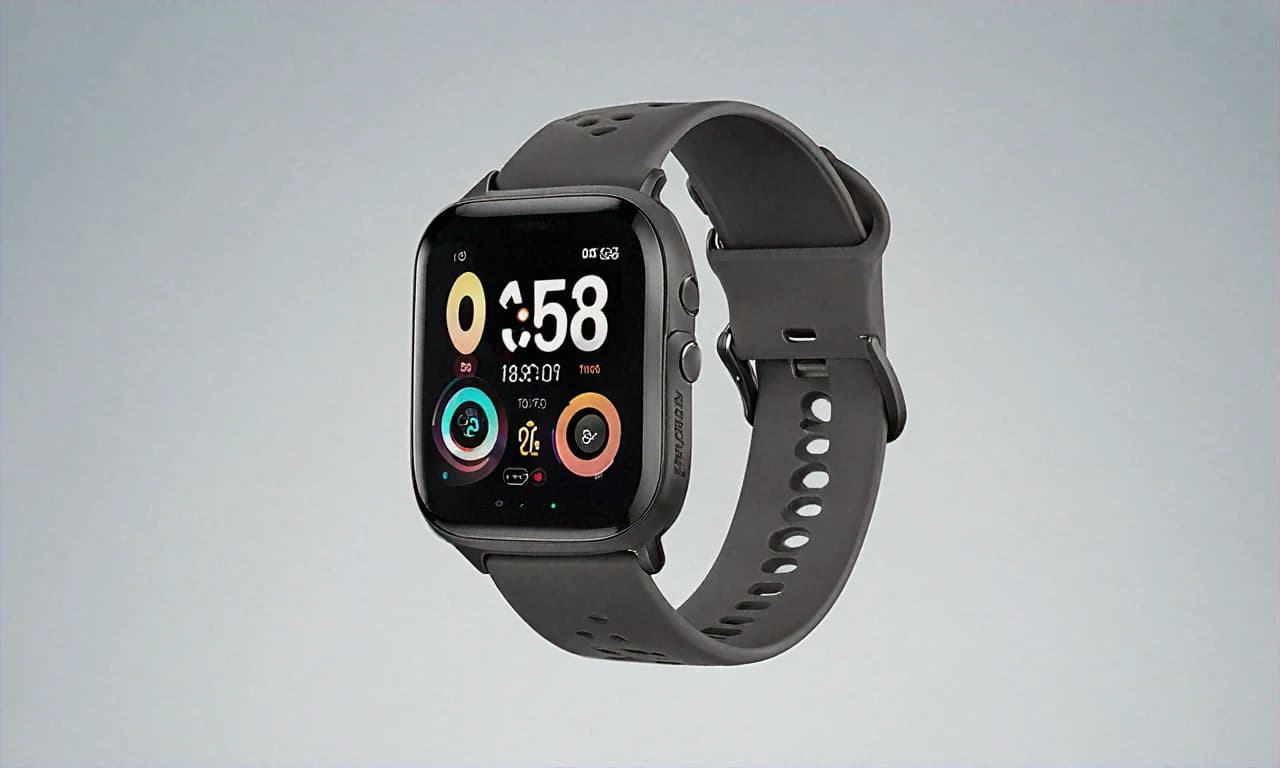
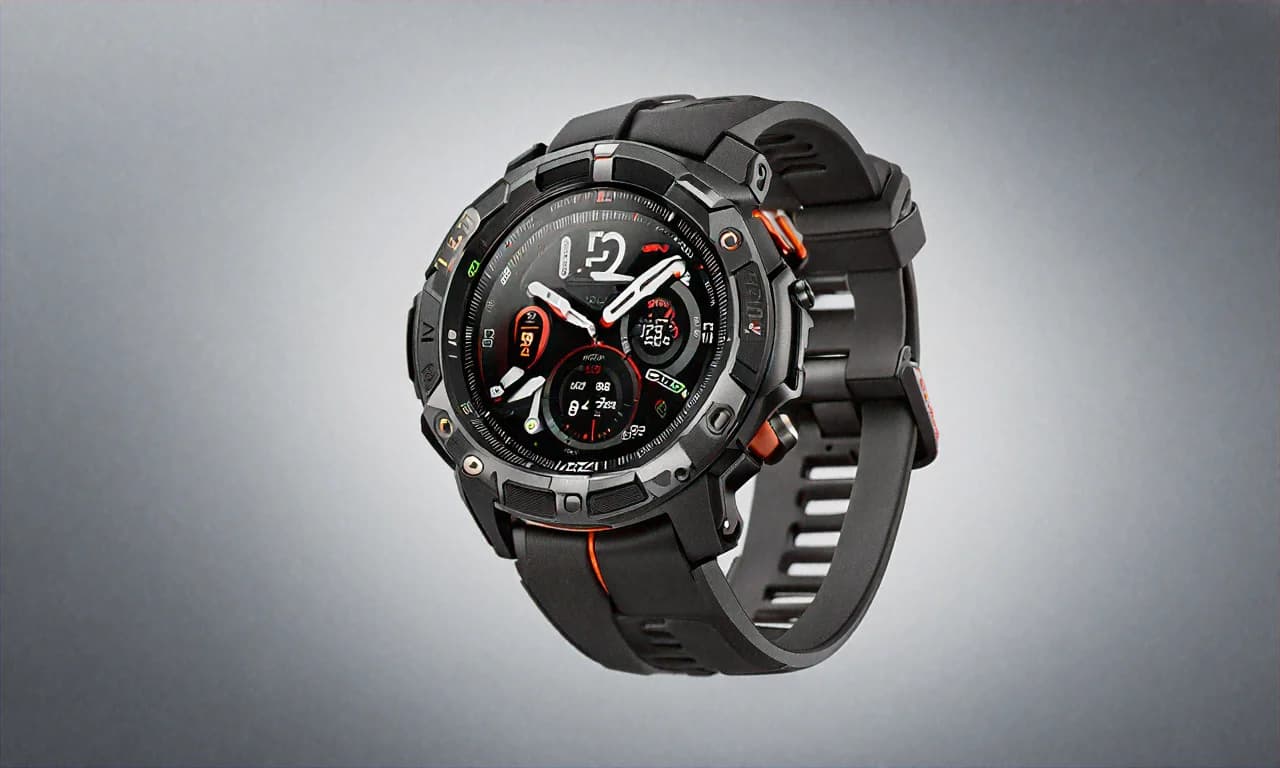
The build reflects this. The titanium alloy bezel is tough and adds a rugged, masculine look. It isn't trying to be sleek or minimal — it's chunky, bold, and unapologetically built for rough use. The four physical buttons on the side are large enough to operate with wet fingers or even thin gloves, which matters when you are at 4,000 metres and your hands are freezing. The liquid silicone strap is comfortable for extended wear and doesn't irritate the skin even when sweaty.
Now, let me address the elephant on the wrist. This watch is heavy. At 89 grams with the strap, it's noticeably heavier than most smartwatches. Coming from a 36-gram Apple Watch, the T-Rex Ultra felt like wearing a small brick for the first two days. After that, I got used to it. But if you have a thin wrist or prefer lightweight watches, be aware of this before buying. Try it on in a store if you can — Croma and Amazon experience centres sometimes have Amazfit products on display.
Water resistance is rated at 10ATM, and there's a dedicated freediving mode that supports depths up to 30 metres. I've not tested the freediving feature because my idea of water sports is struggling through two laps in a pool, but I've worn the watch while swimming, in heavy rain during monsoon in Bangalore, and while washing dishes (yes, I do help in the kitchen, occasionally). Zero issues every time.
The Display — Bright, Clear, and Actually Readable Outdoors
The 1.39-inch AMOLED display is running at 454x454 resolution, which gives you sharp text and detailed watch faces. Amazfit has used tempered glass with an anti-fingerprint coating over the display. Is it as scratch-resistant as sapphire crystal? No. But tempered glass at this price is standard, and after three months, my screen is still clean without any visible scratches. I'd recommend using a screen protector if you're planning serious outdoor use — you can get a pack of three on Amazon for about ₹200-300.
Brightness is excellent. Under direct sunlight — and I'm talking about peak Chennai-level sunlight here, not mild winter sun — the display is clearly readable. The auto-brightness adjusts well, though there's a slight delay when you move from shade to direct sun. You can also manually set brightness if you prefer, which I did for the trek because I wanted to conserve battery.
The always-on display mode works but eats into battery life significantly. I keep it off during treks and outdoor activities (where every hour of battery counts) and sometimes turn it on during regular office days when checking the time frequently is more convenient with a glance rather than a wrist raise.
Dual-Band GPS and Offline Maps — The Real Adventure Features
This is where the T-Rex Ultra separates itself from regular smartwatches and enters territory that was previously only occupied by Garmin and high-end Suunto watches.
The dual-band positioning system supports five satellite networks: GPS, GLONASS, Galileo, BDS, and QZSS. In simple terms, dual-band means the watch uses two different signal frequencies from satellites, which dramatically improves accuracy in difficult environments — think dense forests, deep valleys, tall buildings in cities. On the Hampta Pass trek, the GPS tracking was remarkably accurate. I compared my route recording with a friend who was using a Garmin Fenix 7, and our tracks were almost identical. The total distance reading differed by less than 200 metres over a 14 km day. For a watch that costs half the price of the Garmin, that's exceptional.
The offline maps feature is what really sold me on this watch. Before the trek, I downloaded the Himachal Pradesh region maps onto the watch via the Zepp app. On the trail, I could see the topographic map right on my wrist, with my real-time position marked clearly. No phone needed. No cell service needed. Just the watch and the satellites.
You can also import GPX route files — which you can download from sites like AllTrails or India-specific trekking sites — and the watch displays the route as a breadcrumb trail on the map. You follow the blue line, basically. When I deviated from the planned trail (took a wrong turn near a stream crossing on Day 2, long story), the watch showed me immediately that I was off-route. That kind of feature can be really safety-relevant in the mountains.
For someone trekking in the Western Ghats, doing the Kedarkantha or Brahmatal treks, cycling in the Nilgiris, or even running trails in Aarey Colony in Mumbai, the navigation features on this watch are incredibly useful. I know a lot of Indian trekking groups — the Indiahikes and YHAI types — where participants use their phones for navigation and drain their phone battery in the process. Having GPS navigation on the watch means your phone stays charged for emergencies. That alone is worth the price of admission for serious trekkers.
Health Tracking — Solid but Not Garmin-Level
Let me set expectations correctly here. The T-Rex Ultra has a good set of health sensors — 24/7 heart rate monitoring, SpO2 blood oxygen tracking, stress monitoring, and sleep analysis. Amazfit's BioTracker 3.0 PPG sensor does a decent job across the board. Heart rate during workouts has been accurate within 3-5 BPM compared to a chest strap, which is acceptable for most people. Resting heart rate trends are consistent and useful for tracking overall fitness.
Sleep tracking is good but not as detailed as what you get from a Garmin or even a Fitbit. It detects sleep and wake times accurately, breaks sleep into light, deep, and REM stages, and gives you a sleep score. But the analysis lacks the depth of Garmin's sleep coaching or the actionable insights from Fitbit's Sleep Profile feature. It's functional. It tells you how you slept. It doesn't tell you much about how to sleep better.
SpO2 monitoring is useful during high-altitude treks. At Hampta Pass (around 4,270 metres), my SpO2 readings dropped to about 88-90%, which is expected at altitude. Having this data on my wrist helped me monitor for signs of altitude sickness. When readings went below 85%, I knew to slow down, hydrate, and rest. This is practical, honestly useful health data for Indian trekkers who regularly go to high-altitude destinations in Ladakh, Spiti, or the Himalayas.
Stress monitoring works through heart rate variability measurement and gives you a stress score throughout the day. I find it less useful than Garmin's Body Battery, which combines stress with sleep and activity data for a more holistic picture. But as a standalone feature, the stress tracking is fine for general awareness.
160+ Sports Modes — Quantity and Quality
The T-Rex Ultra supports over 160 sports modes. That number sounds impressive, and honestly, most of them are variations of the same thing. But the modes that matter — trail running, mountaineering, hiking, swimming, cycling, gym workouts — are well-implemented with relevant metrics for each activity.
Trail running gets GPS tracking with elevation data, pace zones, heart rate zones, and cadence. Mountaineering adds altitude tracking with ascent and descent calculations. Swimming tracks laps, stroke type, and SWOLF efficiency score. The freediving mode is unique at this price point — it displays depth, water temperature, dive time, and surface interval. If you're into scuba or freediving in Andaman, Goa, or Pondicherry, this is a seriously useful feature.
Training load analysis shows you how hard you have been training over the past week and whether you're in the optimal zone, overreaching, or undertraining. Recovery time estimates suggest how long you should rest before your next intense workout. These features are borrowed from Garmin's playbook, and while the implementation isn't as sophisticated, having them at all in a ₹25,000 watch is impressive.
Battery Life — 20 Days Is Not an Exaggeration
The 500mAh battery is a monster. Amazfit claims up to 20 days in typical usage mode, and I can confirm that this is realistic. In my regular daily use — notifications enabled, 24/7 heart rate and SpO2 monitoring, no always-on display, and a 30-45 minute tracked workout most days — I consistently get 16-18 days on a single charge. If I turn off SpO2 monitoring and reduce the heart rate measurement frequency, 20 days is absolutely achievable.
During the Hampta Pass trek, with GPS tracking for 5-7 hours daily, frequent altitude and SpO2 checks, always-on display during daylight hours, and regular notification use, the battery lasted four full days and still had about 30% left. I brought a small power bank just in case but never needed it for the watch. Compare that to an Apple Watch, which would need daily charging and a Galaxy Watch that might last two days if you're lucky.
In continuous GPS mode, Amazfit claims about 50 hours. I've not tested a 50-hour continuous session (who has?), but based on my GPS-heavy usage during the trek, this claim seems plausible. For ultra-marathon runners or multi-day cycling events, this kind of GPS endurance is a big deal.
Charging from zero to full takes about two hours via the magnetic charger. Not the fastest, but since you charge it every two to three weeks, the charging speed is largely irrelevant. You plug it in before bed, and it's full by morning.
Zepp OS and the Smart Features Situation
Zepp OS 2.0 is clean, fast, and intuitive. Navigating through menus is smooth, animations are fluid, and the watch doesn't lag or stutter during normal use. Watch faces are customisable with a decent selection available in the Zepp app. Some are free, some are paid (usually ₹50-100). The interface is well-designed for a proprietary OS.
But let me be blunt about the limitations. There is no Google Play Store. No WhatsApp on the watch. No Google Maps. No NFC payments. No Bluetooth calling (you can't answer or make calls from the watch). The app library on Zepp OS is tiny compared to Wear OS or watchOS. You get notifications mirrored from your phone, music control, weather, alarms, timers, and a few basic apps. That's about it.
If you're coming from a Galaxy Watch or Apple Watch and expect the same smart features, you will be disappointed. The T-Rex Ultra is fundamentally a fitness and adventure watch that happens to have basic smart features. It isn't a mini-smartphone on your wrist. Accept that going in, and you won't be disappointed.
One thing that does work well is the Zepp app on your phone. Health data syncing is fast and reliable, the app interface is clean, and you can view detailed analytics for workouts, sleep, stress, and body metrics. It also integrates with Strava, so your workout data automatically shows up there if you use it.
The Comparison Everyone Wants — T-Rex Ultra vs Garmin Instinct 2
I know a lot of people are cross-shopping between these two, so here's a quick comparison based on my experience.
The Garmin Instinct 2 (around ₹28,000-32,000) has a better fitness tracking algorithm, better training insights (Body Battery, Training Status), and a more mature platform with Garmin Connect. But it has a monochrome MIP display that looks dated, no offline maps on the base model, and a design that some people find too utilitarian.
The T-Rex Ultra has a significantly better AMOLED display, offline maps and route navigation built-in, freediving support, and costs less. But the fitness analytics aren't as deep, the health sensor accuracy is slightly lower, and the app selection is more limited.
My take: if you're primarily a runner or cyclist who cares about training data above all else, go Garmin. If you want a more versatile adventure watch with a great display, maps, and freediving at a lower price, go T-Rex Ultra. I went with the Amazfit because the offline maps and the AMOLED display swung it for me, and I don't regret it.
Should You Buy It at ₹24,999?
If you are someone who treks, hikes, camps, dives, or does any kind of outdoor adventure activity regularly, the Amazfit T-Rex Ultra at ₹24,999 is an incredible value. You're getting features — dual-band GPS, offline maps, freediving mode, military-grade durability — that typically cost ₹40,000-60,000 from Garmin or Suunto.
If you're buying this as a daily office watch that you also wear on occasional trips, it works for that too, but the size and weight might bother you. It's a big watch. It looks like a big watch. Some people love that aesthetic. Some don't. No judgement either way.
The SBI card offer on Amazon brings it to about ₹23,999, and the no-cost EMI makes it even more accessible. I'd also check if there are any exchange offers running — Amazon sometimes gives ₹1,000-2,000 on old watches or fitness bands, which would bring the price down further.
One last thing. Amazfit's after-sales service in India has improved a lot over the past couple of years. They have authorised service centres in most major cities now — Delhi, Mumbai, Bangalore, Hyderabad, Chennai, Kolkata, Pune. It isn't Titan-level coverage, but it's decent. And the watch comes with a one-year manufacturer warranty, which is standard.
For outdoor enthusiasts in India, the T-Rex Ultra at this price is hard to beat. It took a beating on Hampta Pass and kept ticking. What more can you ask from a watch?