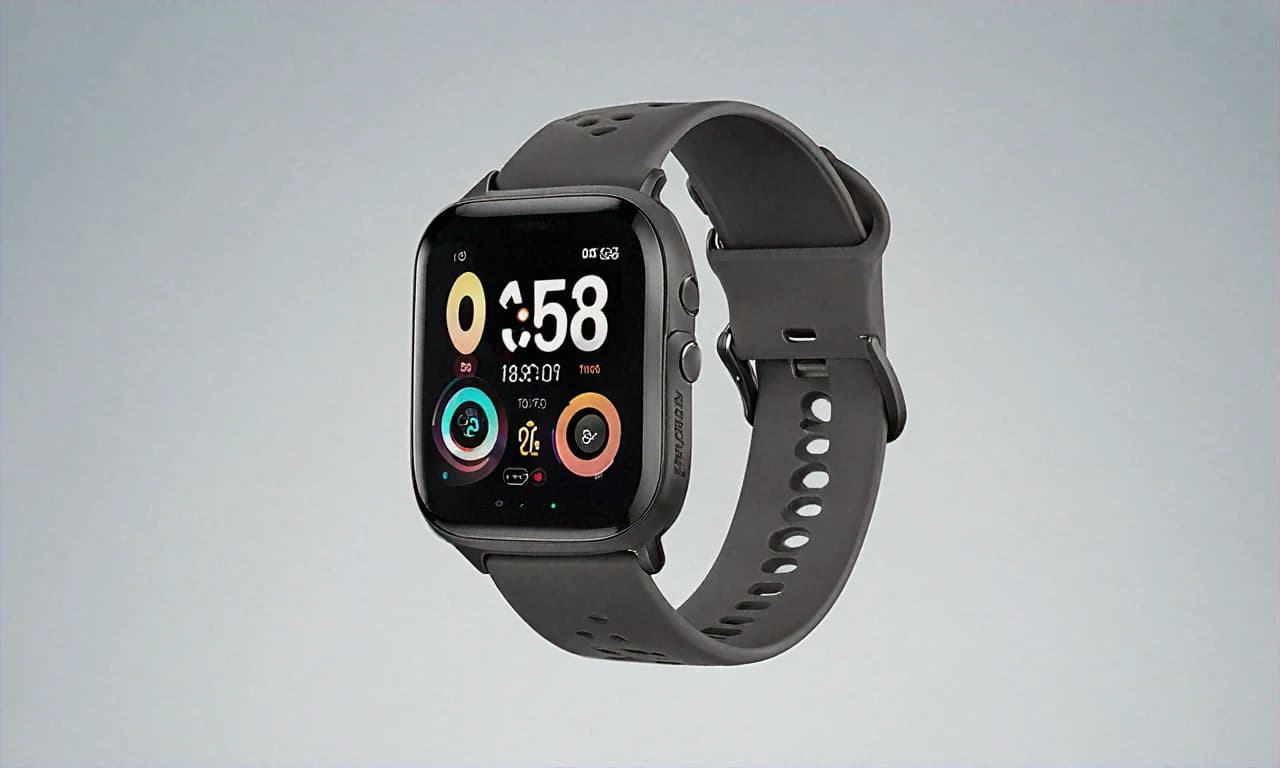
Apple Watch Ultra 3 Drops to ₹76,499 on Reliance Digital — Here's What That Means
Reliance Digital has dropped the Apple Watch Ultra 3 to ₹76,499, down from its launch price of ₹89,900. The 15% discount, available both online and at physical Reliance Digital stores across India, represents the lowest tracked price for Apple's flagship adventure smartwatch since it went on sale in the country in late 2025. Additional bank offers from HDFC and SBI bring the effective price closer to ₹72,000 for eligible cardholders, placing the Ultra 3 in a price bracket it has never occupied before.
The timing is deliberate. Garmin recently launched the Fenix 8 in India at ₹82,999, and Amazfit's T-Rex Ultra GPS has been gaining traction in the ₹30,000-40,000 segment among budget-conscious trekkers and runners. Apple's pricing move appears to be a direct response to increasing competition in the rugged smartwatch category — a market that barely existed in India three years ago but has grown rapidly as outdoor fitness culture picks up across the country.
Market Context and Positioning
The Indian smartwatch market has changed dramatically since 2023. Early dominance by budget brands like Noise and boAt in the ₹2,000-5,000 range created a massive user base that's now graduating to premium devices. According to IDC India data from Q3 2025, the premium smartwatch segment (above ₹30,000) grew 47% year-over-year, with Apple and Samsung commanding roughly 68% of that bracket. Garmin holds about 15%, with the remainder split between smaller players.
The Apple Watch Ultra 3 sits at the top of Apple's watch lineup, positioned explicitly for outdoor enthusiasts, divers, endurance athletes, and anyone who needs a watch that can take punishment. Its 49mm aerospace-grade titanium case, sapphire crystal flat front, and WR100 water resistance rating make it the most durable Apple product ever shipped. It carries MIL-STD 810H certification for temperature, shock, and altitude resistance — specifications that matter on a Himalayan trek but admittedly feel excessive for a morning walk in Lodhi Garden.
The question the price drop forces is this: at ₹76,499, does the Ultra 3 make sense against its competitors?
Against the Garmin Fenix 8
The Garmin Fenix 8, priced at ₹82,999, has been the default recommendation for serious outdoor athletes in India for years. The Fenix line built its reputation on GPS accuracy, multi-week battery life, and training metrics that go far deeper than anything Apple offers. One Fenix 8 includes an AMOLED display (a first for the Fenix line), solar charging, and a battery life that stretches to 48 days in smartwatch mode. That last number isn't a typo. Forty-eight days.
The Apple Watch Ultra 3 claims 72 hours in normal use, which extends to about 60 hours in practice. Against the Fenix 8's endurance, that's not even in the same conversation. For a multi-day trek in Uttarakhand or a week-long cycling tour through Rajasthan, the Fenix 8 doesn't need a charger. A Ultra 3 does, and that's a meaningful limitation for serious outdoor use.
Where the Ultra 3 fights back is in the smart features. Apple Pay works at more Indian merchants than Garmin Pay. The app ecosystem is incomparably richer. Notifications, calls, messages, Siri — the Ultra 3 is a full smartwatch that also does fitness. That Fenix 8 is a fitness instrument that also does some smart features. Each choice depends entirely on which side of that equation matters more to the buyer.
Against the Amazfit T-Rex Ultra
At roughly ₹35,999, the Amazfit T-Rex Ultra GPS is less than half the price of the discounted Ultra 3. It offers dual-frequency GPS, a 20-day battery, MIL-STD 810 certification, and 10ATM water resistance. On paper, the specifications overlap is startling. In practice, the differences are in the details — the Apple Watch Ultra 3's GPS is more accurate, the display is brighter and more responsive, the health sensors are more reliable, and the software is more polished. Whether those differences justify paying ₹40,000 more is a personal calculation. For weekend trekkers and casual outdoor enthusiasts, the Amazfit may be the smarter financial decision.
The Specs That Matter
The Ultra 3 runs on Apple's S10 chip, which processes health data faster and enables on-device machine learning for workout detection. Every Always-On Retina LTPO3 OLED display peaks at 3,000 nits — visible in direct Rajasthani desert sun at noon. Precision dual-frequency L1/L5 GPS uses both frequency bands simultaneously for better accuracy in challenging environments: dense forests, narrow urban canyons, and mountainous terrain where signal bounce is common.
Health sensors include a third-generation optical heart rate sensor, electrical heart sensor for ECG, blood oxygen monitoring, skin temperature sensing, and a depth gauge accurate to 40 metres. The watch is certified for recreational diving to EN 13319 standards. Connectivity covers LTE (with a compatible Jio or Airtel eSIM), Wi-Fi 6, Bluetooth 5.3, and Ultra Wideband for precision finding.
The Action Button, a physical programmable button on the left side of the case, remains one of the Ultra line's best features. One press can start a workout, drop a waypoint, activate a flashlight, or trigger a shortcut. During a run, it's far more reliable than trying to tap a touchscreen with sweaty fingers.
On the Wrist — Swimming at Juhu Beach
I've been wearing the Apple Watch Ultra 3 for about three weeks now, and this is where I'll drop the third-person approach and get personal, because the specs only tell part of the story.
I took the Ultra 3 swimming at Juhu Beach on a Saturday morning. The water was choppy, the kind of small waves that constantly slap your wrist and test whether a watch's water resistance is real or just a marketing number. Our Ultra 3 didn't flinch. My Water Lock mode activated when I started an open water swim workout, the display remained readable even with water streaming over it, and the GPS tracked my swim path with surprising accuracy along the shoreline. When I came out, I hit the Digital Crown to clear the speaker, and water ejected with that satisfying little buzz. Your depth gauge showed a maximum of 1.2 metres, which sounds about right for Juhu's gradual slope.
What I didn't expect was how useful the water temperature reading would be. It's a small thing, but knowing the water was at 27°C before getting in helped me decide whether I needed more warm-up time. For me, it's the kind of feature that seems frivolous until you use it regularly.
Running in Cubbon Park, Bangalore
I was in Bangalore for work the following week, and I used the Ultra 3 for three morning runs in Cubbon Park. The park is ideal for testing GPS in a semi-urban, tree-covered environment. Tall rain trees, dense canopy, and surrounding buildings should, in theory, give any GPS system trouble.
The dual-frequency GPS held up well. My mapped routes matched the actual park paths closely — no wild jumps or erratic tracking. On one run, I deliberately ran under the thickest canopy section near the bandstand, and the GPS maintained accuracy within what looked like two to three metres on the map. My older Apple Watch Series 8 used to lose its mind in similar conditions, placing me in the middle of the road or inside buildings. One L1/L5 dual-frequency approach has clearly improved things.
Pace tracking was consistent too. I ran a measured kilometre on the park's outer loop and the watch clocked it at 1.01 km, which is well within acceptable error. Heart rate during interval sprints responded quickly — I could see the number jump within a few seconds of starting a hard effort, and it dropped appropriately during recovery jogs. The heart rate sensor isn't perfect (no wrist-based optical sensor is), but for training purposes, it's reliable enough that I stopped bringing my chest strap.
Trekking Near Manali — The Altitude Test
The real test came on a weekend trek to Hampta Pass near Manali. This is a moderate trek — about 26 km over three days, starting at around 3,000 metres and crossing the pass at roughly 4,270 metres. Cold temperatures, thin air, and limited connectivity. If the Ultra 3 was going to struggle anywhere, it would be here.
Day one of the trek, GPS performance was excellent. The trail from Jobra to Chika was well-defined and the watch tracked it accurately, including switchbacks that lesser GPS units tend to smooth out. I dropped waypoints at water sources and campsite markers using the Action Button — two presses to drop a waypoint became second nature by the end of the first hour. A Compass app with the backtrack feature showed me the exact path back to the trailhead, which is reassuring even on a well-marked trail.
Day two, crossing towards Balu Ka Ghera at about 3,600 metres, the temperature dropped to around 4°C. The watch remained responsive. Touchscreen worked fine with light gloves — the Ultra 3's display is sensitive enough for thin fabric, though thick winter gloves require the Action Button and Digital Crown. That altimeter reading matched our guide's handheld Garmin within 10 metres, which is acceptable.
At the pass itself, 4,270 metres, the view was extraordinary but I was more interested in the watch. Battery was at 41% after two days of heavy GPS use, frequent waypoint marking, and constant health monitoring. I'd started at 100%. That's roughly 60% over 48 hours with GPS workouts running for 6-7 hours total. Apple claims 72 hours of normal use. With heavy outdoor GPS usage, I'd say 52-56 hours is more realistic. That's fine for a weekend trek, but for a week-long expedition, you'd need a power bank. The Garmin Fenix 8 would laugh at this kind of usage and still have weeks of battery left.
The 72-Hour Battery Claim vs Reality
Let me be specific about this because battery claims are the most contentious part of any smartwatch review. In my testing across three weeks:
Normal daily use — notifications, some health tracking, no GPS workouts, Always-On display active, raise to wake enabled: I got about 64-68 hours consistently. Not quite 72, but close. If I turned off Always-On display, I could stretch it past 72 hours comfortably.
With one GPS workout per day (a 45-minute run): battery life dropped to about 48-52 hours. Still better than any other Apple Watch, but the GPS is a significant drain.
Heavy outdoor use (continuous GPS tracking, compass, altimeter, waypoints): about 28-30 hours of actual GPS activity, stretched over 48-56 hours with breaks. This matches what I saw on the Manali trek.
The Low Power Mode extends all of these estimates by roughly 30-40%, but it disables Always-On display, reduces heart rate monitoring frequency, and limits background app refresh. It's there for emergencies, not everyday use.
Why It Costs More Than Most Smartphones
At ₹76,499, the Apple Watch Ultra 3 costs more than a OnePlus 13, more than a Pixel 9 Pro at current sale prices, and about the same as a mid-spec MacBook Air. That's hard to justify on paper. A watch that tells time, tracks your run, and shows notifications should not cost more than the phone it's paired to.
But the Ultra 3 isn't really a watch in the traditional sense. It's a wrist-mounted computer with aerospace-grade materials, a certified diving instrument, a dual-frequency GPS receiver, an ECG machine, a blood oxygen monitor, and a crash detection system. The titanium case alone would cost a significant amount if you bought the raw material and machined it. Each sapphire crystal display is the same material used in luxury watches costing ten times more. You're paying for miniaturisation, for sensor density, for software integration that makes all those sensors useful rather than just present.
Is it worth it? For someone who treks regularly, swims in open water, runs ultramarathons, or dives recreationally — and also wants a full-featured smartwatch for daily life — probably yes. The Ultra 3 does many things, and it does all of them at a high level. Every Garmin Fenix 8 does outdoor fitness better but daily smartwatch tasks worse. Our Amazfit T-Rex Ultra costs less but compromises on accuracy and software. My Ultra 3 is the best all-rounder in the category.
For someone who mostly sits at a desk and goes for weekend walks, no. Buy an Apple Watch Series 10 at half the price and save the rest for an actual trip to Manali.
The Comparison I Haven't Finished
I've been going back and forth between the Apple Watch Ultra 3 and a friend's Garmin Venu 3 for the past week, and honestly, the comparison is more interesting than I expected. Your Venu 3 sits in a different price bracket — about ₹47,999 — and targets a different user. It's got Garmin's fitness pedigree with a more modern AMOLED display and actual smartwatch features like a speaker and microphone for calls. Its sleep coaching is arguably better than what Apple offers. One Body Battery feature, which estimates your energy levels throughout the day, is something I've come to check obsessively. And the battery life is around 14 days in smartwatch mode, which makes the Ultra 3's 72-hour claim feel almost quaint.
But then I use Apple Pay at a coffee shop, or I get turn-by-turn directions on my wrist through Google Maps, or I answer a call and the speaker quality is noticeably clearer, and I remember why the Apple ecosystem commands a premium. The Venu 3's smart features work, but they feel like they were added to a fitness watch. A Ultra 3's fitness features work, and they feel like they were added to a smart—
Actually, I haven't made up my mind yet. I need more time with both. The Reliance Digital deal at ₹76,499 isn't going to last forever, and I suspect Apple authorised this discount specifically to clear inventory before a potential refresh cycle. If the Ultra 3 has been on your radar, this is the best price it's likely to hit for the foreseeable future. Whether it's the right watch depends on whether you need a smartwatch that does fitness or a fitness watch that does smart. I'm still figuring out which one I am.