I Switched From an Apple Watch to the Garmin Venu 3. Here Is What Happened.
I know, I know. Going from an Apple Watch to a Garmin sounds like going from a smartphone back to a feature phone. That is what I thought too, until a friend who runs marathons told me, "Bro, Garmin is a different world. You won't go back." He was mostly right. Mostly.
The Garmin Venu 3 is currently on Croma at ₹42,990, down from an MRP of ₹52,990. That is ₹10,000 off a watch that almost never gets big discounts. Garmin is notoriously stingy with pricing in India — their products sit at MRP for months at most retailers. So when Croma drops ten thousand off, you pay attention. On top of that, HDFC Bank credit and debit card users get an additional ₹2,000 off, bringing the effective price to ₹40,990. For a Garmin of this calibre, that's truly a deal worth acting on.
I've been wearing the Venu 3 daily for nearly two months now, through everything from office days in Hyderabad to a trekking trip in Coorg to regular evening runs around KBR Park. Here's my honest, detailed take on whether this watch is worth the money.
First, Let Us Talk About What the Garmin Venu 3 Actually Is
Garmin makes a lot of watches, and it can be confusing to figure out where each one sits. The Venu series is their lifestyle-fitness line — think of it as the watch for people who want serious fitness tracking but also want something that looks good enough for daily wear. It isn't the ultra-rugged Fenix line for mountain climbers. What isn't the Forerunner series for pure runners. It's the best of both worlds — a proper fitness watch that doesn't look like you're about to climb Everest when you wear it to a restaurant.
The Venu 3 is the latest in this series, and Garmin has actually stepped up the smartwatch features this time around. Previous Garmin watches were incredible for fitness but felt dumb compared to an Apple Watch or Galaxy Watch when it came to everyday smart features. One Venu 3 closes that gap significantly. Not completely, but significantly.
That Display Though
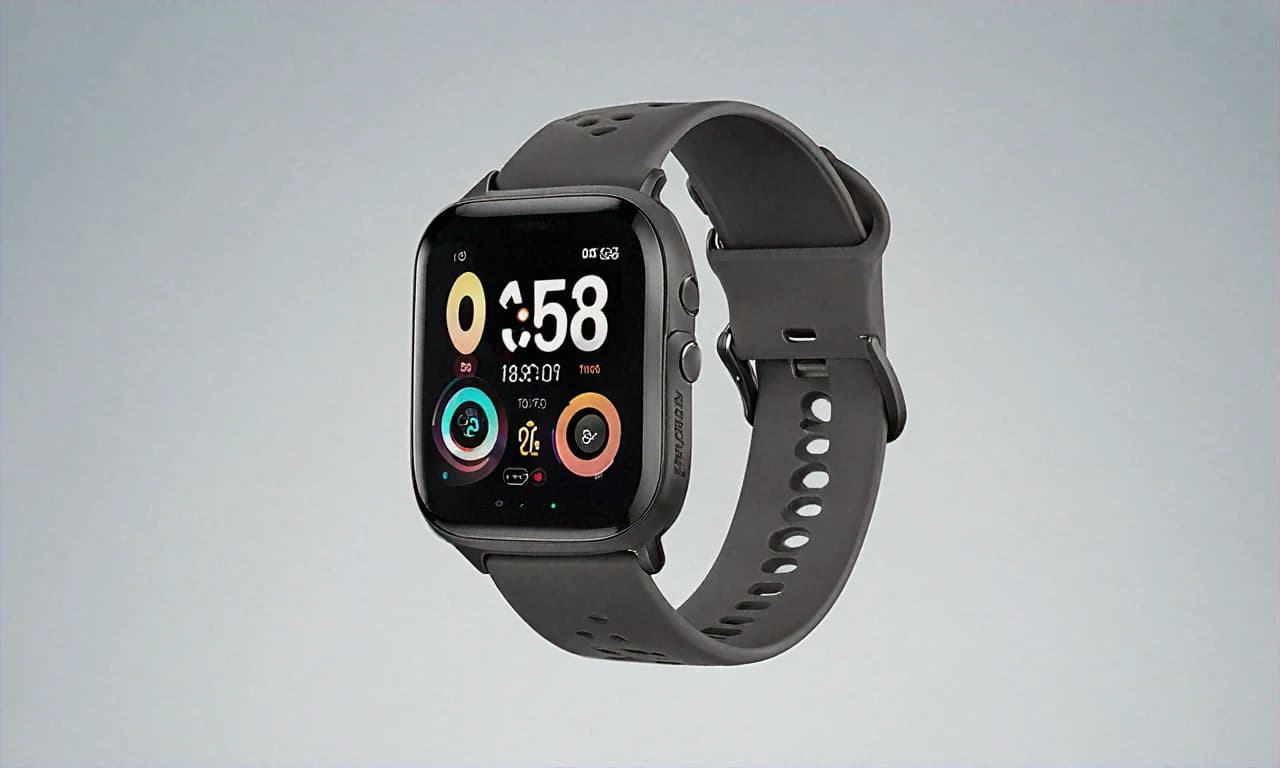
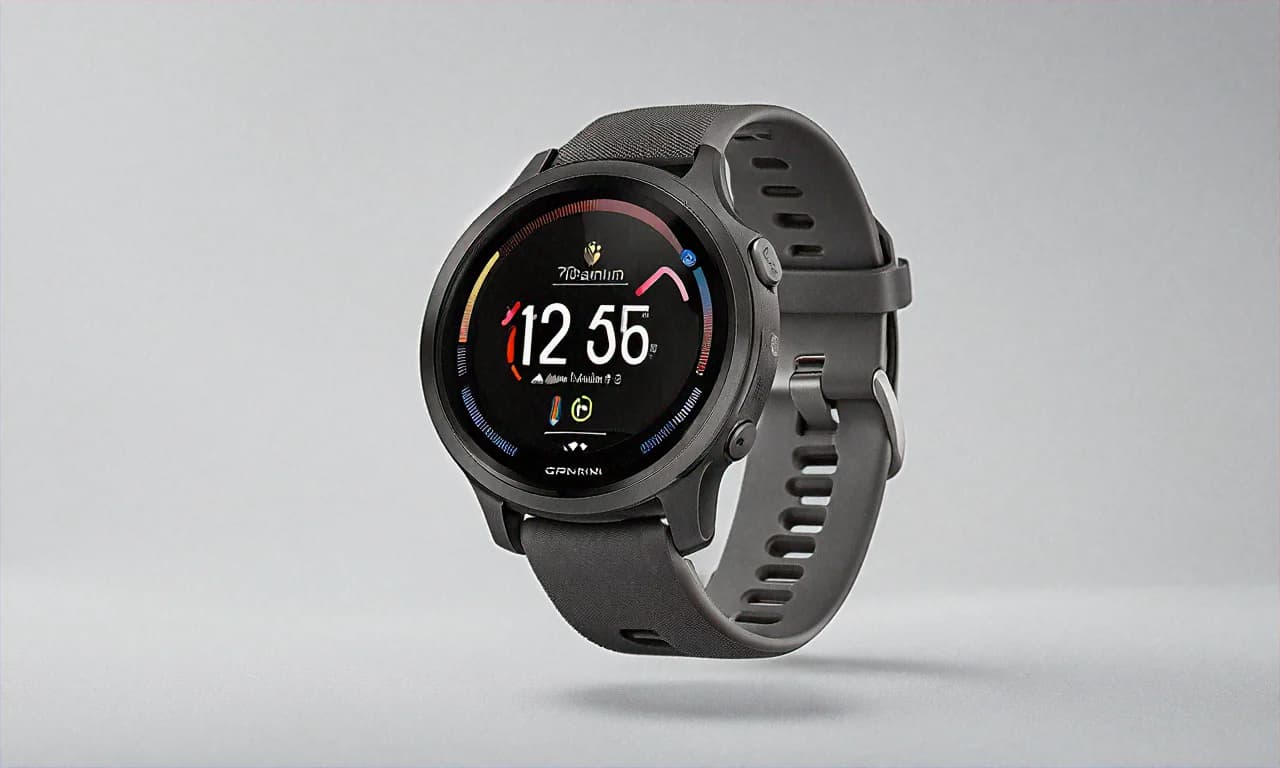
The 1.4-inch AMOLED display running at 454x454 resolution is one of the best screens I've ever seen on a smartwatch. And I don't say that lightly. The colours are rich, the blacks are deep, and text is crisp and readable at any angle. Garmin used to be known for dull, washed-out MIP displays that were functional but ugly. A Venu 3 fixes that completely.
Under Hyderabad's brutal afternoon sun, the screen remains readable without any strain. The auto-brightness adjusts well, though I did bump up the minimum brightness a notch in settings because the default felt a bit dim indoors. That always-on display mode is a lifesaver — you get a simplified watch face that shows the time and basic stats without lighting up the full AMOLED panel, which helps preserve battery.
The stainless steel bezel around the display looks and feels premium. Garmin has used Corning Gorilla Glass 3 for protection, and while that isn't sapphire crystal, it has held up well against daily wear. No scratches yet, and I'm not particularly careful with it. Each 45mm case is definitely on the larger side. If you have a thin wrist, it might look a bit chunky. On my wrist, it sits nicely — substantial without being obnoxious. Every watch weighs 35 grams without the strap, which is lighter than it looks.
Body Battery — The Feature That Changed How I Plan My Days
Okay, I need to talk about this because it's the single feature that has had the most impact on my daily life. Body Battery is Garmin's proprietary energy monitoring system. It gives you a score from 0 to 100 based on your sleep quality, stress levels, heart rate variability, and activity. High number means you have energy to burn. Low number means you're running on fumes.
I was sceptical at first. Sounds gimmicky, right? But after two weeks of wearing the watch, I started noticing patterns. On days when I slept well and my Body Battery showed 80+ in the morning, I genuinely felt more energetic and productive at work. On days when it showed 40-50 — usually after a late night or a stressful day — I could feel the difference in my energy levels. The correlation between the number and how I actually felt was surprisingly accurate.
Here's how I've started using it practically. If my Body Battery is high in the morning, I schedule my harder workout for that day — a longer run or a strength session. If it's low, I either take a rest day or do a light yoga session. I used to push through fatigue because I thought consistency meant working out every single day regardless of how I felt. That approach left me injured twice last year. The Body Battery data has made me smarter about when to push and when to rest.
My colleague at work thinks I'm crazy for letting a watch decide when I exercise. But he is also the guy who pulled a hamstring trying to run 10K on four hours of sleep, so I'll take the watch's advice over his, thanks.
Sleep Tracking That Actually Taught Me Something
I've used sleep tracking on an Apple Watch, a Fitbit, and a Mi Band before. They all tell you how long you slept, show you some stages, and give you a score. The Garmin Venu 3 does all of that but also adds a few things that make a real difference.
First, nap detection. This watch actually recognises when you take a nap during the day and logs it separately. I take a 20-minute post-lunch nap most Saturdays (don't judge me, it's basically an Indian tradition), and the Venu 3 catches it every time. It even shows how the nap affected my Body Battery — usually a nice 10-15 point boost. Apple Watch doesn't do this. Samsung doesn't do this. As far as I know, only Garmin does.
Second, the sleep coaching feature. Based on your recent sleep data, it gives you a personalised sleep schedule and actionable tips. Nothing mind-blowing — stuff like "maintain a consistent bedtime" and "reduce screen time before bed" — but seeing it tied to your actual data makes it more persuasive than generic advice. My sleep score has improved from an average of 62 to about 74 over the past month, partly because I've been following the coaching suggestions and partly because I stopped doomscrolling Instagram at midnight. The watch didn't make me stop, but seeing the data made me want to stop.
Heart rate variability (HRV) tracking is the other sleep-related feature worth mentioning. HRV is a measure of the variation in time between heartbeats, and it's increasingly recognised as an indicator of overall health and recovery. The Venu 3 tracks your HRV overnight and shows you trends over time. Mine has been gradually improving since I started being more disciplined about sleep and exercise, which is encouraging. It's the kind of long-term health data that you can't get from a one-time doctor visit.
Fitness Tracking — Where Garmin Is in a League of Its Own
I'm going to say something that might be controversial: no other smartwatch brand comes close to Garmin for fitness tracking. Not Apple. Not Samsung. Not Amazfit. Garmin has been doing this for decades, and the depth of their fitness features shows it.
Running
I run about 4 times a week, typically 5-7 km runs around KBR Park in Hyderabad. The Venu 3's multi-band GPS locks on within seconds — literally 5-10 seconds, compared to the 30+ seconds my Apple Watch used to take. Our route tracking is incredibly accurate. I ran the same route with the Garmin and a friend's Forerunner 265, and the distance readings were within 20 metres of each other over a 6 km run. That's impressive.
Running dynamics gives you data on cadence, stride length, and ground contact time. This level of detail is normally reserved for Garmin's higher-end Forerunner and Fenix models or requires an external sensor. On the Venu 3, you get it from the wrist. It helped me identify that my cadence was too low on easy runs — I was taking long, lazy strides instead of quicker, shorter ones. Adjusting this small thing made my runs feel noticeably more comfortable and reduced the knee pain I used to get after longer runs.
Garmin Coach is a built-in adaptive training program that creates personalised running plans for 5K, 10K, and half marathon goals. You pick a coach, set your target race date, and it generates a week-by-week training plan that adjusts based on your performance. I'm currently using it to train for a 10K event in Hyderabad this December, and having the day's workout appear on my watch each morning removes the mental load of figuring out what to do.
Swimming
I swim once a week at the pool in my apartment complex. Pool swimming tracking on the Venu 3 is excellent — it auto-detects stroke type, counts laps accurately, and gives you metrics like SWOLF score (a measure of swimming efficiency). It even detects rest intervals between sets. Compared to my old Apple Watch, which would occasionally miscounting laps by one or two, the Garmin has been spot-on every time.
Strength Training and Yoga
The animated on-screen workouts are a neat feature. You can download workout routines from Garmin Connect and they display animated exercise demonstrations on the watch screen. It isn't the same as having a trainer next to you, but for remembering proper form during exercises you don't do often, it is helpful. The yoga tracking detects when you transition between poses and logs the session accordingly.
Smart Features — Better Than Expected, But Not Quite There
This is the area where Garmin still lags behind Apple and Samsung, but the Venu 3 has made big improvements.
Bluetooth calling works. You can answer and make calls directly from the watch when your phone is connected via Bluetooth. The speaker and microphone quality is okay — I wouldn't have a long conversation on it, but for answering a quick call while my hands are full with grocery bags from D-Mart or during a run, it's functional. Call quality through the Venu 3 isn't as clear as on an Apple Watch or Galaxy Watch, but it gets the job done.
Music storage is a genuine killer feature. The watch stores up to 650 songs locally, so you can go for a run without your phone and still have music. You can sync playlists from Spotify (premium required), Amazon Music, or Deezer. I've a Spotify playlist synced to the watch, and with my Bluetooth earphones connected, I can run phone-free. This alone was something my Apple Watch GPS could not do (the Apple Watch needs cellular for streaming without a phone, or you need to manually sync music through the Watch app, which is clunkier).
Notifications come through from all phone apps, and you can read them on the watch. Replying is limited to pre-set quick replies and voice-to-text, which works but isn't as smooth as Samsung or Apple's implementations. There's no app store in the traditional sense — Garmin has the Connect IQ store, which has watch faces, data fields, and some basic apps, but nothing close to the Google Play Store or Apple's App Store. You will not be running WhatsApp or Google Maps on this watch. If smart features are your primary concern, this isn't the watch for you.
One annoying thing — no NFC payments in India. Garmin Pay exists, but it isn't supported by Indian banks. This is frustrating because the hardware is there. Samsung and Apple both offer NFC payments in India, but Garmin has not partnered with Indian banks yet. Come on, Garmin. Figure this out already.
Battery Life — The Garmin Advantage
And here we arrive at the thing that makes people switch to Garmin and never look back. Battery life.
Fourteen days. In smartwatch mode. Not some stripped-down battery saver mode. Regular, everyday smartwatch mode with notifications, heart rate monitoring, Body Battery, and stress tracking. Fourteen days.
Let me put that in context. The Apple Watch Series 10 lasts 18 hours. My Samsung Galaxy Watch FE lasts about 30 hours. Your Garmin Venu 3 lasts 14 days. That isn't a typo. That isn't a mistake. You charge this watch on a Sunday night, and you don't think about charging again until the following Saturday. Maybe even Sunday.
With the always-on display turned on, battery life drops to about 5-6 days. Still dramatically better than any Apple or Samsung watch. In GPS mode during outdoor workouts, you get about 26 hours of continuous tracking. For a long trek — say, a 3-4 day trip in the Himalayas or the Western Ghats — you can track GPS activities daily and still come back with battery to spare. Try that with an Apple Watch.
I went on a weekend trip to Coorg last month — left on Friday morning, came back Sunday evening. I tracked two hikes and multiple walks using GPS. I used the watch for notifications, sleep tracking, and Body Battery the entire time. When I got back to Hyderabad on Sunday evening, the battery was at 41%. I didn't even carry the charger. That's liberating in a way that's hard to describe until you experience it.
The practical impact is that you stop thinking about your watch's battery. It just works. Every morning, you wake up, and it has tracked your sleep, and there's still plenty of battery left. You never have that moment of panic where you realise your watch is dead because you forgot to charge it. For someone who has spent years managing Apple Watch charging routines, this felt like being let out of a cage.
Who Is This Watch For?
The Garmin Venu 3 is for people who take fitness and health seriously and want the deepest possible insights from their wrist. It is for runners, swimmers, cyclists, trekkers, and gym-goers who want training plans, recovery advice, and detailed performance metrics. It's for people who are tired of charging their watch every single night. For me, it's for people who value health data over having WhatsApp and Google Maps on their wrist.
It isn't for people who want a mini-smartphone on their wrist. What isn't for people who prioritize third-party apps and NFC payments. And at ₹42,990 — even with the Croma discount — it isn't for people on a tight budget. This is a premium product with premium pricing.
If you're an Apple Watch user who's curious but scared to switch — I get it. The Apple Watch does smart features better. Garmin does fitness better. It depends on what matters more to you. For me, after two months with the Venu 3, I'm not going back to Apple. A battery life alone is reason enough, and the depth of fitness tracking has legitimately improved my workouts and sleep habits.
Buying Advice
Croma's ₹42,990 with the HDFC bank offer bringing it to ₹40,990 is the best deal available right now. Amazon India occasionally matches the Croma price but rarely offers the additional bank discount on Garmin products. Garmin's own India website sells at MRP. If you're in a city with a Croma store, go try it on first — the 45mm size isn't for everyone, especially if you have a smaller wrist. You might prefer the Venu 3S, which is the 41mm version with the same features in a smaller case.
Also, don't buy a Garmin without downloading the Garmin Connect app first and exploring it. The app is where most of the data analysis happens, and it's excellent — detailed dashboards, long-term trend tracking, training status insights, and a social feed where you can connect with friends. Half the Garmin experience is in the app, so make sure you're comfortable with it before investing this much.
If fitness is your priority and you can afford the price, the Garmin Venu 3 is the best fitness smartwatch you can buy in India today. The AMOLED display makes it a proper daily wear watch, the battery life eliminates charger anxiety, and the health and fitness features are in a class of their own. That ₹10,000 discount on Croma just makes the timing right.