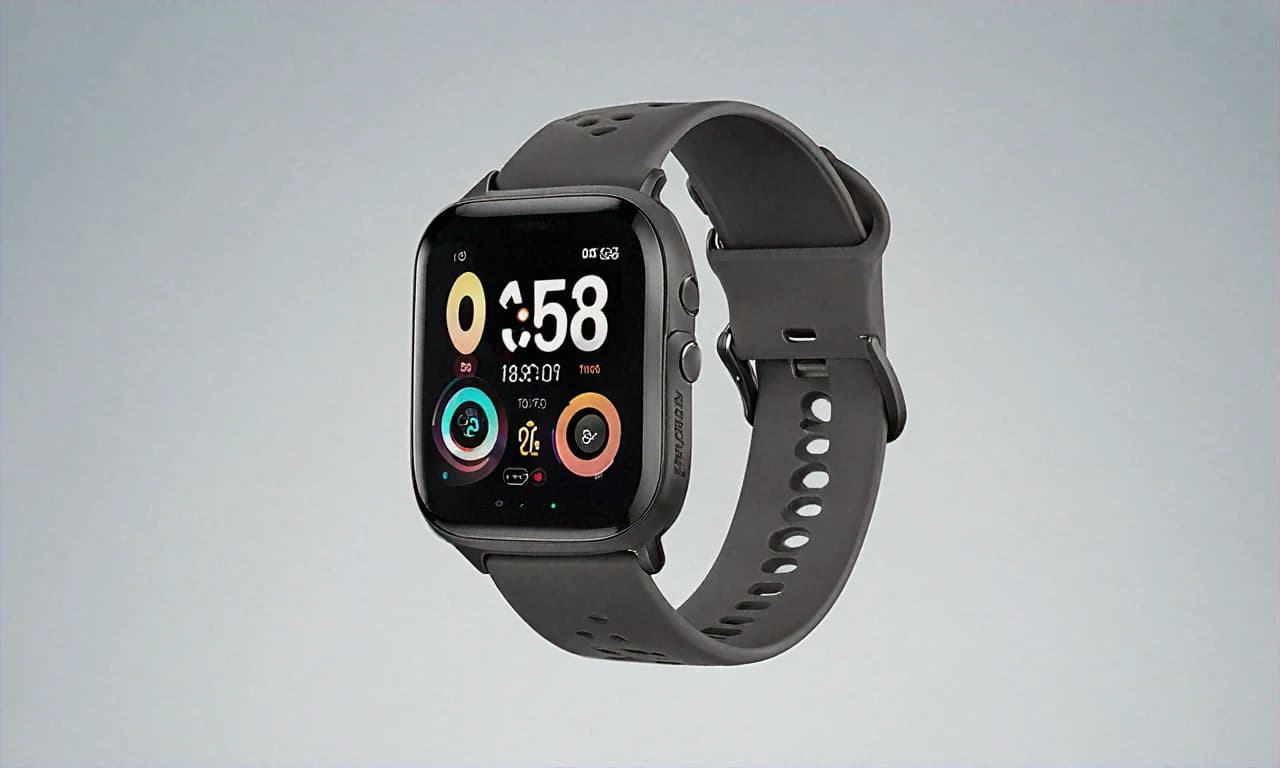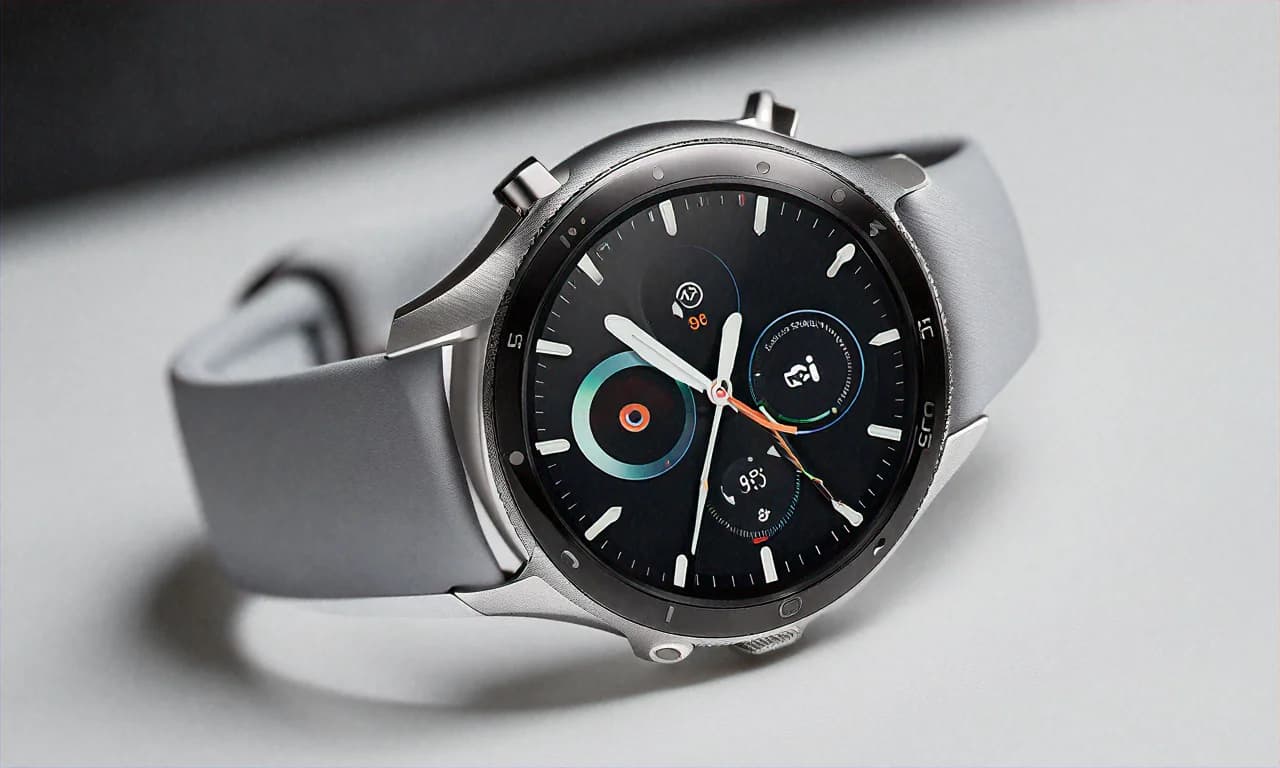
Samsung Galaxy Watch 7 — The Smartwatch That Made Me Stop Ignoring My Wrist
Smartwatches in India used to be a two-horse race — Apple Watch or bust. If you were on Android, you were stuck choosing between a handful of overpriced Wear OS devices that froze every time you tried to open Google Maps, or a sub-₹5,000 fitness band masquerading as a "smartwatch." Then Samsung showed up with the Galaxy Watch series, and things started to shift.
The Indian smartwatch market has gone through a strange evolution over the past three years. Noise and boAt absolutely dominate the budget segment — walk into any college campus and you'll see their rectangular screens on every other wrist. And fair enough, they're cheap, they track steps, and they look decent from a distance. But try to do anything beyond checking your heart rate or reading a notification preview, and you hit a wall. No apps. No payments. No real OS to speak of. They're glorified notification mirrors, and everyone kind of knows it but nobody says it out loud because the price is right.
The mid-range, though — that's where things get interesting. And that's where the Galaxy Watch 7 has quietly planted its flag. It's not trying to compete with the ₹2,999 Noise ColorFit. It's playing a different sport entirely.
Wear OS 5 and Why the App Ecosystem Actually Matters Now
I'll be honest — I've been burned by Wear OS before. The early days were rough. Laggy interfaces, apps that crashed, battery life that barely lasted till dinner. But Wear OS 5 on the Galaxy Watch 7 is a really different experience. Samsung's Exynos W1000 chip is doing the heavy lifting here. Apps open fast. Transitions are smooth. I haven't had a single freeze in three weeks of daily use, which is more than I can say for my experience with the Galaxy Watch 4 a couple of years ago.
The app selection has matured significantly. Google Maps with turn-by-turn navigation on your wrist sounds like a gimmick until you're on a two-wheeler in Bangalore traffic and can't keep pulling out your phone. YouTube Music lets you download playlists for offline listening during workouts — I loaded up about 2GB of songs and went for a run without my phone. It worked. Spotify's watch app has also improved, though it still occasionally loses connection when you move between Wi-Fi and Bluetooth.
There's also Zomato and Swiggy watch apps now, which I didn't expect to use but actually find handy for tracking delivery status without unlocking my phone. It's these small quality-of-life things that separate a real smartwatch from a fitness tracker with delusions of grandeur.
Google Pay Tap-to-Pay — Does It Actually Work in India?
This was the feature I was most skeptical about, and the one that surprised me the most. Google Pay on the Galaxy Watch 7 uses NFC for contactless payments, and yes, it works at more places in India than I expected. I tested it at CCD on Indiranagar 12th Main — tapped, paid, got my cappuccino. Worked first try. Tried it at Starbucks in Koramangala — same thing, no issues. The barista didn't even blink, which tells me people are doing this more often than I thought.
I also got it working at a Big Bazaar self-checkout and at a Decathlon store. Where it didn't work: my local kirana store (obviously), a couple of smaller restaurants that still use the old swipe-only machines, and one Reliance Fresh where the terminal was technically NFC-capable but the staff had no idea how to enable it.
The setup process is a bit involved — you need to add your card through the Google Wallet app on the watch, which requires your phone to be nearby. It took me about ten minutes and one failed attempt before everything synced properly. But once it's set up, it just works. I've been leaving my wallet at home on short trips to the store, which feels both liberating and slightly terrifying.
One thing to note: this only works with supported banks. Axis Bank, HDFC, SBI, ICICI — the major ones are covered. But if you're with a smaller regional bank, you might be out of luck for now.
Health Tracking — Can Your Doctor Take It Seriously?
Samsung's BioActive sensor is doing triple duty here — heart rate, blood oxygen (SpO2), and stress levels, all measured continuously throughout the day. The heart rate tracking has been consistent with my chest strap monitor during workouts, usually within 2-3 BPM. During resting periods, it matches almost exactly. That's good enough for fitness purposes, and honestly better than I expected from an optical wrist sensor.
Blood oxygen readings are where things get more variable. I compared the Watch 7's SpO2 readings against a medical-grade pulse oximeter over five consecutive days. The watch was typically 1-2% lower than the oximeter, which is within acceptable margins. But occasionally — maybe once every couple of days — I'd get a reading that was 4-5% off. Usually this happened when the watch had shifted position on my wrist or when my hands were cold. Tightening the band and waiting a minute usually fixed it.
Would a doctor take these readings seriously? I actually asked mine during a routine checkup. His answer was diplomatic: "It's useful for trends. If your heart rate is consistently elevated over a week, or your SpO2 keeps dropping at night, that's worth investigating. But I wouldn't diagnose anything based on a single watch reading." That feels like a fair assessment. The Galaxy Watch 7 isn't a medical device. It's a really good early warning system.
The body composition analysis — which measures body fat percentage, skeletal muscle mass, and water percentage using bioelectrical impedance — is harder to validate without proper medical equipment. I've seen my body fat readings fluctuate between 18% and 22% depending on the time of day and how hydrated I am. Take it as a rough guide, not gospel.
Sleep Tracking Through a Week of Terrible Sleep
I tested sleep tracking during a particularly bad week — I was working on a project deadline, going to bed at wildly different times, and getting anywhere between four and eight hours of sleep. This was unintentional but turned out to be a great stress test for the Watch 7's sleep algorithms.
Night one: went to bed at 1:30 AM, woke up at 6:15 AM. The watch correctly identified my sleep window, detected two REM cycles, and noted that I was restless between 3 AM and 4 AM (accurate — I remember checking my phone). It gave me a sleep score of 54, which felt harsh but fair.
Night two: fell asleep on the couch at 10 PM watching a show, woke up, moved to bed at midnight, slept till 7 AM. The watch detected both sleep periods separately and combined them in the morning summary. The couch nap was classified as "light sleep" and the bed session had a mix of deep and REM sleep. I was mildly amazed that it caught the transition.
By night five, the watch was sending me "sleep consistency" warnings and suggesting I aim for a more regular bedtime. It wasn't wrong. The sleep coaching feature in Samsung Health gives you a "sleep animal" based on your patterns — I was classified as an "Exhausted Shark," which sounds about right for that week.
The snoring detection feature requires your phone to be on your nightstand with the Samsung Health app running. I set it up one night and it recorded 23 minutes of snoring. My partner confirmed this was, if anything, an undercount. Humbling.
Battery Life and Daily Use
Samsung claims up to 40 hours of battery life. In practice, with always-on display enabled, continuous heart rate monitoring, sleep tracking, and maybe 30 minutes of GPS-tracked exercise per day, I was getting about 28-30 hours. That's a charge-every-night situation, which is fine — I charge it while I shower and get ready in the morning, and it's back to 80-90% in about 40 minutes with the included magnetic charger.
If you turn off the always-on display and reduce the health monitoring frequency, you can stretch it closer to Samsung's claimed numbers. But honestly, those features are why you're buying this watch. Running it in battery saver mode defeats the purpose.
The Flipkart Deal and How It Compares
The Galaxy Watch 7 is currently listed at ₹23,499 on Flipkart, down from an MRP of ₹31,999. That's a 27% discount, which is solid. If you have an Axis Bank credit card, there's an additional ₹2,000 instant discount, bringing the effective price to ₹21,499. There's also an exchange offer — I saw up to ₹3,000 for an old smartwatch, though the valuation depends on condition.
Let's compare this with the competition. The Apple Watch SE 2nd gen sits around ₹24,900 and is the closest alternative if you're in the Apple ecosystem. It's a fine watch, but you lose the always-on display, blood oxygen monitoring, and body composition analysis. And obviously, it doesn't work with Android phones at all. If you're an iPhone user reading this review, the Apple Watch SE is your default choice — but if you're on Android, it's not even in the conversation.
The Amazfit GTR 4 is the budget alternative at around ₹12,999. It has good hardware, a nice AMOLED display, and battery life that'll last you a week without thinking. But it runs Zepp OS, which means no Google apps, no NFC payments, and a much smaller app library. If you just want fitness tracking and notifications, the GTR 4 is great value. If you want a watch that can actually do things independently — handle, pay, play music, respond to messages — the Galaxy Watch 7 is in a different league.
There's also the Pixel Watch 3 to consider if you want the purest Wear OS experience, but availability in India is spotty and the price is higher for what you get in terms of hardware.
What Works, What Doesn't
The 1.3-inch Super AMOLED display on the 44mm variant is bright and readable outdoors. I had no trouble checking notifications in direct sunlight during my afternoon walks. The touch response is accurate, and Samsung's One UI Watch interface makes sense once you spend a day with it. Rotating the digital bezel to scroll through widgets feels natural — it's a small thing, but it makes the watch feel more tactile and less like you're just jabbing at a tiny screen.
The notification handling is where I have mixed feelings. All your phone notifications show up on the watch, which is great in theory. In practice, I get so many notifications — WhatsApp groups, email, news alerts, app updates — that my wrist was buzzing every few minutes for the first two days. I ended up spending 20 minutes in the settings, selectively turning off notifications for apps I don't need on my wrist. Once I did that, it became much more manageable. Quick replies work well for WhatsApp and Messages, with a small keyboard that's surprisingly usable for short responses. Voice-to-text is faster, though it occasionally garbles Hindi words mixed into English sentences.
The workout tracking covers all the basics — running, cycling, swimming, gym workouts — and auto-detects walking and running without you needing to start a session. GPS lock is fast, usually under 10 seconds outdoors. I tracked a 5K run and compared the GPS trace with my phone's — they matched almost perfectly, with the watch showing 5.03 km versus the phone's 5.01 km.
Who Should Buy This?
The Galaxy Watch 7 makes the most sense for Samsung phone owners — you get features like gesture controls, camera viewfinder access, and notification sync that work best within the Samsung ecosystem. But unlike the Apple Watch, it works perfectly well with any Android phone running Android 11 or above. You just lose a few Samsung-specific features.
If you're coming from a budget smartwatch or fitness band, the jump in capability is enormous. If you're coming from an older Galaxy Watch, the speed improvement alone justifies the upgrade. And if you've been an Apple Watch user who recently switched to Android — this is the closest thing you'll find to that level of polish on the other side.
At ₹23,499 on Flipkart — and potentially lower with bank offers — it's the best value Android smartwatch available in India right now. Not the cheapest. Not the most feature-packed. But the best balance of performance, ecosystem, health tracking, and build quality at a price that doesn't make you wince.
I still check my phone for notifications out of habit, which probably says more about me than the watch.