Why the Galaxy Watch FE Might Be the Smartest Purchase Under ₹15,000
Okay, so Samsung has done something really interesting with the Galaxy Watch FE. They have basically taken the guts of their older flagship Galaxy Watch models, put them in a slightly updated body, slapped the "Fan Edition" label on it, and priced it to move. At ₹13,999 on Flipkart — down from an MRP of ₹19,999 — this is a 30% discount on what I'd argue is the most capable smartwatch you can buy in this price range if you are an Android user.
And the deals don't stop at the sticker price. Flipkart Axis Bank credit card holders get an additional 5% cashback, which saves you another ₹700 or so. SBI credit card users can grab an extra ₹750 instant discount during ongoing sales. There's also a no-cost EMI option starting at ₹2,334 per month, which honestly makes this an impulse buy for a lot of people. I mean, ₹2,334 a month for six months to get a proper Wear OS smartwatch? That's less than what most of us spend on Swiggy in a week.
I've been using the Galaxy Watch FE for about six weeks now, and I've a lot of thoughts. Some good, some mildly frustrating, and a couple of things that legitimately surprised me. Let me walk you through all of it.
Build and Design — It Looks More Expensive Than It Is
The first thing that struck me was the weight. Or rather, the lack of it. At 26.6 grams without the strap, this thing is feather-light. I was wearing a regular analog Titan watch before this — nothing fancy, just a daily driver — and the Galaxy Watch FE feels like wearing nothing on your wrist. That sounds like marketing talk, but I mean it literally. After about an hour, I forgot it was there.
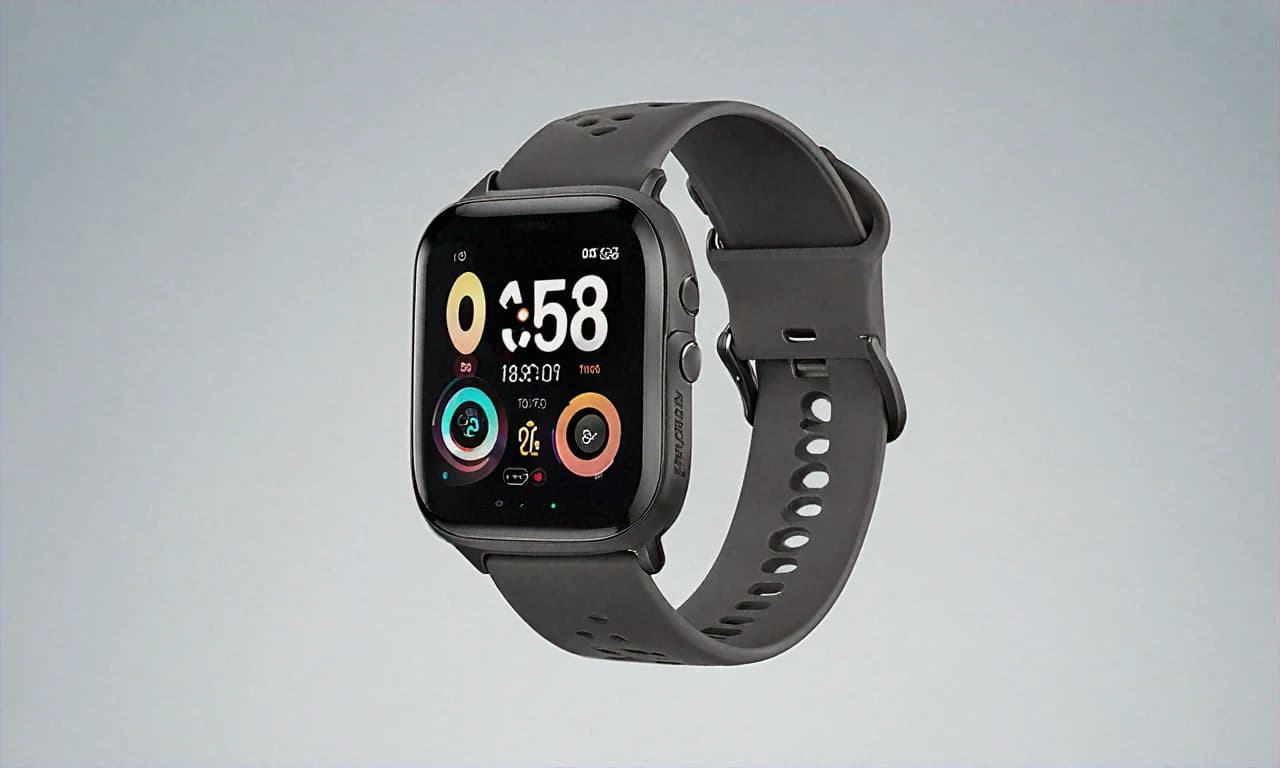
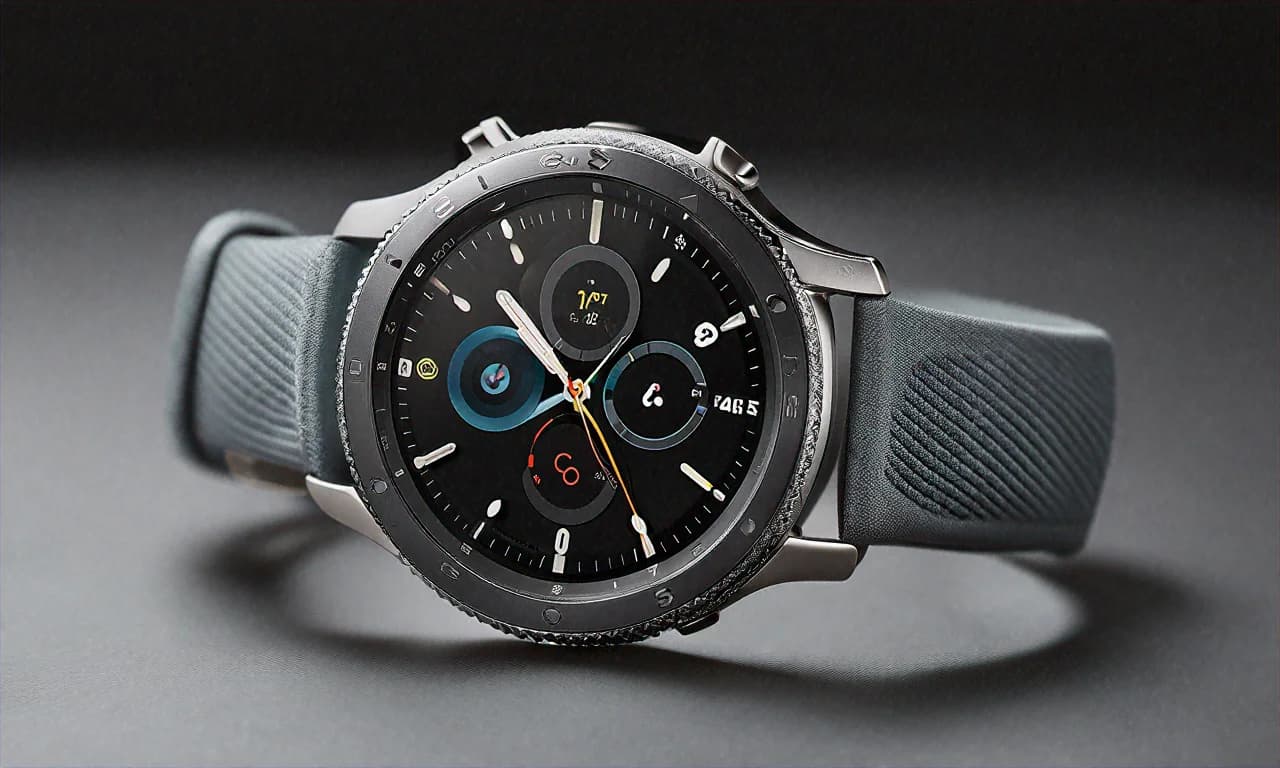
The 40mm round case has a clean, minimalist look. Samsung has gone with aluminium for the body, and it does feel premium when you handle it. The colour options are nice too — I went with the Black, but the Pink Gold one is really pretty if you're into that sort of thing. My sister is eyeing it for her birthday, actually. The Silver is a safe, classic choice that goes with everything.
Now, here's something that pleasantly surprised me — sapphire crystal glass over the display. At ₹13,999. Let that sink in for a moment. Most watches at this price use tempered glass or Gorilla Glass. Samsung is using the same sapphire crystal that you find on watches costing ₹40,000 and above. What this means in practice is scratch resistance. I've been wearing this watch daily — cooking, commuting in Mumbai local trains, working out — and there isn't a single micro-scratch on the screen. With tempered glass, I'd have had at least a few hairline scratches by now.
Water resistance is rated at 5ATM plus IP68, which means swimming is absolutely fine. I've worn it in the pool at my gym twice, and it handled it without any issues. Showering with it on? No problem at all. Just avoid hot water — Samsung recommends against hot tubs and saunas, which, to be fair, isn't something most of us in India are regularly dealing with.
That 1.2-Inch Super AMOLED — Small but Gorgeous
The display is a 1.2-inch Super AMOLED panel running at 396x396 resolution. Let me start with the good stuff. The colours are stunning. Deep blacks, vibrant colours, excellent contrast. Under direct sunlight — and I'm talking about Mumbai afternoon sun, not some mild European overcast — the screen is perfectly readable. Samsung's auto-brightness does a solid job of adjusting on the fly.
The always-on display feature is something I didn't think I'd care about, but now I can't imagine going back. Just glancing at my wrist and seeing the time without having to flick my wrist or tap the screen feels natural. Like a regular watch. The always-on mode uses a dimmed version of your watch face, and the battery impact is noticeable but manageable. More on battery later.
Now, the not-so-good part. 1.2 inches is small. If you have large hands or if you're coming from a bigger smartwatch — even something like the 1.4-inch Amazfit or the larger Galaxy Watch models — the Galaxy Watch FE screen will feel a bit cramped. Reading longer WhatsApp messages requires scrolling. Typing responses using the keyboard is technically possible but practically painful. I gave up on the keyboard after two days and switched to voice replies and quick responses. That said, for notifications, health stats, and quick interactions, 1.2 inches is perfectly adequate. I just wish Samsung had offered a 44mm option as well.
Health Features That Have No Business Being This Good at ₹14K
This is where the Galaxy Watch FE really blew me away. Samsung hasn't held back on the health sensors at all. You get everything that the pricier Galaxy Watch models offer in terms of health tracking, and I'm not exaggerating.
Body Composition Analysis — The Standout Feature
The BIA-based body composition analysis is something you typically only find on Samsung's premium watches and dedicated smart scales. It measures skeletal muscle mass, fat mass, BMI, body water percentage, and basal metabolic rate. You just touch the two side buttons with your fingers for about 15 seconds, and it gives you a reading.
Now, how accurate is it? I compared it with readings from a body composition scale at my gym, and the numbers were in the same ballpark. Not exactly matching — the fat percentage was about 1.5% different, and the muscle mass was off by about 0.3 kg — but close enough to be useful for tracking trends over time. And that's really the point. You aren't using this for clinical measurements. You're using it to see if your diet and exercise are moving things in the right direction over weeks and months. For that purpose, it works really well.
I've been tracking my body composition weekly since I got the watch, and it has actually motivated me to be more consistent with my workouts. Seeing the fat percentage drop by even 0.5% over two weeks is satisfying in a way that just stepping on a regular weighing scale isn't. It gives you a more nuanced picture of what's actually happening in your body.
Heart Rate, SpO2, Stress, and Sleep
The optical heart rate sensor works well throughout the day. Continuous monitoring catches resting heart rate trends, workout heart rate zones, and irregular rhythm alerts. I cross-checked with a pulse oximeter a few times and the readings were consistently within 2-3 BPM, which is perfectly acceptable.
SpO2 tracking is there, and I'll be honest — I don't check it much anymore. During the COVID years, we were all obsessed with blood oxygen levels. Now? I glance at it occasionally. The readings have always been in the 95-99% range for me, which is normal. If you have a condition that requires monitoring blood oxygen, this sensor does a decent job, but it isn't medical-grade.
Stress monitoring uses heart rate variability to estimate your stress levels throughout the day. The guided breathing exercises that pop up when stress is high are actually calming, though I feel silly doing deep breathing exercises at my desk in the office. The feature works best as a retrospective tool — looking at your stress trends at the end of the week gives you a picture of which days were rough and which were relaxed. During the month-end crunch at work, my average stress scores were noticeably higher, which tracked with reality.
Sleep tracking is genuinely excellent. It detects when you fall asleep and wake up, tracks light, deep, and REM sleep stages, and gives you a sleep score. The sleep coaching feature offers personalised tips based on your patterns. I discovered that I get much better deep sleep when I stop looking at my phone at least 30 minutes before bed — which, yeah, my grandmother could have told me that without a smartwatch, but seeing the data made me actually listen.
Wear OS and the App Situation
The Galaxy Watch FE runs Wear OS powered by Samsung with One UI Watch 5.0. This is important because it means you have access to the Google Play Store on your wrist. You can download Google Maps for turn-by-turn navigation, YouTube Music for offline playlists, WhatsApp for messaging, Spotify, Strava, and a bunch of other apps. This is a huge advantage over watches running proprietary operating systems like Amazfit or Noise, where you're limited to whatever the manufacturer provides.
The Exynos W920 processor handles daily tasks smoothly enough. Opening apps takes a second or two, scrolling is smooth, and I've not experienced any crashes or freezes. Is it as fast as the newer Exynos W1000 in the Galaxy Watch 7? No. But for the vast majority of interactions — checking notifications, starting a workout, making a call — you won't notice the difference. The processor shows its age slightly when loading heavier apps or when you try to multitask aggressively, but those situations are rare in normal daily use.
One thing I really appreciate is Samsung Pay with NFC. You can make contactless payments directly from your wrist at any UPI or NFC-enabled terminal. I've used it at a few places in Mumbai — some of the bigger stores and cafes support it. It isn't as widely accepted as UPI QR code payments, but when it works, it feels incredibly cool. Tap your wrist, payment done. The future is here, except it only works at like 30% of places I shop at. But that number is growing.
Google Assistant integration works but is a bit slow to respond sometimes. Samsung's own Bixby is also available and honestly responds faster on the watch, but the things I ask Bixby are limited to setting timers and alarms because its natural language understanding is still not great. Google Assistant handles complex queries better. You win some, you lose some.
Workout Tracking — More Than Enough for Most People
Over 100 workout modes. Automatic detection for running, walking, cycling, swimming, and elliptical training. The auto-detection kicks in after about 10 minutes of activity, which is a bit slow — by the time it detects my evening walk, I've already covered a good chunk of it. I've gotten into the habit of manually starting workouts, which solves that problem.
GPS accuracy is good but not Garmin-level. For my usual 5 km running route around Powai Lake, the Galaxy Watch FE tracked the distance within about 50-100 metres of what my running buddy's Garmin showed. For casual fitness tracking, that's perfectly fine. If you're training for a marathon and need pinpoint accuracy for pace and distance, you might want to look at something from Garmin or a higher-end Samsung model with dual-band GPS.
Heart rate zones during workouts are useful for training. The watch vibrates when you move between zones, which helps if you're trying to stay in a specific zone for endurance training. Post-workout summaries are detailed — you get a map of your route, heart rate graph, pace charts, and estimated calories burned. All of this syncs to Samsung Health, which is a well-designed app with good data visualisation.
Battery Life — The Compromise
Samsung claims up to 30 hours of typical usage. In my experience, with the always-on display enabled, regular notifications from WhatsApp and email, a 30-minute workout, and occasional Bluetooth calling, I get about 24-26 hours. With the always-on display turned off, I can stretch it to just over 30 hours. So Samsung's claim is accurate if you're conservative with features.
Charging takes about 90 minutes from zero to full with the included charger. There's no fast charging in the traditional sense — it's slower than the Apple Watch's charging speed. But since I charge it overnight while sleeping (I track sleep on my phone on nights I need to charge the watch), it hasn't been a practical issue for me. Every other night on the charger seems to be the rhythm I've settled into.
Compared to budget watches from Noise or boAt that last a week, the Galaxy Watch FE's battery life feels short. But those watches also can't run Wear OS apps, do NFC payments, or offer the same depth of health tracking. It is a trade-off, and one I think is worth making if you want a proper smartwatch experience rather than a glorified notification mirror.
Who Should Buy the Galaxy Watch FE?
Let me be specific about this because I think the Galaxy Watch FE has a very defined sweet spot.
- Android users who want a proper smartwatch under ₹15,000. There's honestly nothing else in this price range that gives you Wear OS, Google Play Store, NFC payments, and this level of health tracking. The Pixel Watch is more expensive. The Galaxy Watch 7 is way more expensive. This is it.
- Samsung phone owners especially. The integration with Samsung Health, SmartThings, and Samsung-specific features like Camera Controller and Phone Lock works best with a Samsung phone. It works with other Android phones too, but you miss out on some features like ECG and blood pressure monitoring (those are Samsung-phone exclusive).
- People who care about body composition tracking. If BIA analysis is something that interests you and you don't want to spend ₹30,000+ on a Galaxy Watch 6 or 7, this is the most affordable way to get it on your wrist.
- Gift buyers. Seriously, the Pink Gold colour option in a nice Samsung box makes for a great Rakhi, birthday, or Diwali gift. ₹14,000 is a reasonable gifting budget, and it feels like a much more expensive product than it actually is.
Who Should Skip It?
If you want a large display — skip it, the 40mm is the only option. If you need multi-day battery life — skip it, you're looking at two days max with heavy use. If you're an iPhone user — skip it, Wear OS doesn't work with iPhones (go get an Apple Watch). And if you want LTE connectivity at this price — skip it, there's no cellular variant of the FE in India.
Flipkart vs. Other Places to Buy
Flipkart currently has the best price at ₹13,999 with the bank offers I mentioned earlier. Amazon India sometimes matches this price during sales but is currently a bit higher. Samsung's own website sells it at MRP with occasional exchange offers. If you're buying offline, Croma and Reliance Digital sometimes price-match Flipkart during festival sales, and you get the added benefit of trying it on before buying.
One tip — if you're in no rush, add it to your Flipkart wishlist and enable price drop alerts. During Big Billion Days or Republic Day sales, there's a chance it drops to ₹12,000-12,500 range with stacked bank offers. But ₹13,999 is already a solid price, and I'd not wait months just to save another thousand rupees. Time is money, and you would be enjoying the watch for those extra months.
Bottom line: the Samsung Galaxy Watch FE at ₹13,999 is one of those rare products where you honestly feel like you're getting more than you paid for. It isn't perfect — the battery could be better, the screen could be bigger, and some features are locked to Samsung phones — but for the price, nothing else comes close in the Android smartwatch world. If you have been sitting on the fence about getting a proper smartwatch, this is the one to get off the fence for.