Sony WF-1000XM5 — After 6 Months of Daily Use, Here Is My Honest Take
Most earbud reviews are written after a week of use. Maybe two weeks if the reviewer is being thorough. But the Sony WF-1000XM5 has been my primary pair of earbuds for nearly six months now, and I think that kind of extended use gives me a perspective that a typical "unboxing and first impressions" review simply cannot. These are the earbuds I reach for every single morning. They have been through Mumbai rains, Delhi winters, Bangalore traffic, a two-week Goa trip, hundreds of conference calls, and probably close to a thousand hours of music. So when I tell you these are the best all-round TWS earbuds you can buy in India today, I am saying it with conviction earned through actual daily use.
Amazon India currently has them at Rs 18,990 against the MRP of Rs 24,990. That is Rs 6,000 off, and it is one of the lowest prices I have seen for these outside of the Great Indian Festival sale in October. HDFC Bank credit card users get an additional Rs 1,500 instant discount which brings the price to Rs 17,490. SBI cardholders get 5% cashback up to Rs 1,000. And there is an exchange offer where Amazon gives you up to Rs 2,000 for your old earbuds — even cheap ones. So the effective price can get to around Rs 15,490 if you stack everything. At that price, this is a steal for what many publications globally have called the best TWS earbuds in the world.
Sound Quality — Six Months Later, Still the Best I Have Heard
The WF-1000XM5 uses Sony's 8.4mm Dynamic Driver X, and the sound coming out of these tiny drivers is nothing short of remarkable. I have A/B tested them against the Bose QC Ultra Earbuds, the Sennheiser Momentum TW4, and the OnePlus Buds Pro 3. Each of those has its strengths, but the Sony strikes the best overall balance. It is detailed without being clinical. It has bass without being boomy. Vocals are clear and present without being pushed artificially forward. The soundstage — how wide and spacious the music feels — is wider than any other TWS earbud I have tried.
Let me give you some specific examples from my listening over the past few months:
- Classical Indian music (Ravi Shankar's sitar recordings): The detail in the sitar strings and the delicate tabla accompaniment is breathtaking. You can hear the room. You can hear fingers on strings. This level of detail at this size is remarkable engineering.
- Bollywood (new and old): Everything from Kishore Kumar to Arijit Singh to Diljit Dosanjh sounds excellent. The tuning is versatile enough that it handles the full range of Indian music production styles.
- Western pop and hip-hop: Bass is punchy and controlled. The Weeknd's productions sound rich and layered. Drake's 808s hit without overwhelming. Taylor Swift's latest album has so much production detail that I kept noticing things I had missed on other earbuds.
- Podcasts and audiobooks: Voices sound natural. Sibilance (that harsh "S" sound) is well-controlled. I listened to probably 200+ hours of podcasts on these and never experienced listener fatigue.
LDAC codec support at up to 990kbps means you are getting near-lossless quality over Bluetooth. The difference between LDAC and standard AAC is most noticeable on well-produced acoustic tracks and classical music. On casual pop and hip-hop at normal volumes, the difference is subtle but present if you are paying attention. Sony also has DSEE Extreme, their AI-based audio upscaling technology that analyzes compressed audio in real time and tries to restore the detail lost during compression. Does it work? I'll be real, on very heavily compressed audio (like low-quality YouTube), I think it does make a small positive difference. On already decent quality streams from Spotify or Apple Music, the effect is minimal.
The V2 integrated processor handles all of this — audio processing, ANC computation, codec decoding, DSEE upscaling — with impressive efficiency. You cannot hear any processing artifacts or distortion even at high volumes. It is clean, refined sound from the first note to the last.
Noise Cancellation — The Only Real Competition Is Bose
I am going to be direct here. In the TWS earbud world, there are two brands that do noise cancellation at a level that is clearly above everyone else: Sony and Bose. Everything else — OnePlus, Samsung, Nothing, realme — they are playing a different game. A good game, but a different one.
The WF-1000XM5 uses six microphones (three per earbud) combined with the V2 processor to deliver ANC that blocks out an enormous amount of environmental noise. On my regular Mumbai local train commute (if you have experienced the Western line during rush hour, you know), the XM5 reduced the roar of the train to a faint background hum. Conversations around me became barely audible whispers. The constant screeching of brakes at stations was reduced to a soft sound that did not make me wince.
Compared to the Bose QC Ultra Earbuds? The Bose is still marginally better at pure noise cancellation, especially in the very low frequency range (engine rumble, AC hum). But the difference is maybe 10-15% at most. In practical daily use, both deliver an experience that feels like stepping into a quiet room when you put them on. The Sony's advantage is that its ANC does not affect the sound quality as noticeably — some earbuds change the audio character when ANC is on, making things sound slightly more hollow or compressed. The Sony maintains its sound signature with ANC on or off, which I really appreciate.
The smart features around ANC are where Sony really pulls ahead of everyone. Speak-to-Chat is a feature I thought was gimmicky until I started relying on it daily. When you start talking, the music pauses and ambient sound comes through automatically. When you stop talking, the music resumes. I use this all the time — ordering chai at the office pantry, speaking to delivery guys at my door, quick conversations with colleagues. It has maybe a 1-second delay before activating, and occasionally it triggers when I clear my throat or laugh loudly, which is mildly annoying. But overall it is a feature that I would seriously miss if I switched to earbuds that do not have it.
Adaptive Sound Control learns your daily patterns and switches between ANC modes automatically. After about two weeks of use, it figured out that I want full ANC on my commute, transparency mode at the office, and ANC off when I am at home. It does not get it right 100% of the time, but it is correct often enough that I leave it on. The Auto NC Optimizer runs a quick calibration when you put the earbuds in, adjusting ANC to your current environment and ear seal. Between CustomTune on the Bose and Auto NC Optimizer on the Sony, both brands are doing ear-specific calibration, and both work well.
Comfort — The Foam Tips Make a Huge Difference
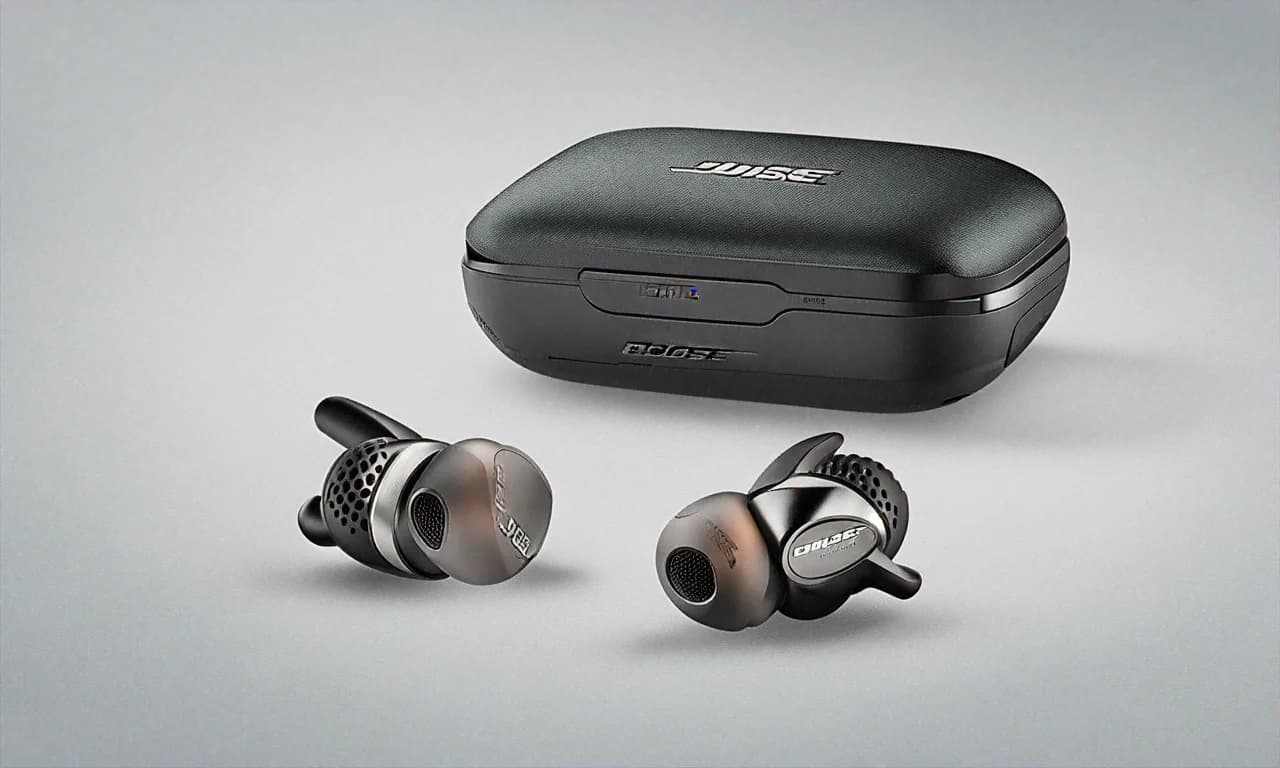
Sony includes foam ear tips with the WF-1000XM5, and they are a big part of why these earbuds sound and seal so well. Unlike silicone tips that just kind of sit in your ear, the foam compresses when you insert the earbud and then expands to fill your ear canal, creating a tight seal that improves both passive noise isolation and bass response. The comfort is excellent. At 5.9 grams per earbud, they are very light. I have worn them for 4-5 hour stretches during long work sessions without any discomfort.
Now, here is my one genuine complaint after six months. The foam tips degrade. They lose their springiness and ability to compress and expand over time. After about three months of daily use, I noticed the seal getting less tight and the bass thinning out slightly. I replaced them with a fresh set (Sony sells replacements, and third-party options are available on Amazon India for around Rs 300-500) and everything went back to normal. But this is an ongoing cost that other earbuds with silicone tips do not have. Budget about Rs 500 every three months for replacement tips. It is not a lot, but it is worth knowing.
The earbuds are significantly smaller than the previous XM4 model. They fit more flush in the ear, which means less wind interference during outdoor use and a more discreet look. The IPX4 rating handles sweat and rain splashes. I have used these during Bangalore's unexpected evening rains several times without any issues. Would not take them into the gym shower though.
The Sony Headphones Connect App — Feature Overload (in a Good Way)
Sony's app is the most feature-rich companion app in the TWS market. Period. You get a 5-band EQ with presets and custom settings. ANC level slider. DSEE Extreme toggle. Speak-to-Chat sensitivity adjustment. Adaptive Sound Control settings. Bluetooth connection quality priority (you can choose between sound quality or stable connection). Find my earbuds with a ring function. Playback controls customization. Notification settings. Service link for Sony support. It is a lot.
Is it overwhelming? A little bit, yeah. The first time you open the app, there are so many toggles and sliders that you might not know where to start. But after spending 20 minutes exploring (which I recommend doing when you first get these), you will appreciate the level of control Sony gives you. Most people will set things up once and then rarely open the app again, which is perfectly fine. The defaults are good.
One feature I want to highlight specifically: the ability to prioritize connection stability over audio quality. In crowded areas — say, the Churchgate platform during rush hour or a busy Connaught Place market — Bluetooth can get congested from all the devices around you. Switching to "stable connection" mode in the app prevents audio dropouts at the cost of slightly reduced audio quality (it uses a more robust codec). I keep this on by default because occasional audio dropouts annoy me more than a tiny quality reduction that I can barely hear anyway.
Battery, Charging, and Daily Practicalities
Battery life is rated at 8 hours per earbud with ANC on, extending to 24 hours with the case. My real-world numbers over six months: about 7 hours and 15 minutes with ANC on at 60% volume. That is close enough to Sony's claim that I am not going to complain. The case is compact — noticeably smaller than the Bose QC Ultra case — and fits easily in a jeans pocket. USB-C charging and Qi wireless charging are both supported.
Quick charge gives you 60 minutes of playback from a 3-minute charge. I have used this exactly twice in six months, both times when I forgot to charge the case overnight before a flight. It works as advertised. The case battery indicator in the app shows exact percentages, which I prefer over vague LED indicators.
The Foam Tip Issue and Other Nitpicks
I already mentioned the foam tip degradation. My other complaints are minor. The touch controls can be finicky in the rain — water drops on the earbud surface sometimes register as taps, pausing music or skipping tracks unexpectedly. This has happened to me about four or five times in six months, so it is rare, but annoying when it does happen. The earbuds also do not have multipoint Bluetooth out of the box — Sony added it via a firmware update, but the implementation is not as smooth as what Jabra or Bose offer. Switching between devices sometimes takes 3-4 seconds instead of being instant.
Call quality is good but not Jabra-level. In quiet environments, the person on the other end hears you clearly. In noisy environments, the wind noise reduction helps but background noise still gets through more than I would like. If you take a lot of outdoor calls, the Jabra Elite 10 Gen 2 is better for that specific use case.
Should You Buy These at Rs 18,990
If you want the single best all-around TWS earbud available in India and you can afford the price, yes. Without hesitation. The Sony WF-1000XM5 does everything at a high level — sound quality, ANC, comfort, smart features, battery life, app support. There is no single area where it fails or even falls significantly behind the competition. The Bose has slightly better ANC. The Sennheiser has marginally more refined sound. The Jabra has better call quality. But none of them beat the Sony in overall package.
With the HDFC discount and exchange offer, you can get these under Rs 16,000. That is OnePlus Buds Pro 3 territory price-wise, but the Sony is in a completely different class in terms of audio quality and ANC. During Diwali and Holi sales on Amazon, I have seen these drop to around Rs 15,999-16,999 without any additional bank offers, so if you are patient, you can get an even better deal.
ICICI Bank no-cost EMI is available for 3, 6, and 9-month tenures on Amazon. At 9-month EMI, that is about Rs 2,110 per month, which is very manageable. I tell everyone who asks me for earbud recommendations the same thing: if your budget stretches to Rs 18,000-19,000, get the Sony XM5 and do not look back. You will keep them for years, they will keep getting firmware updates (Sony is good about this), and every time you put them in, you will remember why you paid what you did. That has been my experience for six months, and I do not see it changing.
The only people I would steer away from these are budget-conscious buyers (the realme Buds Air 6 Pro at Rs 3,500 is insane value), people who prioritize call quality above everything (get the Jabra), or people who want the absolute most noise cancellation possible and do not care about anything else (get the Bose). For everyone else? The Sony WF-1000XM5 is the answer. It just is.