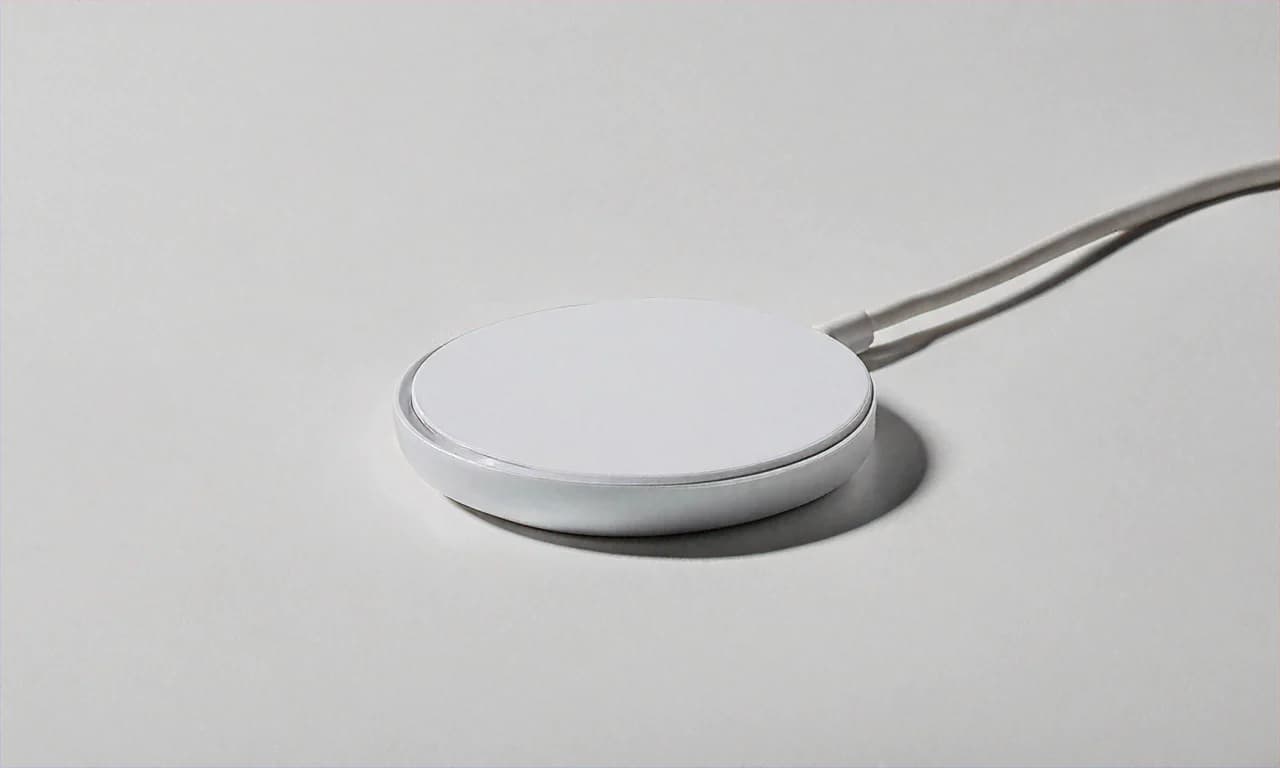
Apple MagSafe Charger at Rs 3,499 on Amazon India — Worth It in 2025?
Okay so let me start with a small confession. I was one of those people who thought wireless charging was a total gimmick. Like, why would I pay extra for something slower when I can just plug in a cable and be done with it? That was me back in 2021 when MagSafe first launched in India. And honestly? I was wrong. Dead wrong. The Apple MagSafe Charger has truly changed how I charge my iPhone, and now that Amazon India has dropped the price to Rs 3,499 — down from Rs 4,500, which is a solid 22% discount — I figured it was time to talk about whether this thing is actually worth your money.
Before we get into the details though, a quick note. Apple accessories in India are notoriously expensive compared to what people pay in the US or even in Dubai. A lot of my friends who travel bring back Apple stuff from abroad because the India pricing is just painful. So when something from Apple actually gets a decent discount on Amazon India, it's kind of a big deal. This is one of those moments.
What Exactly Is MagSafe Charging?
If you have been living under a rock — no judgment, we all have our things — MagSafe is Apple's magnetic charging system that was reintroduced with the iPhone 12 back in 2020. The idea is simple. There's a ring of magnets inside your iPhone (12 and above) and a matching ring in the MagSafe charger. When you bring them close, they snap together perfectly. No fumbling around trying to place your phone in the exact right spot on a regular Qi wireless charger. It just clicks. Literally.
The charger delivers up to 15W of wireless power to your iPhone, which is double what you get from a standard Qi charger (which tops out at 7.5W on iPhones). Now, 15W is still slower than wired charging — let me be upfront about that. If you are in a rush and need to get from 10% to 80% in like twenty minutes, you should use a cable. But for overnight charging, desk charging while you work, or just keeping your phone topped up during the day? MagSafe is actually convenient.
My Experience Using the MagSafe Charger Daily
I've been using the MagSafe charger with my iPhone 15 Pro for about eight months now, and here's what my daily routine looks like. I wake up, pick up my phone from the MagSafe charger on my nightstand — no cable to unplug, just lift the phone off. Throughout the day at my desk in my Bangalore office, I just drop my phone on the charger whenever I'm not using it. By the time I head home, my phone is sitting comfortably at 85-90% without me ever thinking about charging. That's the real magic here. You stop thinking about battery anxiety because the phone is always topping up.
Now, the magnetic alignment is genuinely satisfying. I know that sounds like a weird thing to say about a charger, but there's this little tactile snap when the magnets connect, and it just feels right. I've used cheap Qi chargers before — one from a brand I'll not name that I picked up from a Nehru Place shop in Delhi for Rs 500 — and the problem was always alignment. I'd place my phone on it, walk away, and come back an hour later to find it hadn't charged at all because the coils weren't lined up. With MagSafe, that problem literally doesn't exist. The magnets do the work for you.
Charging Speed — The Honest Truth
Let me be real here because I see a lot of tech blogs in India sugar-coating this. MagSafe at 15W isn't fast. It's convenient, but it isn't fast. From 0 to 50% on my iPhone 15 Pro takes about 80-90 minutes. From 0 to 100% is roughly two and a half hours. Compare that to the 20W wired charger that gets you to 50% in about 30 minutes. So yeah, if speed is your number one priority, MagSafe isn't the answer.
But here's the thing — speed isn't the point. The point is that you never have to think about it. I charge my phone wirelessly while I sleep, while I work at my desk, while I'm watching a show on my laptop. The phone is always on charge when I'm not using it. And that constant trickle charging means I never actually hit those scary low battery numbers anymore. My phone hasn't been below 20% in months.
One more thing about charging speed that nobody talks about. Apple throttles MagSafe charging when the phone gets warm. If you're using your phone while it's on the MagSafe charger — like watching YouTube or browsing Instagram — the charging speed drops to maybe 10W or even 7.5W. This is by design to protect the battery, but it's still annoying. During summer months here in India, especially if you're in a city like Nagpur or Chennai where it gets brutally hot, you will notice the phone warming up faster on MagSafe. Keep that in mind.
Build Quality and What You Get in the Box
Apple being Apple, the packaging is minimal. You get the MagSafe charger itself and some documentation. That's it. No power adapter in the box. Classic Apple move, right? They want you to buy the 20W USB-C adapter separately for another Rs 1,900 or whatever it costs now. You do need a USB-C adapter to power this thing, and Apple recommends at least 20W for full speed. If you have a USB-C adapter lying around from your iPad or MacBook, that works perfectly fine.
The charger itself has a clean, white design with an aluminium underside that gives it some weight and helps with heat dissipation. The cable is braided — Apple switched to braided cables a while back and they're legitimately better than the old rubber ones that would fray and yellow within months. Cable length is 1 metre, which is... fine? Honestly I wish it was 1.5 metres. One metre can be tight depending on where your power outlet is relative to your nightstand or desk. I ended up buying a small USB-C extension from Amazon to give myself extra reach. Minor inconvenience, but worth mentioning.
The magnet strength is solid. It holds onto the phone firmly enough that you can pick up the charger and the phone comes with it. Not that you should do that regularly — it is just an indication of how strong the magnetic grip is. The charger also works through most MagSafe compatible cases, which is great because nobody uses their iPhone without a case in India. We're all paranoid about drops. I use a Spigen case and the MagSafe connection works fine through it, though it does feel slightly weaker compared to bare phone on charger.
Compatibility — Does It Work With Your iPhone?
The MagSafe charger works with the following iPhones at full 15W speed: iPhone 12 series, iPhone 13 series, iPhone 14 series, iPhone 15 series, and iPhone 16 series. If you have an iPhone 11 or older, the MagSafe charger still works as a regular Qi charger at 7.5W — but at that point you aren't getting the MagSafe benefits, so it wouldn't make much sense to buy this over a cheaper Qi charger.
It also charges AirPods that have a MagSafe compatible case — specifically the AirPods Pro 2 and AirPods 3 with the MagSafe charging case. The magnets in the AirPods case aren't as strong as the iPhone ones, so the snap is less satisfying, but it charges fine.
One thing I want to mention for people considering this. If you have an Apple Watch, the MagSafe charger does NOT charge the Apple Watch. I know, I was confused about this too initially. The Apple Watch has its own proprietary wireless charger. Don't buy this expecting a multi-device charging solution — it's specifically for iPhones and compatible AirPods.
Bank Offers and How to Get the Best Price
At Rs 3,499, the MagSafe charger is already at a good price for India. But you can bring it down further. As of now, SBI credit card holders get an additional 10% instant discount on Amazon India, capped at Rs 500. That brings your effective price to around Rs 3,149 which is pretty solid. HDFC Bank also sometimes runs cashback offers on Amazon — usually Rs 300-500 back on purchases above Rs 3,000. Keep checking the Amazon India page for active bank offers because they rotate frequently.
If you have Amazon Pay balance or gift cards, those stack on top of the bank discounts. During the Great Indian Festival or Republic Day sale, I've seen the MagSafe charger go as low as Rs 2,999. But those sales are unpredictable, and the current Rs 3,499 price is available right now without waiting for a sale event. If you need it now, just go for it. The Rs 200-500 you might save by waiting a few months isn't worth the hassle.
Also, a word of caution. Do NOT buy third-party "MagSafe compatible" chargers thinking they're the same thing. I made this mistake once — bought a Rs 999 magnetic charger from some random brand on Amazon. It charged at maybe 5W, the magnets were weak, and it got uncomfortably hot. The genuine Apple MagSafe charger has proper certification and communicates with the iPhone's firmware to deliver the full 15W safely. There are decent third-party options from brands like Belkin and Anker, but the cheapo knockoffs aren't worth the risk to your Rs 80,000+ iPhone.
MagSafe vs Regular Qi Chargers — Quick Comparison
- Alignment: MagSafe wins by a mile. Magnets do the work for you. Regular Qi chargers need manual placement and you will mess it up sometimes.
- Speed: MagSafe does 15W on iPhones. Most Qi chargers cap out at 7.5W for iPhones. Double the speed.
- Price: Regular Qi chargers start at Rs 500-600 for basic ones. MagSafe at Rs 3,499 is obviously more expensive. You pay for the convenience.
- Compatibility: Qi chargers work with any Qi-enabled device — Samsung, Pixel, whatever. MagSafe at full 15W only works with iPhones. On non-Apple Qi devices, it tops out at 7.5W.
- Portability: Both are roughly the same size. MagSafe is a puck, Qi chargers are usually pads. MagSafe is slightly easier to toss in a bag because of its compact circular shape.
Things I Wish Were Better
No product is perfect, and the MagSafe charger has its fair share of annoyances. The 1-metre cable length is my biggest gripe. In most Indian homes, power sockets aren't conveniently placed next to nightstands or desks, and 1 metre just doesn't cut it sometimes. Apple should have made it 1.5 or even 2 metres.
The lack of a power adapter in the box is classic Apple penny-pinching. At Rs 3,499, including a basic 20W adapter would have been nice. Most people have USB-C adapters lying around from other devices, so it might not be an issue for everyone, but for first-time buyers or people switching from Android who might only have micro-USB or USB-A adapters, it means an extra purchase.
Charging speed, as I mentioned, is just okay. Apple hasn't improved MagSafe charging speed since its launch. The iPhone 16 series still charges at 15W via MagSafe. Samsung's wireless charging is at 15W too, so it's an industry-wide thing, but I was hoping Apple would bump it to 20W or 25W by now.
Lastly, the charger leaves a faint circular mark on some cases over time. My white Spigen case has a very subtle ring impression where the MagSafe puck sits. It isn't visible unless you look closely, but if you're particular about keeping your case pristine, be aware of this.
Who Should Actually Buy This?
Look, if you're using an iPhone 12 or newer and you're tired of fumbling with cables, the MagSafe charger at Rs 3,499 is a solid buy. It isn't going to change your life or anything dramatic like that. But it does make one small daily task — charging your phone — completely effortless. And those small quality-of-life improvements add up over time.
If you work from a desk, this is practically a must-have. Just drop your phone on it when you sit down, pick it up when you leave. If you travel a lot for work — say between Mumbai and Delhi or wherever your projects take you — the compact puck design fits easily in any bag or laptop case.
If you're on a tight budget, honestly, skip this and just use the cable that comes with your iPhone. The MagSafe charger is a convenience upgrade, not a necessity. But if you have Rs 3,499 to spare and you value the little things that make daily life smoother, go for it. With the SBI card discount, it gets even more reasonable. Just make sure you have a USB-C power adapter ready, because Apple definitely isn't giving you one in the box.


