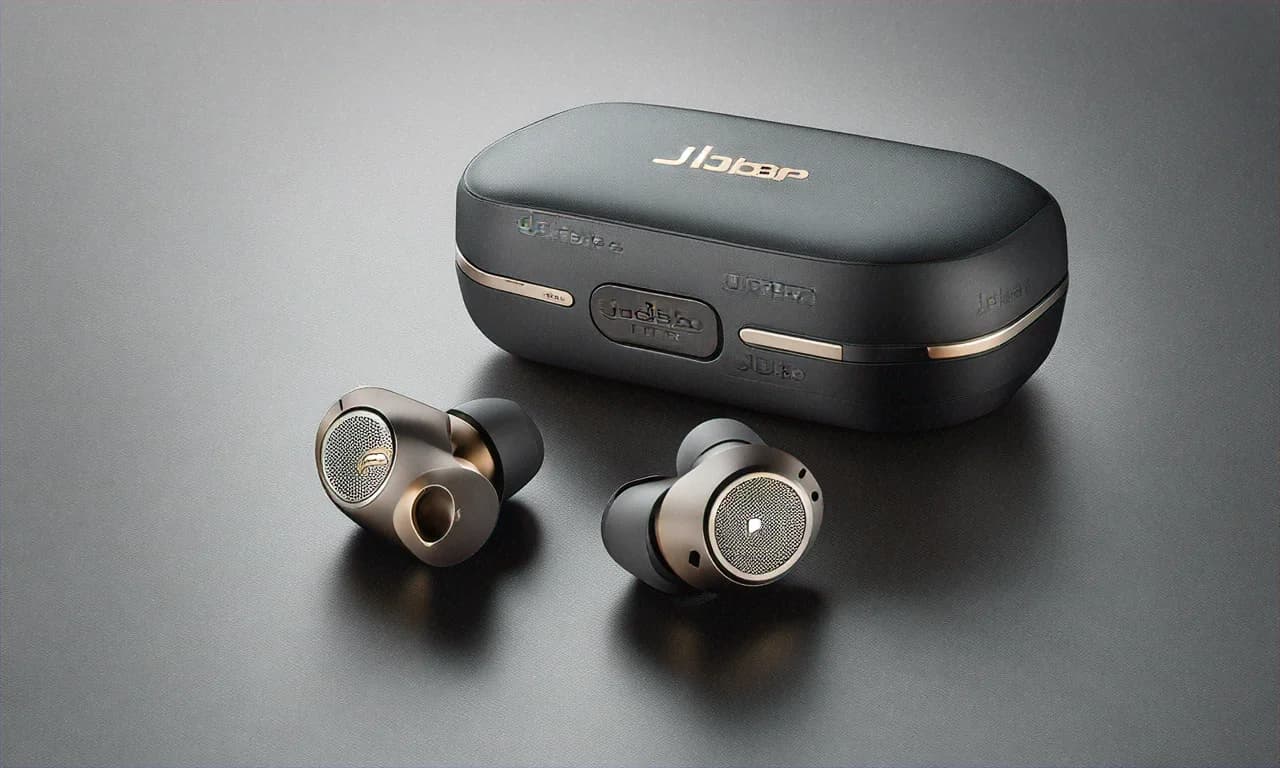
Jabra Elite 10 Gen 2 at Rs 16,999 on Amazon — The Best Earbuds for Calls and Dolby Atmos That Nobody in India Talks About Enough
Here's something that bugs me about the Indian TWS market. Everyone talks about Sony. Everyone talks about Apple. boAt dominates every "best earbuds under Rs 2,000" list. But Jabra? Jabra barely gets mentioned and I legitimately don't understand why. Because the Jabra Elite 10 Gen 2 is, in my opinion, one of the two or three best true wireless earbuds you can buy in India today. And at Rs 16,999 on Amazon — down from Rs 22,999, that's Rs 6,000 off — it's at a price where you should seriously consider it over the Sony XM5 and the Bose QC Ultra.
ICICI Bank credit card holders get an additional Rs 1,000 instant discount right now, bringing the price to Rs 15,999. Amazon Pay ICICI card users get 5% cashback on top of that. If you have been waiting for a good time to buy premium earbuds, this is about as good as it gets outside of a Republic Day or Diwali sale.
I've been using these for about a month as my daily drivers for work calls, commuting, gym, and everything in between. Let me tell you what I found.
Call Quality — This Is Where Jabra Absolutely Destroys Everyone Else
I'm going to start with the feature that I think matters most for a lot of Indian professionals and nobody gives it enough attention in reviews. Call quality. We spend SO much time on calls. Work calls, family calls, WhatsApp calls, Teams meetings that should have been an email. If you're someone who takes calls for more than an hour a day — and most working professionals in Bangalore, Mumbai, Hyderabad, or Pune absolutely do — the quality of your earbuds' microphones matters way more than how good the bass sounds on your Spotify playlist.
The Jabra Elite 10 Gen 2 has a 6-microphone setup. Six. Most earbuds at any price have two or three per side. Jabra uses six total with advanced wind noise protection and what they call "intelligent noise filtering." And the result is... really impressive. I took calls in all the usual nightmare scenarios that Indian cities throw at you and these earbuds handled them all.
Scenario one: sitting at my desk in a noisy co-working space in HSR Layout, Bangalore. Open floor plan, people chatting, keyboards clacking, someone's phone ringing. My colleague on the other end of the Teams call said I sounded like I was in a quiet room. She had no idea I was in a 200-person co-working space. That is how good the noise isolation is on the microphone side.
Scenario two: walking on a busy road near Koramangala. Autos honking, bikes revving, general chaos. The person I was talking to said they could hear I was outside but my voice was still clear and easy to understand. They didn't have to ask me to repeat myself. With most earbuds — including the Sony XM5 — people constantly ask me to repeat things in this situation.
Scenario three: and this one really surprised me. Standing on my apartment balcony on a windy evening. Wind noise is the mortal enemy of TWS microphones. Most earbuds become completely unusable in wind because the mic picks up the buffeting sound and your voice gets lost. The Jabra's wind protection actually works. My friend on the call said it was slightly muffled compared to indoors but perfectly usable. I've never had that experience with any other earbuds in wind.
If your job involves lots of calls — sales, consulting, remote work, client management — the Jabra Elite 10 Gen 2 should be your default choice. Nothing else comes close in this specific area.
Dolby Atmos with Head Tracking — Okay But What Does It Actually Feel Like?
This is the other big selling point of the Elite 10 Gen 2 and I want to be really specific about what it's and what it isn't because there's a lot of confusion around this feature.
Dolby Atmos on earbuds creates a spatial audio effect where sounds seem to come from different directions around you rather than just playing directly in your left and right ear. Head tracking means that when you turn your head, the sound source stays fixed in space — like how real speakers work. If a vocal is coming from in front of you and you turn your head to the right, the vocal shifts to your left ear. It sounds gimmicky when you describe it but the actual experience is genuinely cool.
I watched a Dolby Atmos movie on Netflix — the new Bollywood thriller that everyone was talking about last month — and the spatial effect was noticeable. Dialogue stayed centered in front of me. Background sounds like rain and traffic came from the sides. A scene where someone walks behind the main character and you could actually hear the footsteps move from front to back to the right. On regular stereo earbuds, all of that just sounds like it's happening inside your head. With the Jabra and Dolby Atmos, it sounds like it's happening around you. More natural, more immersive.
Music with Dolby Atmos support — there is a growing library on Apple Music and Amazon Music HD — also benefits. I listened to "Chaiyya Chaiyya" in Dolby Atmos and the percussion instruments had a spatial placement that made the track feel bigger and more alive. The chorus vocals surrounded me. It was honestly different from the stereo version in a good way.
Now here's the catch. Head tracking only works with supported apps and it does drain the battery a bit faster. Also, the spatial effect varies depending on how well the content was mixed for Atmos. Some tracks have an amazing Atmos mix and some feel like a basic upmix that doesn't add much. It isn't a feature you will use for everything but when it works well, it really adds something special to the experience.
Sound Quality — Very Good But Not Quite Sennheiser Territory
I want to be honest here because I think balance matters in reviews. The Jabra Elite 10 Gen 2 sounds very good. The 6mm custom speakers produce a refined, balanced sound with clear mids, crisp treble, and controlled bass. If you're coming from boAt or realme earbuds, you will hear an enormous improvement in detail, clarity, and soundstage.
But. And I say this as someone who truly loves these earbuds. If pure audio quality is your only priority, the Sennheiser Momentum TW4 is a notch above. The Sennheiser has more detail retrieval in the treble region, a wider soundstage, and that aptX Lossless codec that the Jabra cannot match. For dedicated music listening sessions where you just sit down, close your eyes, and listen — the Sennheiser wins.
However, the Jabra wins everywhere else. Better calls, better comfort, better water resistance, better battery life, Dolby Atmos. So it depends on what matters to you. For most people who use earbuds as an all-day companion for calls, music, podcasts, and videos, the Jabra is the better overall package.
The LC3 codec support through Bluetooth LE Audio is worth mentioning. This is the next generation Bluetooth audio standard and while not many phones support it fully yet, it's future-proofing your purchase. When LE Audio becomes mainstream — probably within the next year or so as more Android phones adopt it — you will get improved audio quality and lower latency without needing to buy new earbuds.
ANC — Solid and Smart
The Adaptive ANC on the Jabra works well. It isn't trying to be the most aggressive noise canceller out there. Instead, it intelligently adjusts based on your environment and keeps things comfortable. I've used earbuds with stronger ANC — the Bose QC Ultra comes to mind — but the Jabra's ANC is more than adequate for daily use.
On the Delhi Metro, it cancelled out the train rumble and most of the ambient chatter. In a busy cafe in Saket, background conversation faded to a murmur. In an auto-rickshaw in Jaipur during a holiday trip — where the engine noise is basically a sustained roar — it reduced the noise to a manageable level. Not silent, but quiet enough that I could enjoy a podcast without cranking the volume up to dangerous levels.
The Natural HearThrough mode is Jabra's version of Transparency and it's excellent. Very natural sounding. I could have conversations, hear traffic while crossing roads, and generally stay aware of my surroundings without removing the earbuds. The app lets you adjust the level of HearThrough from barely there to fully open, which is a nice touch that I use regularly depending on the situation.
Comfort — The Semi-Open Design Is a Big Deal
This is where Jabra made a smart engineering decision with the Gen 2 version. The semi-open design creates a slight air gap that reduces that stuffy, pressurized feeling you get with most in-ear earbuds. If you have ever worn earbuds for two or three hours straight and felt that your ear canals are getting uncomfortable, almost like they need to breathe — you know what I am talking about. The Jabra's design addresses this really well.
I wore them for an entire workday once. Eight hours, from my morning commute on the Rapid Metro in Gurugram through a full day of work at my desk, and then the commute back home. My ears felt... fine. No soreness, no fatigue, no itching. That's remarkable for any in-ear earbud. The weight at 5.7 grams per side is moderate and the ergonomic shape sits securely without creating pressure points.
They come with multiple ear tip sizes and I found a good seal with the medium tips. The seal is important for ANC performance and bass response, so spend a minute trying different sizes when you first unbox them. The Jabra Sound+ app has a fit test that plays a tone and uses the microphone to check if your seal is good. Very helpful.
Water Resistance — IP57 Means Real Protection
IP57 is a serious water resistance rating. The 5 means dust protected and the 7 means the earbuds can survive being submerged in up to 1 meter of water for 30 minutes. Now I'm not suggesting you go swimming with these. But it means that sweat, rain, even accidentally dropping one in a bucket of water — all survivable. I've used them through Mumbai monsoon levels of rain (okay maybe I exaggerate slightly, but genuine heavy rain) and they came out perfectly fine.
The charging case has an IP54 rating which is lower — splash resistant basically. Don't dunk the case in water. But for everyday use, even if you leave the case in your gym bag and it gets a bit sweaty, it will be fine.
For people who use earbuds at the gym — and many of us do — the IP57 rating on the earbuds is genuinely reassuring. Sweat dripping into the earbuds is a real concern with cheaper, lower-rated earbuds. Here it's simply not a problem.
Battery Life — Among the Best in Class
Eight hours per earbud with ANC on. Eight. That's outstanding for TWS earbuds. The case adds another 28 hours for a total of 36 hours. In my real-world testing with ANC on, Dolby Atmos off, and moderate volume, I got about 7 hours and 20 minutes before the low battery warning. Close enough to the claim.
With Dolby Atmos head tracking active, battery life drops to around 6 hours. Still very respectable. And the quick charge feature is actually useful — 5 minutes in the case gives you a full hour of playback. For those mornings when you forgot to charge and need to rush out, that 5-minute top-up can save you.
Qi wireless charging support on the case means you can just place it on a charging pad. I keep a small wireless charger on my bedside table and drop the case there every night. Haven't plugged in a USB-C cable to charge these earbuds in the entire month I've been using them.
The Jabra Sound+ App
Clean, functional, and doesn't try to do too much. ANC level adjustment, EQ presets, customizable gesture controls, firmware updates, fit test. The EQ has several presets — Neutral, Speech, Bass Boost, Treble Boost, Smooth — and a manual 5-band EQ if you want to customize. The Soundscape feature that plays background sounds like rain or white noise is something I actually use when I need to focus on work. Not a gimmick for me personally — the "Pink Noise" setting helps me concentrate better than any focus playlist on Spotify.
One annoyance — the app sometimes takes a few seconds to connect to the earbuds when you first open it. Not a dealbreaker but slightly irritating when you just want to quickly change an ANC setting.
Bank Offers and Deals
- ICICI Bank Credit Card on Amazon: Rs 1,000 instant discount, bringing price to Rs 15,999
- Amazon Pay ICICI Card: 5% cashback (around Rs 850 back)
- SBI Credit Card: No-cost EMI available for 3 or 6 months
- HDFC Bank Debit Card: 10% off up to Rs 1,000 during select Amazon sale events
- Amazon Pay Later: Split payment option without a credit card
What Could Be Better
The bass. Look, the bass on the Elite 10 Gen 2 is clean and controlled but it isn't punchy. If you love that thumping bass hit on Punjabi tracks or EDM drops, these will feel a little restrained. You can bump it up with the Bass Boost EQ preset but even then it's more polite than aggressive. This is a tuning choice by Jabra and I respect it from an audio quality perspective, but I know it won't satisfy everyone. Indians generally like bass-heavy sound — that's why boAt sells so well — and the Jabra is tuned more for accuracy than fun.
The Dolby Atmos head tracking feature requires compatible apps. Regular Spotify playback in stereo doesn't get the spatial effect. You need content that's specifically mixed in Dolby Atmos format. The library is growing but it isn't everything yet.
The charging case is bulkier than I'd like. Thicker and heavier than the AirPods Pro case or even the Sony XM5 case. Not a huge issue if you keep it in a bag but noticeable in a trouser pocket.
My Take After a Month of Daily Use
The Jabra Elite 10 Gen 2 isn't the flashiest pair of earbuds. It doesn't have the transparent design of the Nothing Ear (3) or the audiophile credentials of the Sennheiser Momentum TW4. It doesn't have the brand recognition of AirPods or the bass thump of Sony. What it does have is the most well-rounded performance of any TWS earbud I've tested. Best call quality, excellent ANC, great comfort for all-day wear, legitimately fun Dolby Atmos spatial audio, outstanding battery life, and the best water resistance rating in its class. At Rs 16,999 with bank offers bringing it close to Rs 15,000, it's the earbuds I'd recommend to anyone who asks me "bhai, which earbuds should I buy?" without needing to know their specific use case first. It just does everything well.