Everyone Is Buying the Same Glass Slab. The Motorola Edge 50 Ultra Is Not That.
I want to start with something that happened at a coffee shop in Bangalore last week. I was sitting at Third Wave Coffee in Indiranagar, working on my laptop, and my phone was on the table. A guy at the next table leaned over and asked, "What phone is that? Is that wood on the back?" And we ended up having a five-minute conversation about the Motorola Edge 50 Ultra. This has happened to me four times in the three weeks I've been using this phone. Four. Times. No phone has ever generated that kind of spontaneous curiosity from strangers. Not a Samsung, not an iPhone, not a OnePlus. But a Motorola with a wood panel back? People notice.
And honestly, in a market where every single phone looks like a rectangular glass sandwich with a camera island, that alone makes the Edge 50 Ultra interesting. But this isn't just a pretty face — at ₹44,999 on Flipkart (down from ₹59,999, a fat ₹15,000 discount), it's also a truly good phone. Let me tell you what I love about it, what annoys me, and who should seriously consider buying it.
First, Let's Talk About That Design — Because It Deserves It
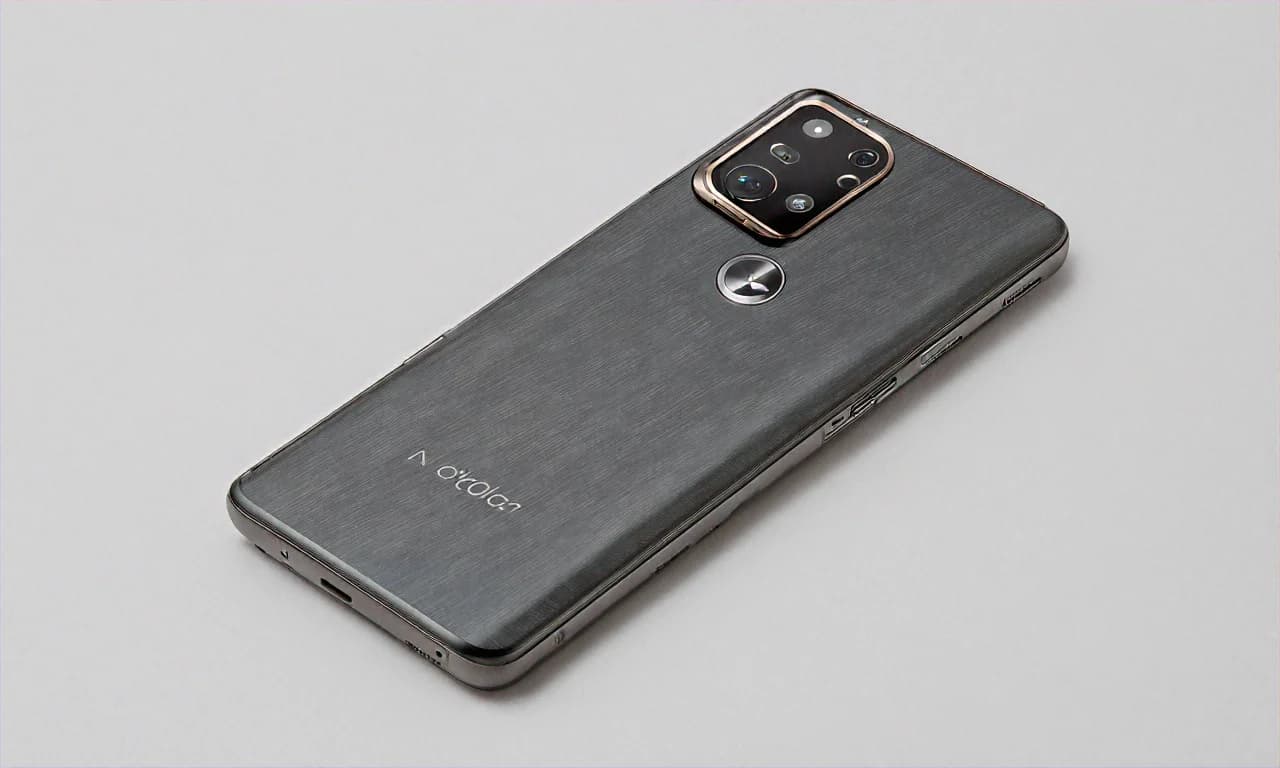
Most phone reviews give design a paragraph and move on. I'm not doing that here because the design IS the story with the Edge 50 Ultra. Motorola offers two back panel options: real wood and vegan leather. I have the wood variant, and it's gorgeous. The grain pattern is unique on every unit — mine has these beautiful flowing lines that feel organic and warm under my fingers. It doesn't attract fingerprints, it doesn't get slippery, and it develops a subtle patina over time that makes it look even better. After using cold glass-backed phones for years, holding the Edge 50 Ultra feels like a relief.
The vegan leather option is also nice — I checked it out at a Croma store in Mumbai — with a soft, grippy texture that feels premium without being flashy. Both variants have an aluminum frame that feels solid and well-machined. At 197g, it's noticeably lighter than most flagships (the iQOO 13 is 213g, the Galaxy S25 Ultra is 232g), and that lower weight combined with the textured back makes it one of the most comfortable phones to hold for extended periods. I fell asleep reading on this phone multiple times without it feeling like a burden on my hand. Small things matter.
IP68 water and dust resistance is included, which you'd expect at this price. Corning Gorilla Glass Victus 2 protects the display. The phone feels like it was designed by someone who actually thinks about what it's like to hold and use a phone every day for hours, rather than just making it look good in marketing photos. I appreciate that more than I thought I would.
The Display — Very Good, With One Caveat
The 6.7-inch pOLED display is excellent. 1.5K resolution sits right between FHD+ and full 2K — it's sharp enough that you can't see individual pixels at normal viewing distance, but not so high that it drains battery unnecessarily. Smart compromise. The 144Hz refresh rate is the same as the iQOO 13 and higher than most Samsung and Apple flagships. Everything looks smooth, from scrolling through Twitter to swiping through photos in the gallery.
Colour accuracy is one of the best I've seen on any phone. Motorola seems to have tuned the display for accuracy over vibrancy, which I personally prefer. Photos look true to life, skin tones in video calls look natural, and watching movies on Netflix feels cinematic without the oversaturated colours that some Samsung and Xiaomi phones default to. You can switch to a more vivid colour profile in settings if you prefer that look, but the default "Natural" mode is actually excellent.
Peak brightness is rated at 2500 nits, which sounds modest compared to the Realme GT 7 Pro's 6500 nits or the iQOO 13's 4500 nits. In practice, it's perfectly fine for outdoor use in most conditions. I used it on a sunny day in Goa — sitting on the beach, sun blazing — and the screen was readable. Was it as effortlessly bright as the GT 7 Pro in the same conditions? Honestly, no. If you spend a lot of time outdoors in harsh sunlight, this is worth noting. For 90% of normal indoor and outdoor use, though, the brightness is more than sufficient. It's only in extreme direct sunlight that you might occasionally wish for more.
Camera — This Is Secretly a Camera Phone
Here's the thing about Motorola that frustrates me. They've built one of the best camera systems in this price segment, and almost nobody talks about it because everyone's too busy discussing Samsung and Google cameras. The Edge 50 Ultra's camera setup is seriously impressive, and I'd argue it's the best camera you can get under ₹50,000 in India right now.
The 50MP main sensor with OIS is excellent. Sharpness is outstanding, dynamic range is wide, and Motorola's image processing is refreshingly restrained — photos look like what your eyes actually saw, not a hyper-processed, artificially sharpened version of reality. I took a bunch of photos at a friend's sangeet ceremony in Pune, and the indoor shots under mixed lighting — fairy lights, natural window light, harsh overhead lamps — all looked balanced and natural. The colours of the lehengas and sherwanis were accurate, skin tones looked healthy, and there was none of that weird orange tint that some phones add in warm lighting conditions.
But the real star is the 64MP telephoto with 3x optical zoom. This is a better zoom lens than what you'll find on most phones at this price. 3x optical means you're getting genuine, lossless zoom — not digital crop zoom pretending to be optical. The detail at 3x is stunning. I used it extensively at a recent wedding — zooming into the mandap from the back of the venue, capturing candid moments of guests from across the hall, getting close-ups of the food spread (priorities, right?) — and every single photo was sharp and well-exposed. You can push to 30x digital zoom, but quality drops significantly beyond 10x. For most real-world zoom needs, the 3x optical is perfect.
The 50MP ultrawide is solid. It doubles as a macro lens, and the macro mode is actually usable — I got some genuinely impressive close-up shots of flowers at Lalbagh Botanical Garden. Most phone macro modes are gimmicky and produce soft, disappointing results. This one is legitimately good. The ultrawide itself is sharp across the frame with minimal distortion at the edges, and colour consistency with the main sensor is close enough that switching between lenses doesn't produce jarring differences.
The 50MP front camera is one of the best selfie cameras on any phone. Period. It captures a ridiculous amount of detail, handles mixed lighting well, and the portrait mode produces a natural, gradual blur that doesn't look artificial. Video calls on the front camera are also excellent — my colleagues on Zoom said I looked "clearer than usual," which I'm choosing to take as a compliment about the camera rather than a comment about my face.
Camera Software and Processing
This is where Motorola's approach really differs from Samsung and Xiaomi. The camera app is clean and fast. No bloated feature menus, no confusing mode selections, no AI beauty filters that make you look like a mannequin. You open the camera, point, shoot, and get a good photo. The processing is quick — about half a second for a regular shot, maybe 2 seconds for Night Mode — and the results are consistently reliable. I rarely had to take multiple shots of the same thing to get one good one, which saves time and means I can actually enjoy the moment instead of being stuck in the camera app.
Low light photography is good. Not Pixel-level magical, but very capable. Night Mode brightens scenes without introducing too much noise, and the main sensor's large pixel size means it captures decent light even without Night Mode in moderately dim environments. Restaurant photos, evening street scenes, and indoor party shots all look good. Only in near-total darkness does the camera struggle, and honestly, that's true of every phone camera.
Near-Stock Android — Why This Matters More Than You Think
I've used Samsung One UI, Xiaomi MIUI/HyperOS, Realme UI, Funtouch OS, OxygenOS, and stock Android over the past few years. And I can tell you with absolute confidence that the experience on the Motorola Edge 50 Ultra is the closest to stock Android you'll find on any phone that isn't a Pixel. And for me, that's a massive selling point.
Here's what you get: no ads in the system UI. Zero. Not in the notification shade, not in the settings, not in pre-installed apps. No bloatware beyond the basic Google apps. The app drawer is clean. The settings menu is logically organized. The notification system works exactly as Google intended. After spending months dealing with Xiaomi's MIUI notifications that randomly disappear, or Samsung's One UI that duplicates every Google app with a Samsung version, using the Edge 50 Ultra feels like breathing fresh air.
Motorola adds exactly the right amount of customization on top of stock Android. The Moto gestures are really useful — chop-chop your hand twice to turn on the flashlight, twist your wrist to open the camera, pick up the phone to silence a call. These are gestures that feel natural after a day or two and that I actually miss on other phones. The Moto Display feature (peek notifications on the lock screen with a glanceable display) is implemented better than similar features on Samsung and OnePlus phones.
Performance with the Snapdragon 8s Gen 3 chipset and 12GB RAM is very smooth. Now, let me be upfront — the 8s Gen 3 is not the same chip as the full Snapdragon 8 Elite found in the iQOO 13 or Realme GT 7 Pro at similar or lower prices. It's a tier below. In benchmarks, the difference is significant — maybe 30-40% lower in raw CPU and GPU scores. In daily use? I genuinely cannot tell the difference. Apps open just as fast, multitasking is just as smooth, and the phone never stutters or lags. The difference only shows up in intensive gaming — Genshin Impact at max settings runs at a stable 45-50fps on the Edge 50 Ultra versus a stable 55-60fps on the iQOO 13. If you're a performance benchmarking enthusiast, the 8s Gen 3 might bother you. If you're a normal human being who uses their phone for normal things, you won't notice.
The 512GB storage is a massive bonus. At this price, most competitors offer 256GB. Getting double that means you can keep years of photos and videos on-device without worrying about cloud storage subscriptions. I have about 200GB of photos, videos, and downloaded content, and I still have over 250GB free. That kind of headroom is liberating.
Motorola promises 3 OS upgrades and 4 years of security patches. Not the best in the business (Samsung offers 4 OS upgrades and 5 years), but competitive and much better than what Motorola offered even two years ago. They've been reasonably good about delivering updates on time for their recent phones, though they do tend to be a month or two behind Samsung in rolling out new Android versions.
Charging — Wired AND Wireless, Finally
The Edge 50 Ultra comes with 125W TurboPower wired charging AND 50W wireless charging. This is worth highlighting because literally none of the other phones I've mentioned — the Samsung A55, the Realme GT 7 Pro, the iQOO 13 — have wireless charging. Zero. And the Motorola gets not just wireless charging, but 50W wireless charging that can fully charge the phone in under an hour wirelessly. That's faster than some phones charge with a wire.
Wired charging is predictably fast — 0 to 100% in about 25 minutes with the included 125W charger. The battery capacity is 4500mAh, which is smaller than the 5800-6000mAh batteries on the Realme GT 7 Pro and iQOO 13. And honestly, you feel that difference in battery life. On a heavy usage day, I need to charge the Edge 50 Ultra by evening — around 6-7 PM, the battery is usually in the 15-20% range. On lighter days, it lasts until bedtime comfortably, but there's no chance of stretching it to a second day like I can with the iQOO 13.
This is the Edge 50 Ultra's most meaningful compromise. To keep the phone thin and light (which it is — 197g and noticeably thinner than competitors), Motorola used a smaller battery. Whether that trade-off is worth it depends on your priorities. If you're always near a charger — at home, at office, in your car with wireless charging — the smaller battery is barely noticeable because you can top up so quickly. If you travel a lot or spend long days away from any power source, the Realme GT 7 Pro or iQOO 13 are better bets.
The Flipkart Deal — Breaking Down the Numbers
Flipkart's pricing right now is ₹44,999, which is ₹15,000 off the MRP of ₹59,999. That's a 25% discount, and it's the biggest single discount on any flagship phone in India right now that I'm aware of. On top of that:
- ICICI Bank Credit Card: ₹3,000 instant discount = ₹41,999 effective price
- SBI Debit Card: ₹2,500 instant discount = ₹42,499 effective price
- Exchange offers: Up to ₹18,000 for recent smartphones in good condition
- No-cost EMI: Available for 3, 6, 9, and 12-month tenures
- Flipkart Plus: Early access to deals + SuperCoins on purchase
If you're an ICICI credit card holder trading in a recent phone, you could realistically be paying ₹24,000-₹28,000 out of pocket. For a phone with a 64MP 3x optical zoom, 512GB storage, wireless charging, and near-stock Android. I remember paying ₹45,000 for a phone with half these specs just two years ago. The value here is honestly exceptional.
You can check Croma and Reliance Digital as well — I've seen the Edge 50 Ultra at similar discounts in physical stores during sale events, and buying offline lets you negotiate for accessories or extended warranty. My local Reliance Digital in Bangalore was bundling a free back cover and screen protector with the purchase last week, which is a small but nice bonus.
Who Is This Phone Actually For?
The Motorola Edge 50 Ultra is for people who are tired of the same phone. Tired of glass rectangles that all look alike. Tired of bloated software with ads crammed into every corner. Tired of carrying a phone that feels like everyone else's phone. If you value design that stands out, camera quality that consistently impresses, software that gets out of your way, and a phone that feels truly pleasant to hold and use every day — this is your phone.
It's also for people who shoot a lot of photos and videos. The camera system here, especially that 64MP 3x telephoto, is better than what most phones in this segment offer. If you're always the one taking group photos at family gatherings, recording videos at your kid's school function, or trying to get a decent shot of the sunset from your apartment — the Edge 50 Ultra will serve you well.
I wouldn't recommend it for hardcore gamers (the iQOO 13 is better for that), for people who need all-day battery life without a charger nearby (the Realme GT 7 Pro has a much bigger battery), or for people who prioritize raw performance above all else (the Snapdragon 8s Gen 3 is a tier below the 8 Elite). But for everyone who wants a phone that's thoughtfully designed, takes great photos, runs clean software, and is currently available at a price that makes it one of the best deals on Flipkart — the Motorola Edge 50 Ultra deserves your serious consideration. Walk into a Croma or Reliance Digital, hold it in your hand, and see if you don't fall for that wood back panel the way I did.