The Nothing Phone (3) Walks Into a Room and Everyone Notices. That's Kind of the Point.
There's a scene that keeps happening to me. I'm sitting at a cafe — could be a CCD in Koramangala, could be a third-wave coffee place in Bandra, doesn't matter — and I place my phone face-down on the table. Someone across from me goes, "Wait, what phone is that? Why can I see the inside?" And then the Glyph lights do their little dance when a notification comes in, and suddenly everyone at the table wants to hold it. This has happened to me at least four or five times in the last month.
That is the Nothing Phone (3) experience basically. It's a phone that wants to be noticed. And at ₹39,999 on Flipkart right now — down from ₹49,999 — it's also a phone that makes a lot of practical sense. But I'm getting ahead of myself. Let me start from the beginning.
Why Nothing Even Exists as a Brand
For those who don't follow the tech industry drama closely, Nothing was started by Carl Pei, one of the co-founders of OnePlus. He left OnePlus a few years back and started Nothing with this whole vision of making tech "fun" again. And honestly? In a market absolutely dominated by Samsung, Apple, Xiaomi, and their various sub-brands, Nothing did manage to carve out a space that nobody else was occupying. Their whole thing is transparent design, LED lights on the back, and clean software. No gimmicks beyond the design gimmick itself, if that makes sense.
The Phone (1) was interesting but flawed. The Phone (2) was better but still felt like it was trying too hard to justify its price. The Phone (3)? I think this is where Nothing finally figured out the balance. The specs are legitimately good. The software is mature. And the design still turns heads. At ₹40,000, it's competing with phones from Samsung, OnePlus, and iQOO that all look... basically the same. That's Nothing's advantage.
The Glyph Interface — Gimmick or Actually Useful?
Let me be real about this. When I first heard about LED lights on the back of a phone, I thought it was the dumbest thing ever. Like, who cares about lights you can't even see when the phone is in your pocket? But after using the Phone (3) for a few weeks, I've to admit — it's more useful than I expected.
The Glyph Interface now has over 1600 individual LEDs arranged in specific patterns on the transparent back. Each contact you assign a unique Glyph pattern to will light up differently, so you can tell who's calling without flipping the phone over or looking at the screen. I've my wife set to one pattern, my office group to another, and my parents to a third. When the phone is on the table during meetings (I flip it face-down to reduce distraction), I can glance at the Glyph pattern and decide whether to pick up. Surprisingly practical.
The Glyph Timer is another feature I didn't expect to use but now rely on regularly. You set a timer — say 25 minutes for a focused work session — and the LED strip on the back acts as a visual progress bar that slowly fills up. No annoying ticking sounds, no screen turning on. Just a quiet visual indicator. I use it for cooking too. When I'm making chai (which is multiple times a day, obviously), I set the Glyph Timer for 4 minutes and just watch the light creep across while the tea steeps. It's oddly satisfying.
There's also a Glyph progress bar for things like Uber rides and food delivery. When you order from Zomato or Swiggy, the Glyph lights show you roughly how far along the delivery is without you needing to obsessively refresh the app. I mean, I still obsessively refresh the app because that's just how I'm. But the Glyph thing is a nice touch.
When the Glyph is Annoying
At night, if you don't set up a schedule for the Glyph to turn off, the lights can be quite bright in a dark bedroom. I learned this the hard way when my wife got woken up at 2 AM by a WhatsApp notification from a group chat that lit up the entire bedside table like a tiny Diwali celebration. Make sure you set the Glyph schedule to turn off at night. Lesson learned.
Nothing OS 3.0 — The Cleanest Android Skin I Have Used
Okay, I don't say this lightly because I've used every major Android skin out there — One UI, OxygenOS, MIUI/HyperOS, ColorOS, Funtouch OS, you name it. Nothing OS 3.0 is the closest thing to stock Android while still having legitimately useful additions. There is almost zero bloatware. The only pre-installed third-party app I found was a weather app, and even that can be uninstalled. Compare this to Xiaomi phones where you get a dozen pre-installed games and shopping apps that start sending you notifications the moment you set up the phone.
The animations in Nothing OS are distinctive — they have this slightly bouncy, playful quality that matches the brand's personality. The dot-matrix font used throughout the UI is either something you will love or find mildly annoying. I've grown to like it, though I wasn't sure at first. The settings are well-organized, the notification shade is clean, and the app drawer... is just an app drawer. No feeds, no news articles, no recommendations. Just your apps. What a concept.
Nothing OS 3.0 is based on Android 15 and Nothing has committed to 3 OS upgrades and 4 years of security patches. Not as generous as Samsung's 4+5 or even Vivo's 4+5 promise, but decent enough. The updates come fairly regularly — I've already received two security patches since buying the phone. No complaints there.
The Hardware Under That Transparent Back
The Snapdragon 8s Gen 3 is the chipset here. It isn't the top-of-the-line Snapdragon 8 Elite, but it's still very capable. In daily use — scrolling social media, messaging on WhatsApp, watching YouTube, browsing the web, running banking apps — I've not noticed a single stutter or lag. The 12GB LPDDR5X RAM ensures apps stay in memory, and the 256GB UFS 4.0 storage means file access is snappy.
For gaming, it's good but not the best at this price. BGMI runs fine on high settings with smooth frame rates. Genshin Impact on medium-high settings gives you around 45-50fps, which is perfectly playable. If you're a serious mobile gamer who needs to run everything maxed out, the iQOO 13 or Realme GT 7 Pro would be better picks. But for casual to moderate gaming? The Phone (3) handles it just fine.
The 6.68-inch LTPO AMOLED display is a good panel. 120Hz adaptive refresh rate adjusts itself based on content — 120Hz when scrolling, 60Hz on static screens, even lower when the always-on display is showing. 1600 nits peak brightness is good for indoor use but I've found it can struggle a bit in very harsh direct sunlight compared to phones with 3000+ nits. Watchable, but you might need to find some shade if you're reading in peak afternoon sun in Chennai or Nagpur. The colours are well-calibrated out of the box. No crazy saturation, no washed-out look. Just natural, accurate colours.
Camera — Good, Not Great, and That's Okay
Nothing has always taken a "good enough" approach to cameras rather than trying to compete with the Vivos and Samsungs of the world on pure camera specs. The Phone (3) has a dual 50MP setup — a Sony IMX890 primary sensor with OIS and a Samsung JN1 ultrawide. No telephoto. No macro. Just two lenses, and both are 50MP.
In good lighting, the primary camera takes excellent photos. Colours are natural and balanced — Nothing's processing philosophy is "capture what you see" rather than "make everything look like it went through ten Instagram filters." I appreciate this approach, though I know some people prefer their photos a bit more vibrant. You can always bump up the saturation in post, but you can't undo artificial processing that was baked into the image. So I respect the choice.
The ultrawide is decent for group shots and landscapes. Detail drops off compared to the primary sensor, as expected with any ultrawide, but the colour consistency between the two lenses is impressive. Samsung and even Vivo sometimes have a noticeable colour shift between their primary and ultrawide sensors. Nothing does not have that problem.
Night photography is where the camera shows its limits. The IMX890 sensor handles low light reasonably well with night mode enabled, but there is visible noise in shadow areas and the processing can sometimes make things look a bit smudgy. If night photography is a big deal for you, the Vivo X200 Pro or even the Samsung Galaxy A55 at a lower price will give you better results in the dark.
Video recording tops out at 4K 30fps. No 4K 60fps, which is a bummer in 2025 at this price point. 1080p 60fps is available and the stabilization is decent for hand-held shooting. The 32MP selfie camera is fine — nothing remarkable, nothing terrible. Gets the job done for video calls and the occasional selfie.
Battery — Lasts All Day, Charges Slowly Relative to Competition
The 5000mAh battery is a good size and Nothing's software optimization means it lasts a full day of heavy usage without any issues. I typically end the day at around 20-25% after heavy social media use, some photography, and about 45 minutes of YouTube. Moderate users will probably get to bedtime with 35-40% left. No complaints about battery life at all.
Charging, however, is where the Phone (3) falls behind the competition. 45W wired charging takes about 55-60 minutes for a full charge. In a world where POCO charges at 120W and Realme at 120W and even OnePlus does 100W, 45W feels slow. Not painfully slow, but noticeably slower. If you plug in for 15 minutes before heading out, you will get about 30-35% charge. With a 120W phone, that same 15 minutes would give you 50-60%.
The good news is that you get 15W wireless charging at this price point. Not many phones under ₹50,000 offer wireless charging at all, so this is a genuine differentiator. I've a wireless charging pad on my office desk and it's nice to just place the phone down and forget about it. Not fast, but convenient.
The Build — Premium Feel, Lightweight, One Concern
At 195 grams, the Nothing Phone (3) is noticeably lighter than most phones in this segment. After using the 228-gram Vivo X200 Pro for a week, picking up the Nothing felt like lifting a feather by comparison. The recycled aluminium frame gives it a solid, sturdy feel without adding unnecessary weight. The flat edges are comfortable to hold — much better than phones with aggressively curved sides that dig into your palm.
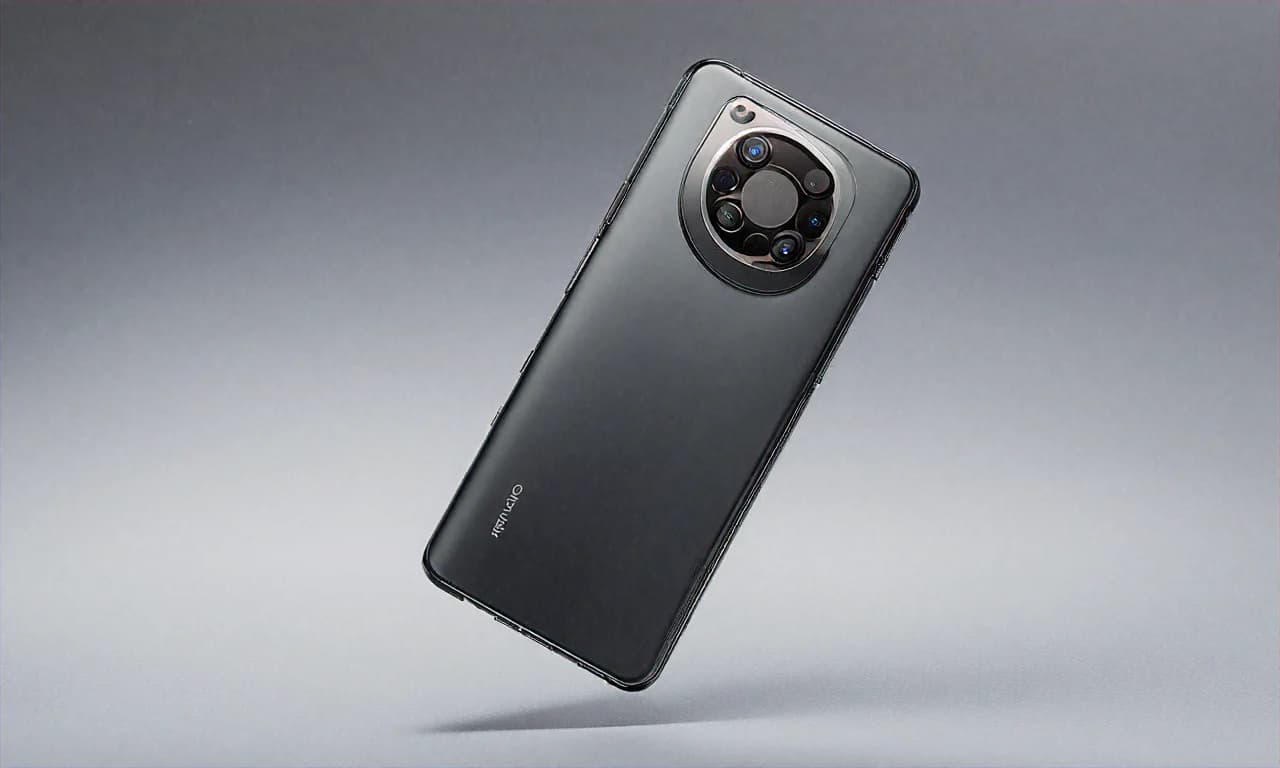
The transparent back is the star of the show design-wise. You can see some of the internal components through it, though Nothing admits that what you see is a decorative layer on top of the actual internals. Still, the effect is striking. Combined with the Glyph LEDs, it makes for a phone that looks like nothing else — pun intended — on the market.
My one concern is the IP65 water resistance rating. IP65 means it's protected against water jets but not submersion. Competitors in this range like the Samsung Galaxy A55 offer IP67 (submersion up to 1 metre) and some phones even have IP68. This means you need to be a bit more careful with the Nothing Phone in heavy rain or near water. It isn't going to die if it gets splashed, but I wouldn't leave it on the bathroom counter during a steamy shower or take it to a water park.
The Flipkart Deal — Breaking Down the Numbers
The Nothing Phone (3) is listed at ₹39,999 on Flipkart, which is ₹10,000 off the original MRP of ₹49,999. At ₹40K, you're in interesting territory because you're competing against the OnePlus 13R, the Samsung Galaxy A55, the iQOO Neo 9 Pro, and others in that mid-premium segment.
Here is where the bank offers come in. Axis Bank credit and debit card holders get ₹2,000 instant discount, bringing the effective price to ₹37,999. ICICI Bank credit card users get ₹1,500 off, so ₹38,499 for them. If you have an old phone to exchange, Flipkart's exchange offers go up to ₹15,000 depending on the phone's condition and model. Even for a 2-year-old mid-range phone, you can usually get ₹5,000-₹7,000 in exchange value.
No-cost EMI is available for 3, 6, and 9 months. At ₹39,999 on a 6-month EMI, that's about ₹6,667 per month. With the Axis Bank discount, it drops to about ₹6,333 per month. Flipkart Plus members get ₹500 worth of SuperCoins, which is a small bonus but hey, free is free.
Is It Worth ₹40,000?
Here's my honest assessment. If you're purely spec-shopping — meaning you compare processor benchmarks, camera megapixels, charging speeds, and battery size in a spreadsheet — the Nothing Phone (3) doesn't win. The iQOO Neo 9 Pro gives you a slightly better chipset. The POCO X7 Pro gives you much faster charging and a bigger battery at a lower price. The OnePlus 13R matches or beats it in most raw specs.
But if you care about the full experience — the design, the software quality, the brand identity, the daily pleasure of using a phone that feels different from everything else — then the Nothing Phone (3) is absolutely worth ₹40,000. This is a phone for people who are tired of every phone looking like every other phone. For people who want something that sparks a conversation. For people who value clean software over spec-sheet bragging rights.
Who Should Buy This?
- Design-conscious buyers who want something that stands out at office meetings and social gatherings.
- Software purists who hate bloatware and want the cleanest possible Android experience without buying a Pixel.
- People switching from iPhone who want an Android phone with similar attention to design detail and software polish.
- Content creators who want a phone that looks interesting in photos and videos (the Glyph lights photograph really well).
Who Should Skip?
- Camera enthusiasts who need a telephoto lens or excellent night photography. The dual camera setup is limited.
- Heavy gamers who want every last drop of performance. The Snapdragon 8s Gen 3 is good but not the best at this price.
- People who need fast wired charging. 45W is okay but falls behind the 80W-120W competition significantly.
The Nothing Phone (3) at ₹39,999 on Flipkart isn't trying to win a spec war. It's trying to win on personality, and I think it succeeds. Every time I pick it up, the transparent back catches the light differently. Every time a notification comes in, the Glyph pattern does its little dance. Every time I open the settings, I'm greeted by clean, bloat-free software that just works. In a market full of phones that are functionally identical with only different logos on the back, that counts for something. Whether it counts for ₹40,000 to you specifically — well, only you can answer that. But I think for a lot of people, especially younger buyers who want their phone to reflect their personality, this is the most exciting option in its price range right now.