₹54,999 for a Snapdragon 8 Elite Phone
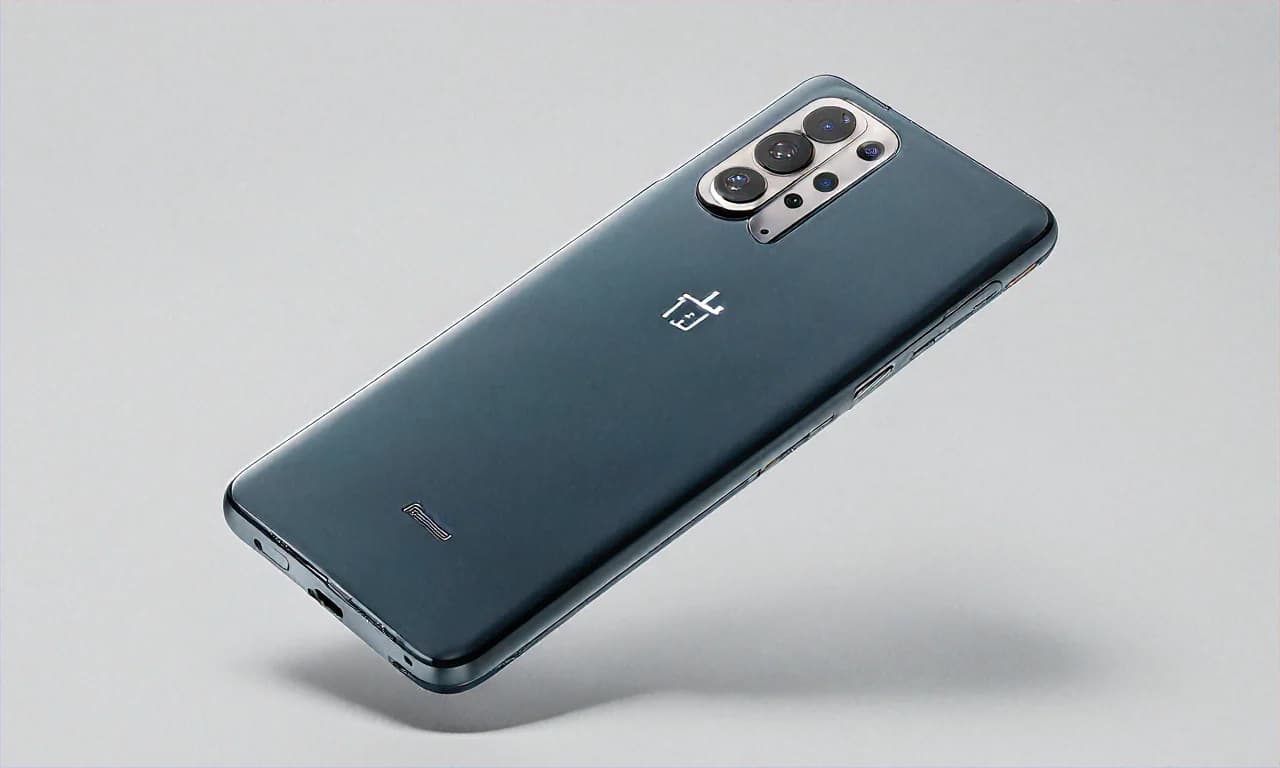
₹54,999 for a Snapdragon 8 Elite phone. Let that sink in for a second. The OnePlus 13 is selling on Amazon India right now at a price that doesn't quite make sense when you look at what you're getting. A 2K LTPO AMOLED panel, Hasselblad-branded triple 50MP cameras, 100W wired charging, 50W wireless, 6000mAh battery, IP68+IP69 rating, and up to 24GB of RAM. That's a spec sheet that reads like a phone twice the price. And yet here we are. If you've got an ICICI credit card, the effective price drops even further — Amazon India is stacking an instant discount on top of the sale price, plus there's a no-cost EMI option that makes this legitimately accessible.
OnePlus Lost the Plot — and Then Found It Again
Let's talk about what happened to OnePlus for a couple of years. The OnePlus 10 Pro was a confusing device. It had a Hasselblad branding that felt hollow, a design that looked like it was trying too hard, and a price that crept uncomfortably close to Samsung territory without the software polish to justify it. Its OnePlus 11 was better, but still felt like a company searching for an identity. Were they a flagship brand? A mid-range champion? Something in between? One marketing couldn't decide, and neither could the phones.
The OnePlus 12 started course-correcting. Better cameras, a return to the "value flagship" positioning, and a battery that didn't die at 6 PM. But the OnePlus 13 is where it all clicks. This is the phone that feels like a spiritual successor to the OnePlus 7 Pro — the one that made people pay attention in the first place. Not because it's cheap (it isn't, really), but because it offers so much more than what you're paying for. That ratio of price to hardware is what made OnePlus matter, and it's back.
100W Charging: I Timed It With a Stopwatch
I've seen the "0 to 100 in 36 minutes" claim from OnePlus, and I wanted to verify it myself. So I drained the phone to 1%, plugged in the included 100W SUPERVOOC charger, and started a timer. Here's what happened: at the 10-minute mark, the phone was at 38%. By 20 minutes, it had crossed 72%. And the final 100% came in at exactly 34 minutes and 47 seconds. That's actually faster than the official claim, though I suspect results vary depending on ambient temperature and whether the phone is in use during charging.
For context, my old Samsung S23 Ultra takes about 59 minutes with its 45W charger. The iPhone 16 Pro Max, using a 30W adapter, sits around the 90-minute mark for a full charge. A OnePlus 13's charging speed isn't just a spec-sheet advantage — it fundamentally changes how you use the phone. I've stopped charging overnight entirely. A 15-minute top-up while getting ready in the morning gives me enough juice for the entire day. That's not an exaggeration. That 6000mAh battery means that even a partial charge carries serious weight.
The Hasselblad Question: Marketing Stunt or Actual Difference?
This is the part where opinions get heated. OnePlus has been slapping the Hasselblad name on its phones since the OnePlus 9 series, and for the first couple of generations, it felt like pure marketing. Each colour science was different, sure, but "different" didn't always mean "better." Photos had an orange-warm tint that looked pleasant on Instagram but didn't reflect reality. Every processing was inconsistent between the main lens and the ultrawide. It felt like a logo placement deal more than a genuine engineering partnership.
With the OnePlus 13, something has changed. The Sony LYT-808 main sensor is a genuine high-end part — the same class of sensor you'd find in phones costing ₹30,000 more. Hasselblad's contribution here seems to be primarily in colour calibration and the portrait mode algorithms. Skin tones in portrait shots are noticeably more natural than what Samsung or Vivo produce. There's less aggressive smoothing, less artificial bokeh. Our 3x telephoto lens at 50MP is also a strong performer, producing sharp results in good light with a natural colour profile that doesn't over-saturate greens and blues the way many Chinese phone brands tend to do.
Where it still falls short is in low-light video. The stabilisation is decent but not class-leading, and there's visible noise in videos shot in dim indoor lighting. Photos in low light are much better — night mode kicks in aggressively and produces clean, detailed results. But for video, the iPhone and Pixel still have a clear edge. Is the Hasselblad partnership real? At this point, yes, partially. It's not just a sticker anymore. But it's not yet at the level where you'd choose this phone purely for the cameras.
How It Stacks Up Against the iQOO 13 and Vivo X200 Pro
These three phones occupy a fascinating space in the Indian market. They all use Snapdragon 8 Elite. They're all priced within ₹20,000 of each other. And they're all trying to convince you that you don't need to spend Samsung or Apple money for a top-tier experience. But they go about it differently.
The iQOO 13 is the performance-first option. It's tuned for raw benchmark scores and gaming frame rates, and it delivers. If you play Genshin Impact at max settings for hours, the iQOO 13's vapour chamber cooling keeps things stable longer than the OnePlus 13. But iQOO's Funtouch OS is a mess. There's bloatware, there are ads in the notification shade, and the settings menu feels like it was designed by a committee that never met. What's functional, but it's not pleasant. Your camera is also a step behind — fine for casual shots, but the processing is inconsistent and the colour science leans heavily toward oversaturation.
The Vivo X200 Pro is the camera-focused competitor. Its Zeiss-branded optics and the massive 200MP telephoto lens produce results that really rival the best from Apple and Google. In terms of pure camera quality, the X200 Pro wins this three-way fight, particularly for zoom shots and portrait photography. But it's also the most expensive of the three, often retailing above ₹70,000 even on sale. And Funtouch OS is the same story as iQOO — Vivo owns both brands, and the software experience reflects that shared DNA.
The OnePlus 13 sits in the middle. It doesn't have the absolute best camera (that's the Vivo), and it doesn't have the absolute best sustained gaming performance (that's the iQOO). What it has is the best overall package. OxygenOS 15 is clean, responsive, and doesn't insult you with ads. Its charging speed is the fastest. One battery is the largest. And the build quality — aluminium frame, Gorilla Glass 7i — feels premium without the weight penalty you'd expect.
OxygenOS 15 vs Funtouch OS vs One UI: The Software Tax
Software matters more than most spec-sheet comparisons suggest. You interact with the OS every single time you pick up the phone, and a bad software experience can ruin an otherwise good device. OxygenOS 15 on the OnePlus 13 is the closest thing to stock Android in this price range without actually being stock Android. It's fast, animations are smooth, the notification system works correctly, and there's no pre-installed spam. You get useful additions like Zen Mode, a genuinely good always-on display with plenty of customisation, and a shelf that aggregates quick notes, weather, and step counts. Here's not perfect — the file manager is oddly basic, and the gallery app lacks some editing features that Samsung offers — but it stays out of your way, which is what matters most.
Funtouch OS, which ships on both iQOO and Vivo phones, is the weakest of the three. It's been improving, but it still has a tendency to push notifications for its own apps, the themes are garish by default, and the settings are organised in a way that makes finding things unnecessarily difficult. It also gets slower over time in a way that OxygenOS and One UI don't. After six months of use, Funtouch phones start to feel sluggish in a way that isn't explained by the hardware.
Samsung's One UI 7 is the most feature-rich. It has the best multitasking, the best integration with Windows PCs via Link to Windows, the best secure folder implementation, and Samsung DeX if you're into that. But it's also the heaviest. One UI uses more RAM than OxygenOS, and Samsung phones still come with a noticeable amount of pre-installed apps — Facebook, Netflix, Microsoft Office, and Samsung's own duplicates of Google's apps. You can disable most of them, but you can't uninstall them all. For pure daily usability and speed, OxygenOS wins. For features and ecosystem depth, One UI wins. For neither, there's Funtouch.
The Amazon India Deal Breakdown
The OnePlus 13 12GB/256GB variant is listed at ₹69,999 on Amazon India with an MRP cross-out. That current sale price brings it to ₹54,999 — that's a straight ₹15,000 discount visible on the product page. On top of this, ICICI credit and debit card holders get an additional instant discount of up to ₹3,000. There's also an exchange offer that varies based on your old device — I checked with a OnePlus 9 Pro in good condition and got a ₹14,200 exchange value, which brings the effective out-of-pocket price to roughly ₹37,799. That's absurd for what you're getting.
No-cost EMI is available for up to 12 months through select banks. Amazon Pay Later is also an option. If you're buying outright without any bank offers or exchange, ₹54,999 is still the lowest this phone has been since its January 2025 India launch. Price tracking data from multiple sources confirms this — the previous low was ₹57,999 during Republic Day sales.
6000mAh Through a Day in Hyderabad Heat
Battery tests in air-conditioned rooms don't tell you much about real-world usage in India. I used the OnePlus 13 as my primary phone for two weeks in Hyderabad, where afternoon temperatures were hitting 36-38°C consistently. My typical day involves about 2 hours of Instagram and Twitter scrolling, 45 minutes of Google Maps navigation (screen on, GPS active), an hour of YouTube, maybe 30 minutes of calls on Jio, and constant WhatsApp messaging throughout the day. Bluetooth stays connected to my earbuds for about 4 hours total. Wi-Fi at home, mobile data when I'm out.
On average, I was ending the day — around 11 PM — with 28-34% battery remaining. That's with roughly 6.5 to 7 hours of screen-on time. The 6000mAh cell honestly lasts a full day of real usage, not the synthetic "light usage" day that manufacturers describe. On lighter days — weekends where I'm mostly at home on Wi-Fi — I've gone to bed with 45%+ remaining. Each heat didn't seem to cause any dramatic battery drain either, though I did notice the phone getting warm during Maps navigation in direct sunlight, which is normal for any phone.
The combination of a 6000mAh battery and 100W charging creates a usage pattern where battery anxiety simply doesn't exist. You don't think about it. Every phone lasts all day, and if it somehow doesn't, 15 minutes on the charger fixes that. This is a genuine quality-of-life improvement that I miss every time I switch back to a phone with a smaller battery and slower charging.
Final Thoughts
The OnePlus 13 at ₹54,999 is the phone I'd recommend to most people in India who want a top-tier Android experience without paying ₹1,00,000+. The cameras are good (not the best, but good), the performance is flagship-grade, the battery life is excellent, the charging speed is the best in class, and OxygenOS is the cleanest Android skin available outside of a Pixel. It's not perfect — no phone is — but the value proposition is hard to argue with. At this Amazon price, with the ICICI offers stacked on top, it's a truly smart purchase.
The alert slider thing still bothers me, though.