I Had AirPods Pro for Two Years. Then I Switched to Samsung Galaxy Buds 3 Pro. Here’s the Honest Truth.
This one is personal. I’ve been an AirPods person for a long time. Started with the original AirPods, moved to AirPods Pro, then AirPods Pro 2. I’m not even an iPhone user — I’ve been on Samsung phones for the past three years (currently Galaxy S24). But something about AirPods just worked for me. The fit, the sound, the case design. I was comfortable. Sometimes too comfortable to consider anything else.
Then the Samsung Galaxy Buds 3 Pro went on sale on Flipkart. ₹14,999, down from ₹18,999. My AirPods Pro 2 were starting to show their age — the left bud’s ANC had gotten noticeably weaker (a known degradation issue), the battery was giving me maybe 3.5 hours with ANC instead of the original 6, and the silicone tips had gotten that slightly sticky texture that old silicone gets. I needed new earbuds. The question was: do I stick with Apple and buy AirPods Pro 3, or do I finally try Samsung’s best offering now that I’m already using a Samsung phone?
I went Samsung. And two months later, I have opinions. Lots of opinions.
The Reason I Even Considered Switching
Here’s the thing about using AirPods with an Android phone. They work. Let me be clear about that. You pair them over Bluetooth, they connect, music plays, calls work. But you lose SO much. No Adaptive Audio. No Conversation Awareness. No personalised spatial audio with head tracking. No automatic switching between devices. No Find My integration. No firmware update control. You’re basically using ₹25,000 earbuds as ₹5,000 Bluetooth earbuds. The actual audio output is the same but all the smart features that justify the Apple premium? Gone.
I’d been living with this compromise for two years because I liked how AirPods sounded and fit. But when your phone is a Galaxy S24 and you’re already using a Galaxy Watch and a Samsung TV, using AirPods starts to feel a bit silly. Like wearing Nike shoes with an Adidas tracksuit. Both are fine individually but together? Something doesn’t fit.
The Galaxy Buds 3 Pro promise full feature integration with Samsung phones. 360 Audio with head tracking. SSC UHQ codec for higher quality audio. Automatic switching between Samsung devices. Galaxy Wearable app with custom EQ, ANC control, firmware updates. Basically everything I was missing by using AirPods with Android. Plus the ₹14,999 price on Flipkart was ₹4,000 less than what AirPods Pro 3 cost even on sale. Math was mathing, as the kids say.
First Impressions Coming from AirPods
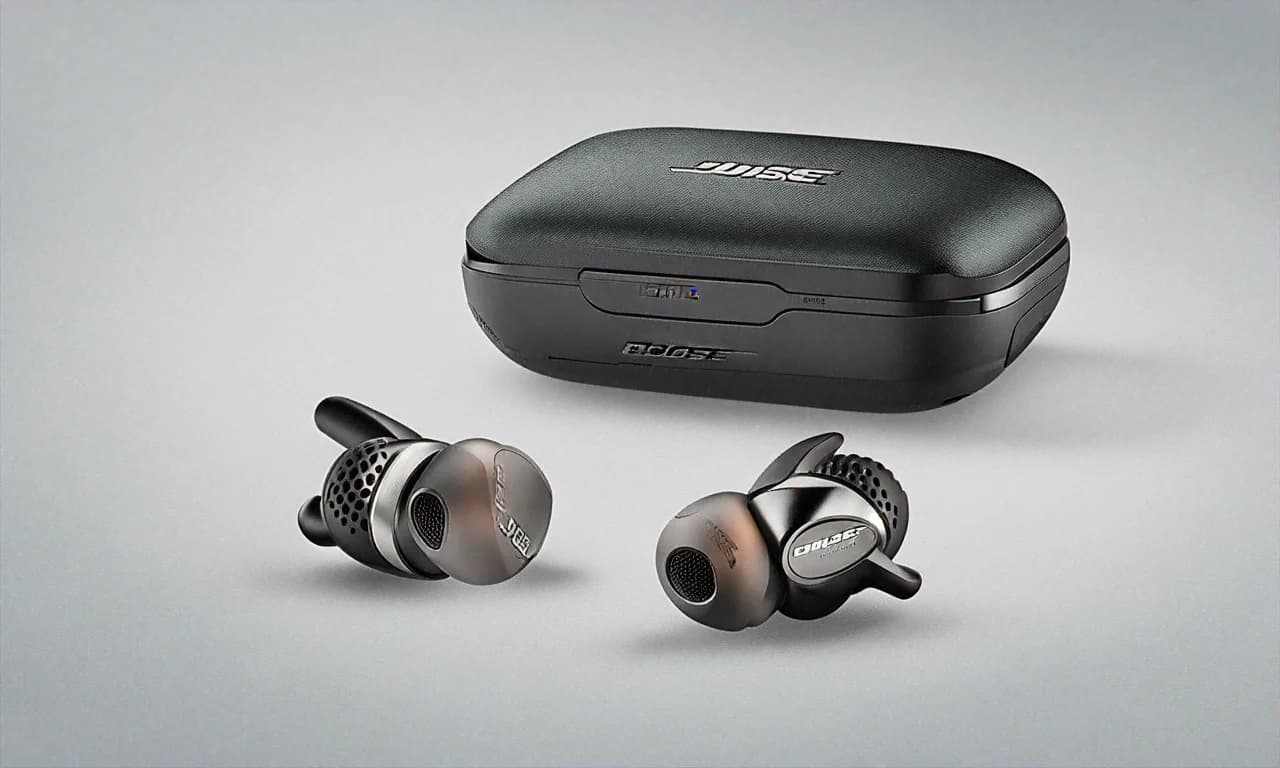
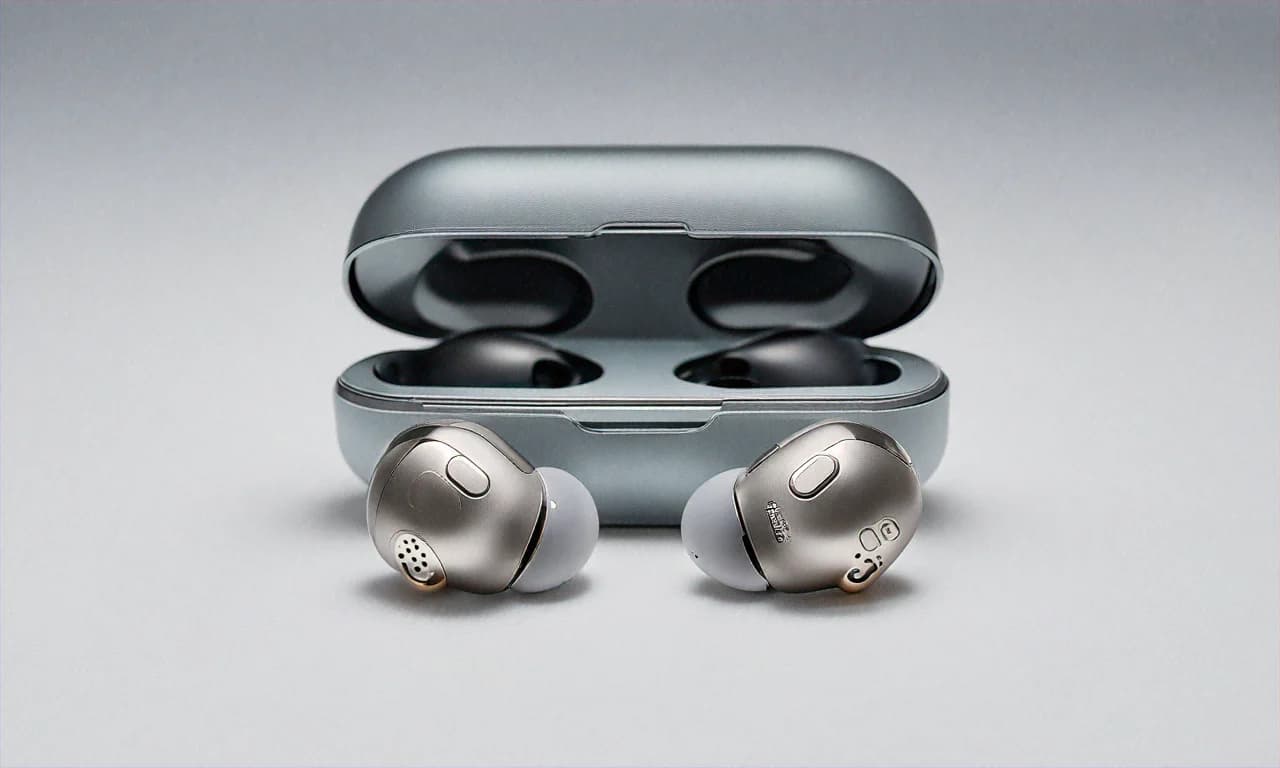
The design is the first thing you notice. These look nothing like the bean-shaped Galaxy Buds of old. Samsung went with a “blade” design — flat stems sticking out of each earbud, somewhat similar to AirPods but more angular, more industrial. Silver finish with a slight metallic sheen. My first reaction was “these look premium.” My second reaction was “these also look like they’ll scratch easily.” Both reactions turned out to be correct.
The fit is different from AirPods. The AirPods Pro have a rounded, smooth shape that sits in your ear canal and sort of disappears. The Galaxy Buds 3 Pro have a slightly larger body with the blade extending outward. They come with multiple silicone tip sizes and optional wingtips for exercise. I went with the medium tips and got a solid seal on both ears. The fit test in the Galaxy Wearable app confirmed a good fit on the first try which was nice. But — and this is important — they sit slightly less deep in my ear canal than AirPods Pro did. This affects both noise isolation and the perceived bass response. More on that later.
Pairing with my Galaxy S24 was instant. Literally opened the case near my phone and a pop-up appeared asking if I wanted to connect. Tapped yes. Done. This is the Samsung-to-Samsung experience and it’s as smooth as the Apple-to-Apple experience with AirPods. If you’re using a non-Samsung Android phone, pairing still works fine through regular Bluetooth but you might miss some of the automatic features.
Sound Quality — The 2-Way Speaker Difference
Alright. The big question. How do these sound compared to AirPods Pro?
Different. Noticeably different. Not necessarily better or worse across the board, but different in ways that matter depending on what you listen to.
The Galaxy Buds 3 Pro have a 2-way speaker system — a 10.5mm woofer for bass and mids, and a separate 6.1mm planar tweeter for highs. AirPods Pro use a single custom driver. The theory is that dedicated drivers for different frequency ranges produce cleaner, more detailed sound. In practice? It’s more nuanced than that.
I tested with my usual playlist. Started with Arijit Singh’s “Tum Hi Ho” because it’s a track I’ve heard a thousand times and I know exactly how every instrument and vocal inflection should sound. On the Buds 3 Pro, Arijit’s voice had more clarity in the upper register. The guitar strumming had more texture, more definition between individual strings. The overall presentation was wider — like the music had more room to breathe. On AirPods Pro 2 (comparing from memory, which I know isn’t scientific), the same track sounded warmer, smoother, more compressed together. Pleasant but less detailed.
Then I played “Excuses” by AP Dhillon. Bass-heavy Punjabi pop. This is where it got interesting. The AirPods Pro, from what I remember, had punchier bass on tracks like this. The low end thumped harder, vibrated more. The Buds 3 Pro bass is tighter, more controlled. The kick drum hits are precise and quick rather than big and boomy. If you like feeling the bass in your chest — that physical sensation — AirPods might still have an edge. If you prefer hearing the bass, with every detail of the drum pattern clearly resolved, the Buds 3 Pro are better.
Where the 2-way system really shines is in complex music. I put on “Kun Faya Kun” from Rockstar — layers of vocals, tabla, strings, harmonium, all going at once. On the Galaxy Buds 3 Pro, I could pick out individual instruments more easily. The qawwali chorus voices had separation between them instead of blending into one mass of sound. The planar tweeter handles the high frequencies with a crispness that single-driver earbuds struggle to match. Cymbal hits, breath sounds in vocals, the shimmer of string instruments — all cleaner and more present.
I’m not going to claim these are definitively better than AirPods Pro 3 in sound quality. I haven’t done a proper A/B test with the latest AirPods. But compared to my old AirPods Pro 2, the Buds 3 Pro sound more detailed and analytical. AirPods sound more warm and musical. It’s a preference thing. I’ve come to prefer the Samsung sound after two months but I understand why someone would prefer Apple’s tuning.
ANC — Where AirPods Still Win (But Not By Much)
I’ll be upfront. The AirPods Pro (any generation) have the best ANC in the true wireless earbud market. Apple’s computational audio processing through their custom chips is truly ahead of everyone else. I know this from experience.
The Galaxy Buds 3 Pro ANC is good. Really good. It kills low-frequency noise effectively — air conditioning hum, traffic rumble, the drone of an airplane engine (I flew Mumbai to Delhi last month and tested extensively). The adaptive mode adjusts to your environment automatically, ramping up in noisy situations and relaxing in quieter ones. It works well enough that I don’t think about it most of the time, which is the goal.
But there’s a difference I noticed on the Delhi Metro. The Metro has this specific mix of low rumble from the tracks, mid-frequency hum from the AC system, and high-frequency chatter from passengers. AirPods Pro used to reduce all three layers pretty evenly. The Galaxy Buds 3 Pro handle the low rumble beautifully — it nearly vanishes — but let more of the mid-frequency and high-frequency sounds through. Voices are more audible through the ANC. Whether that’s a pro or con depends on your perspective. I actually find it slightly safer for commuting because I’m not completely cut off from announcements and people around me. But if you want maximum silence, AirPods still do it better.
The Ambient Sound mode (Samsung’s version of Apple’s Transparency mode) is decent. It lets outside sound through so you can hear conversations and traffic. It sounds a touch more digital than Apple’s Transparency — there’s a processing quality to it that makes you aware you’re hearing the world through microphones rather than directly. Not terrible, just not as transparent as Apple’s implementation. I use it when walking through busy streets in Connaught Place or Brigade Road and it works well enough that I don’t feel unsafe.
The Auto-Rickshaw Test
If you live in India, you know that no earbuds review is complete without the auto-rickshaw test. It’s the ultimate ANC challenge. The engine rattles, the wind blasts because there’s no door, traffic horns come from every direction at unpredictable intervals, and the driver’s radio might be playing devotional songs at full volume while you’re trying to listen to your podcast.
I took the Buds 3 Pro on about fifteen auto-rickshaw rides across Bangalore and Delhi over the past two months. The adaptive ANC handled the steady-state engine noise well — significant reduction, enough that I could listen to podcasts at moderate volume. The wind noise from the open sides was partially reduced but not eliminated. Sudden truck horns punched through the ANC every time — but honestly, I’ve never owned earbuds that could block a Tata truck horn at close range. That’s probably a physics limitation not a Samsung limitation.
Compared to what I remember of AirPods Pro in the same scenario: Apple was slightly better at creating that consistent bubble of silence. The Galaxy Buds let more environmental texture through. But the difference isn’t dramatic. Maybe 10-15% in ANC effectiveness between them. For ₹4,000 less? I can live with that gap.
360 Audio and Head Tracking — Finally Works With My Phone
This is where switching from AirPods to Galaxy Buds makes the biggest difference for me specifically. Because I have a Samsung phone.
360 Audio with head tracking on the Galaxy Buds 3 Pro paired with my Galaxy S24 is... actually cool? I’m not going to oversell it. For regular music listening I keep it off because it adds a slightly artificial spaciousness that I don’t always want. But for watching movies and shows on my phone or tablet? It’s immersive. The sound anchors to the screen, so when you turn your head, the audio stays positioned relative to the display. Action scenes in movies feel more enveloping. The car chase sequence in Pathaan was actually more exciting with 360 Audio on — you could hear vehicles moving from left to right and explosions had spatial positioning.
With AirPods on my Samsung phone, I had none of this. Spatial Audio is an Apple device exclusive. The AirPods connected and played audio but no spatial features, no head tracking, no dynamic processing. Getting these features on the Galaxy Buds with my Galaxy phone felt like I’d been missing out for two years. Which I had been.
The Flipkart Deal and Price Analysis
I bought these on Flipkart for ₹14,999. MRP is ₹18,999 so that’s a ₹4,000 discount. At the time there was no additional bank offer active, which was a bit annoying because literally the week before there had been an ICICI card offer for extra ₹1,000 off. Timing. Always check the product page for active bank offers before buying — they rotate frequently on Flipkart.
For context, AirPods Pro 3 are ₹24,900 MRP and you rarely see them below ₹19,000 even on sale at Croma or Amazon. So the Galaxy Buds 3 Pro at ₹14,999 are about ₹4,000-5,000 cheaper than the cheapest AirPods Pro 3 deal. That’s a meaningful difference.
Is the price gap justified by quality difference? I’d say the AirPods Pro 3 are maybe 15-20% better overall — superior ANC, slightly better transparency mode, tighter Apple device integration. But that 15-20% improvement costs 30% more. The math favours Samsung unless you’re deep in the Apple world with an iPhone, Mac, and Apple Watch.
I’ve seen the Galaxy Buds 3 Pro go as low as ₹13,499 during Flipkart Big Billion Days with bank card stacking. If you can wait for the next big sale (September-October), you might save an extra ₹1,500. But ₹14,999 is already a good price and I don’t regret not waiting. Two months of daily use is worth more than ₹1,500 in savings.
One thing — Flipkart’s SuperCoin redemption can sometimes knock off another ₹200-500 at checkout. Check if you have SuperCoins from previous purchases. Small savings but they add up. Also, the Flipkart Axis Bank credit card gives 5% unlimited cashback on Flipkart purchases which is effectively another ₹750 back on this purchase. If you buy stuff on Flipkart regularly, that card is worth having.
Battery Life and Daily Routine
Samsung says 7 hours without ANC, 5 hours with ANC. My real-world numbers: about 6 hours with ANC off and around 4.5 hours with ANC on at my usual 60-65% volume. That’s pretty standard — every manufacturer inflates battery claims by about 10-15% compared to real usage. I’m not bothered by this.
For my daily routine — about 45 minutes commute each way with ANC on, maybe an hour of music at my desk, and a 30-minute evening walk — the buds last the full day comfortably. I put them back in the case around 9 PM with usually 15-20% left. The case tops them up fully in about an hour. Total battery with the case is roughly 28-30 hours which means I charge the case about every three days.
The case charges via USB-C or Qi wireless charging. USB-C is obviously faster. A 5-minute quick charge gives about an hour of playback which has saved me multiple times when I forgot to charge overnight and needed to rush out for work. Coming from AirPods whose case uses Lightning (or USB-C on the latest model), having the same USB-C cable for my phone, earbuds, and tablet charger is very convenient.
Comfort and Fit Over Long Sessions
The blade design is polarising. I like how it looks. Some people think it looks weird. Whatever. More relevant is how it feels. The stems are longer than AirPods stems and slightly wider. They sit in your ears and don’t cause fatigue for about 2-3 hours of continuous wear. After that, I start feeling mild pressure in my ear canal from the silicone tips and usually take a break.
AirPods Pro were slightly more comfortable for long sessions in my experience. The shorter, rounded stems created less of a “something is in my ear” awareness. But the difference is small enough that I don’t consider it a major drawback. If you’re wearing any in-ear earbuds for more than 3 hours straight without a break, you should probably give your ears a rest regardless.
The IP57 rating is better than AirPods Pro’s IP54. I’ve worn these during rain in Mumbai (got caught without an umbrella near the Gateway of India, typical monsoon surprise) and through sweaty gym sessions at my local Anytime Fitness in Indiranagar. No issues whatsoever. The earbuds handle moisture well and I’ve never had audio glitches or charging problems from sweat or water exposure. For anyone who exercises with earbuds regularly, the IP57 rating is genuinely reassuring.
The Galaxy Wearable App — Better Than I Expected
After years of AirPods where you get basically no customisation (Apple decides how your earbuds should sound and you either agree or disagree), the Galaxy Wearable app felt like discovering a hidden room in your house. Custom EQ with adjustable frequency bands. ANC intensity slider so you can dial in exactly how much noise cancellation you want instead of just on/off. Earbud fit test. Touchpad control customisation. Game mode for lower latency. Hearing test that adapts the audio profile to your specific hearing.
I spent a good hour tweaking the EQ when I first got them. Boosted the bass slightly around 60Hz (I missed that AirPods thump), dipped the 3kHz range a tiny bit to reduce a slight harshness I was hearing on some tracks, and left the treble mostly flat. The result was a sound signature that I prefer to both the default Samsung tuning and the AirPods tuning. Being able to customise this is huge. With AirPods, you get what Apple gives you and that’s it.
The ANC slider is my other favourite feature. Full ANC for the metro. About 60% ANC for the office (so I can still faintly hear if someone calls my name). Ambient Sound for walking outside. Having this granular control instead of just toggle on/off makes a real difference in daily use.
What I Miss About AirPods
Transparency mode. Apple’s transparency mode is still the most natural sounding. Samsung’s Ambient Sound is functional but has that electronic quality I mentioned. For quick conversations while keeping your earbuds in, AirPods were better.
The case. The AirPods case is smaller, smoother, doesn’t scratch as easily, and has MagSafe. The Galaxy Buds 3 Pro case is fine functionally — USB-C and Qi charging both work — but it scratches incredibly easily. Mine already has visible marks from just being in my pocket with keys. Samsung should have used a different finish. I’ve seen people online putting skins on the case which is honestly a bit ridiculous but I understand why.
Conversation Awareness. AirPods Pro 2 and 3 have this feature where the music automatically lowers when you start talking to someone. It’s legitimately useful and works well. Samsung has Voice Detect which does something similar but it’s slower to activate and occasionally triggers when I’m just clearing my throat or talking to myself (I talk to myself while cooking, don’t judge). It’s not as polished as Apple’s version.
Two Months Later — Do I Regret Switching?
No. And that honestly surprises me a little because I was a dedicated AirPods person for years. The Samsung Galaxy Buds 3 Pro at ₹14,999 on Flipkart are really excellent earbuds, especially if you use a Samsung phone. The 2-way speaker system produces more detailed, more layered sound than any single-driver earbud I’ve used. The adaptive ANC is good enough for Indian commuting conditions. The Samsung ecosystem integration means I’m finally getting features I was locked out of with AirPods on Android. And the price — ₹4,000-5,000 less than AirPods Pro 3 — makes the value argument easy.
Are they perfect? No. The ANC is a step behind Apple’s best. The transparency mode isn’t as natural. The case scratches. The blade design catches wind during runs. But at ₹14,999, these are the best value premium earbuds for Samsung phone users in India right now and I don’t think anything else comes particularly close.
If you’re on Flipkart and see these at or below ₹15,000, that’s a good price. Stack whatever bank offer is active. Use your SuperCoins. And if you’re currently using AirPods with a Samsung phone like I was — you’ve been leaving features on the table. These Buds will give you back everything Apple’s been keeping from you on Android. That alone might be worth the switch.