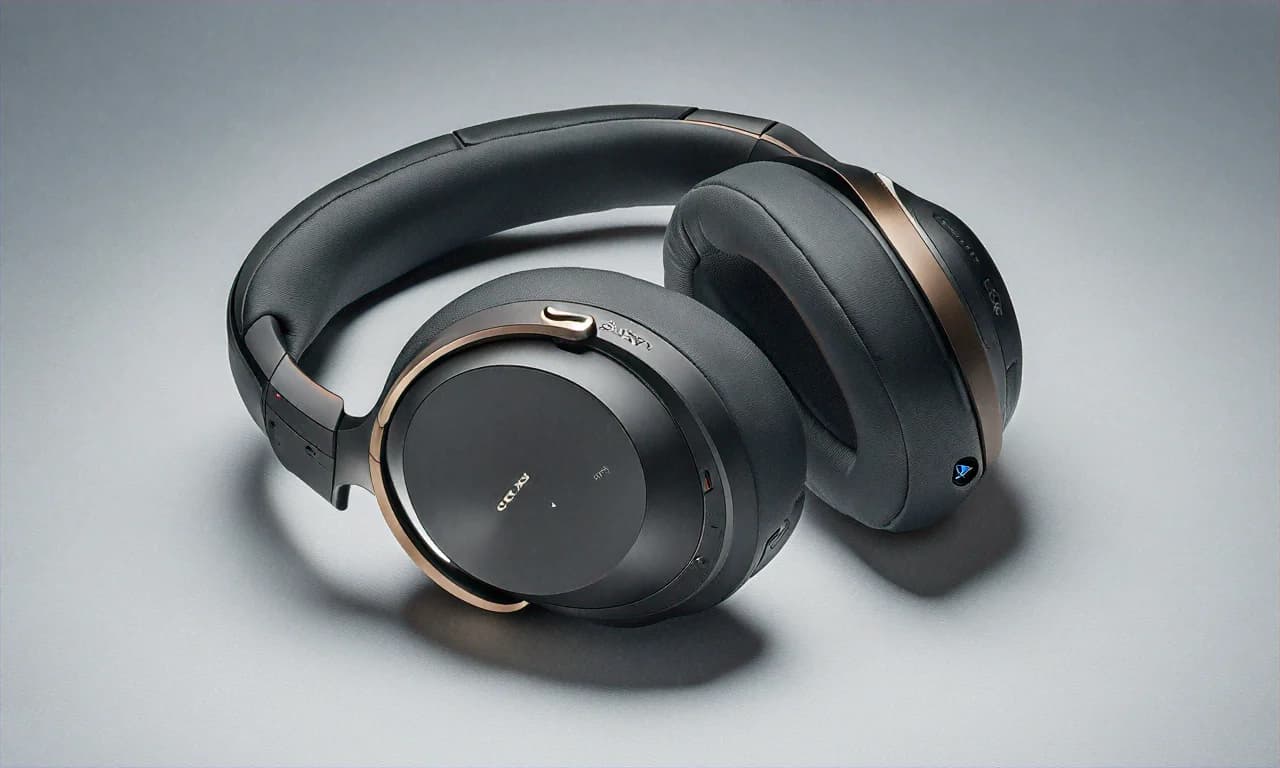
Sony WH-1000XM6 — The Headphones That Ruined All Other Headphones for Me
Here's the thing about noise cancelling headphones — once you've used a good pair, everything else sounds broken. I don't mean that in a marketing-copy way. I mean it literally. You put on a pair of proper ANC headphones, the world goes quiet, and then you take them off and suddenly you can hear the fridge humming, the fan rattling, the neighbors arguing about parking, and you think, how was I living like this?
That's what happened with the Sony WH-1000XM6. And I'm not sure I can go back.
The Bangalore Traffic Test
I commute. Not in a nice air-conditioned cab with the windows up — I'm talking auto-rickshaws, buses, and occasionally the metro. If you live in Bangalore, you know that the sound environment of this city is not background noise. It's foreground noise. It's the main character.
I tested the XM6 at Silk Board junction at 6 PM on a Tuesday. For anyone outside Bangalore, Silk Board is basically the final boss of Indian traffic. Buses honking. Trucks downshifting. Auto-rickshaws weaving through gaps that don't exist. That guy on the Pulsar revving his engine for no reason. All of it, all at once, all the time.
I put the XM6 on, flipped ANC to max. And... it was like someone turned the volume knob on reality down to about 15%. Not silent — you can still faintly hear the lowest-frequency rumbles of diesel engines, and if a bus honks directly next to you, you'll catch a muffled version of it. But the constant wall of traffic noise? Gone. Replaced by whatever I chose to listen to instead. I played A.R. Rahman's "Kun Faya Kun" and for about four minutes at Silk Board junction, I was at peace. That shouldn't be possible. But here we are.
The MG Road test was different. Less brute-force noise, more variety — conversation fragments, construction work in the distance, the beeping of pedestrian crossings, occasional music from shops. The XM6 handled the mid-frequency sounds (voices, construction) almost perfectly. I could see people talking around me but heard nothing. The beeping of the crossing signal bled through slightly, which I'd argue is actually a safety feature even if Sony didn't intend it that way.
Walking down Brigade Road on a Saturday evening — crowded, loud, chaotic — the adaptive ANC adjusted in real-time as I moved from a quiet side street into the main road. There's no manual intervention needed. The V3 processor samples the ambient sound hundreds of times per second and tweaks the cancellation accordingly. I didn't notice it adjusting in real-time — which is exactly the point. It just always felt right for wherever I was.
Music, Genre by Genre
The XM6 doesn't have a single "sound signature." It adapts well to whatever you throw at it, but some genres definitely shine more than others.
Bollywood: I spent a lot of time with these playing Hindi film music because that's what I listen to most. The XM6 handles the layered instrumentation of modern Bollywood production really well. Arijit Singh's vocals on "Kesariya" had a warmth and presence that I hadn't noticed on my previous headphones. The tabla and percussion in "Chaiyya Chaiyya" hit with satisfying punch without overwhelming the vocals. Where these headphones really shine is in the separation — in a dense Bollywood mix, you can pick out individual instruments. The sitar. The bass line. The backing vocals. They don't blur together into a wall of sound.
Classical Indian: I put on a Hariprasad Chaurasia flute recording and had to pause for a moment because I honestly heard details I'd missed before. The breath control, the subtle microtonal slides between notes — the 30mm drivers render them with a clarity that felt almost uncomfortably intimate, like I was sitting three feet from the musician. The LDAC codec is doing work here, pushing higher-resolution audio data over Bluetooth than standard codecs allow.
EDM and electronic: Sub-bass response is strong. Not Beats-level exaggerated bass, but clean, tight, low-end that you feel in your chest during a drop. I ran through some Martin Garrix and KSHMR tracks and the bass extension was excellent. The highs stayed crisp without getting fatiguing, which is tricky at high volumes with electronic music. I pushed the volume to about 80% for a prolonged listening session and didn't experience any harshness or sibilance.
Podcasts: Voice clarity is where these headphones quietly excel. I listen to a lot of podcasts during my commute — The Ken, Seen and the Unseen, some tech podcasts — and voice reproduction is natural. No artificial boosting of treble to make voices "pop." They just sound like humans talking in a quiet room, even when you're in the back of a bus on the Outer Ring Road.
The Dubai Flight
I took a Bangalore to Dubai flight — about four hours — and this was the real test. Airplane cabin noise is a specific kind of unpleasant: a constant low-frequency drone that wears you down over time. It's not loud enough to be painful, but it's persistent enough that you get off the plane feeling exhausted partly from the noise alone.
The XM6 eliminated the cabin drone almost entirely. I'm not exaggerating — within seconds of turning ANC on, the drone was replaced by silence. The captain's announcements came through faintly, which again felt like a reasonable safety compromise. The flight attendant had to tap my shoulder to ask about drinks because I truly couldn't hear her speaking at normal volume from a foot away. I felt slightly bad about that.
I watched a movie (Jawan, if you're curious), listened to music, and then just sat with the ANC on and nothing playing for the last hour. I landed feeling less tired than I usually do after a four-hour flight, and I'm convinced it's because my brain wasn't processing four hours of background engine noise.
The ear cushions held up well through the flight. No hot spots, no pressure points. I have average-sized ears and wear glasses, and the XM6's redesigned padding accommodated the glasses' arms without creating uncomfortable pressure. After four continuous hours, I'd rate the comfort at about 8 out of 10 — there was a mild warmth around my ears that's unavoidable with closed-back, over-ear headphones in a pressurized cabin, but nothing that made me want to take them off.
40-Hour Battery — The Actual Number
Sony says 40 hours with ANC on. I decided to test this properly. Starting from 100%, I tracked my usage over the course of about two weeks of regular use. Here's what happened.
Day 1: Used for about 3 hours — commute, office, commute back. ANC on the entire time. Battery dropped to 91%.
Day 2-3: Similar usage pattern, about 2.5-3 hours daily. By the end of Day 3, battery was at 68%.
Day 4: Heavier use — 5 hours of continuous listening while working from home. Battery hit 52%.
Day 5-7: Mixed use. Shorter sessions during commute, one long evening listening session. By the end of Day 7, I was at 18%.
Total usage before I hit the low battery warning: approximately 34 hours over a week of mixed use. Not quite 40, but I had LDAC enabled the entire time, which uses more power than AAC or SBC. Sony's 40-hour claim is likely based on AAC codec with moderate volume. Switch to LDAC at higher volumes, and you're looking at 32-35 hours in the real world. Still extremely good. I've never owned headphones where I genuinely forgot about charging because the battery just kept going.
The quick charge feature — 3 minutes for 3 hours of playback — works as advertised. I tested it twice. Both times, a 3-minute USB-C charge gave me enough juice for my commute when I'd forgotten to charge the night before. That alone has saved me from grabbing my backup wired earphones more than once.
Multipoint: Two Devices, Minimal Drama
Multipoint Bluetooth lets the XM6 stay connected to two devices simultaneously. I kept them paired with my laptop (a ThinkPad running Windows 11) and my phone (Pixel 8) at all times.
The switching worked better than I expected but not perfectly. When a call comes in on my phone while I'm listening to music on my laptop, the headphones pause the laptop audio and switch to the phone within about 1.5 seconds. After the call ends, they switch back to the laptop automatically. Most of the time, this works without any intervention from me.
Where it occasionally stumbles: if both devices are trying to play audio at the same time — say, a YouTube video on my phone starts autoplaying while I'm in a Google Meet on my laptop — the headphones get confused for a second and you hear a brief audio artifact before they prioritize one source. It's a minor thing, and it happens maybe once every couple of days. The fix is to pause whatever you're not actively listening to, which is what you'd do anyway.
Switching between LDAC (for the phone) and standard Bluetooth (for the laptop) happens automatically. I didn't notice any quality drops or delays when moving between the two. The Sony Headphones Connect app shows you which device is currently active, and you can manually switch priority if the automatic detection isn't working.
Trying Before Buying — The Croma Experience
I'll admit something: I almost didn't buy the XM6 from Croma. I walked in planning to just try them on and then buy online where I assumed the price would be lower. But Croma's in-store experience actually changed my mind.
The Croma on Residency Road in Bangalore had a dedicated Sony audio section with working display units. I asked to try the XM6, and the staff member — who clearly knew his stuff — set them up with LDAC enabled on a connected phone. He played a few tracks, showed me the ANC toggle in the app, and let me walk around the store with them on. I could feel the ANC adapt as I walked from the relatively quiet headphone section to the noisier TV and speaker area. That real-time demo sold me harder than any spec sheet could.
The price at Croma was ₹25,990, which is ₹9,000 off the MRP. I checked Amazon and Flipkart on my phone while standing in the store — Amazon was at ₹26,499, Flipkart at ₹26,990. Croma was actually cheaper. Add in a Croma loyalty card benefit and an HDFC credit card offer, and my final price came to about ₹24,200. Not the cheapest headphones you'll ever buy, but for what you're getting, it felt right.
The staff also threw in a free carrying case — not the one that comes in the box (the XM6 already includes a hard case), but an additional soft pouch for days when you don't want to carry the bulkier hard case. Nice touch.
XM6 vs. Bose QC Ultra — The Inevitable Comparison
Everyone asks this, so let me address it directly. The Bose QuietComfort Ultra Headphones are the XM6's only real competitor in India. They're priced similarly — around ₹25,000-₹28,000 depending on sales — and they're both targeting the same buyer: someone who wants the best ANC headphones available.
ANC performance: Sony wins, but by a smaller margin than you'd think. The XM6 is noticeably better at handling low-frequency noise — airplane drone, traffic rumble, AC hum. Bose is slightly better at mid-frequency cancellation — voices, office chatter. For Indian conditions — where traffic noise is the dominant annoyance — I'd give the edge to Sony.
Sound quality: Sony wins more clearly here. The LDAC support, wider soundstage, and more neutral tuning give the XM6 a noticeable advantage for serious music listening. Bose has a warmer, bass-heavier signature that some people prefer, but it doesn't resolve detail as well in complex tracks.
Comfort: This one's a draw. Both are comfortable for long sessions. The XM6 is lighter at 227g. The headband distributes weight evenly. Bose's ear cushions are arguably softer out of the box, but the XM6's cushions conform to your head shape over the first week of use.
App experience: Sony Headphones Connect is better than Bose Music. More EQ options, better device management, more granular ANC controls. Neither app is going to win design awards, but Sony's is more functional.
Call quality: Bose is slightly better for voice calls. The XM6 is fine — my colleagues on Google Meet said I sounded clear — but Bose's microphone array does a slightly better job of isolating your voice in noisy environments.
If I had to pick one sentence: Buy the XM6 for music and noise cancellation. Consider the Bose if call quality is your top priority.
The Small Stuff
A few things that don't deserve their own section but are worth mentioning.
The speak-to-chat feature works better than I expected. Start talking, and the headphones automatically pause your music and let ambient sound in. Stop talking, and they fade back to your music after a few seconds. It works about 85% of the time. The other 15%, it gets triggered by a cough or a loud sigh, which is mildly annoying. You can adjust the sensitivity in the app or turn it off entirely.
The touch controls on the right ear cup are responsive but require some muscle memory. Swipe up/down for volume, forward/back for tracks, tap to play/pause, hold for ANC toggle. I accidentally skipped tracks a few times in the first week when I was trying to adjust the fit. You get used to it.
The fold mechanism feels solid. The ear cups rotate flat and the headband folds inward. The included hard case fits the folded headphones perfectly with room for the USB-C cable and an airplane adapter. The case is compact enough to fit in a backpack side pocket.
DSEE Extreme, Sony's AI-powered audio upscaling, is meant to improve the quality of compressed audio (Spotify, YouTube, etc.). In practice, I can hear a subtle difference — slightly more detail in the high frequencies, a touch more air around instruments. It's not a real shift, but it's a nice-to-have. I leave it on because there's no noticeable battery penalty.
What I'd Change
No water resistance rating at this price point is disappointing. I'm not going to wear them in the rain, but knowing they can survive an accidental splash or a sweaty gym session would add peace of mind. The Bose QC Ultra doesn't have an IP rating either, so it's an industry problem, not just a Sony problem. But still.
I wish the multipoint connection supported LDAC on both devices simultaneously. Currently, if you're connected to two devices, the codec defaults to AAC for both. You only get LDAC when connected to a single device. It's a Bluetooth limitation, not a Sony limitation, but it's worth knowing if audio quality is your primary concern.
The carry case could be slimmer. It protects the headphones well, but it's bulky enough that I sometimes just throw the headphones in my bag without the case when I'm in a rush. A more compact design would be welcome.
Three Months Later
I've been using the XM6 daily for about three months now. The ear cushion padding has softened slightly and actually become more comfortable. The headband hasn't loosened. There are no creaks or rattles. The touch controls work exactly as well as they did on day one. The ANC performance hasn't degraded — if anything, Sony pushed a firmware update about six weeks after my purchase that made the ANC slightly more aggressive in automatic mode.
My listening habits have changed. I listen to more music now. Not because the headphones made me a music enthusiast overnight, but because they removed the friction. When your headphones sound great, cancel noise effectively, and last for days on a single charge, you just... use them more. I've rediscovered albums I'd forgotten about. I've started listening to genres I used to skip — jazz, ambient, classical — because the XM6 renders them with a fidelity that makes them legitimately interesting to listen to.
Sometimes I wear them with nothing playing. Just for the silence.